
How to Not Mess Up Buying Decision 3
What the customer does care about is how this product / service will meet “their needs”. That’s right! How does what we offer help the customer?
Buying Decision 3 is the part in my live and online trainings where the sales professionals believe they need zero help. It’s at this time that I have to ask for examples of participants to show me how they work on this buying decision.
Most attendees start with firing features and benefits in rapid fire, their elevator pitch, or how their product is so revolutionary like they are in one of those late-night infomercials. Unfortunately, this is an incorrect process in selling your product / service. The reason I know this is because I started out selling my products this way which drove my lack of sales. The customer does not care about how many features and benefits we have.
What the customer does care about is how this product / service will meet “their needs”. That’s right! How does what we offer help the customer? Each customer is different and has different needs which means we need to be smart about how we approach them. We can not simply rain features and benefits all over them hoping something sticks. We need to sell by answering their needs.
To effectively answer the customer’s needs, the salesperson needs to do the work in the first buying decision by asking great questions to uncover the customer’s needs. By asking questions we are finally able to understand the customer, what they are looking to achieve, and why they are looking to achieve it with this purchase. If we assume that we know exactly what the customer needs we typically miss the mark in sales.
You’re probably asking yourself how do I avoid this mistake? The answer is simple. By making sure that the question I am asking aligns with the needs answered by my features and benefits. That’s right I use the features and benefits of my product / service to roadmap questions for the customer. If the customer is saying yes to those questions, then we know that we are on the right track to help the customer. Simple right!
Below is a simple process I use to create the questions:

This is the process for creating the needs questions that align with your features and benefits.
One last point here and this is a big point!
If the answer is no to most of my questions about my product / service. I quickly understand that what the customer is looking for is not what I offer and I point them in the right direction to meet their needs. That is right, if my product / service will not help the customer I am going to do everything in my power to help them find what they need. Most sales people are shaking their heads in disbelief and they are wrong. See I am playing the long game with selling that builds influence.
If my current product / service does not help the customer and I help them find something that does, I have just solidified my value and gained tremendous influence with the customer. Even if they do not buy this product / service today, they will tell their friends, family, coworkers, neighbors, etc. about the service that I have provided and how I helped them. They will tell those people that they need to come talk to me. It has helped me time and time again with references and grow my sales in the long run.
Yes, this is an internal decision to focus on helping more than just selling our products / service. I chose this early in my career which helped me gain more sales than I could have ever thought possible. Customers have come to me years later telling me that someone referred them to me because I was the best and helped in such a way that they needed to see me first.
Isn’t that where we want to be? To be the person everyone wants to come to for a solution to meet their needs?
To find out how to apply the total Sales Process Uncovered training with your team, follow the this link and get moving forward to reaching your sales goals!
Sincerely,
Kevin Sidebottom
“Businesses wonder why the majority of their sales teams struggle at winning profitable business. I teach your sales team to walk with the customer through the five buying decisions, and in the correct order to generate more sales with high margins!”

Communicate Effectively or Risk Trust!
When I have failed to communicate expectations, or parameters to those I am about to have an experience with, things ultimately go off the rails. Someone gets upset, someone ends up sleeping on the couch, or worse someone could start building a wall between the other person that is hard to take back down.
How many times have you had someone respond negatively to something that you have said and you still are not sure why? Have you ever wanted to buy something, but when signing on the dotted line, there was a change? How about a significant other irritated from something you have said that was taken in a totally different context?
The reason is because most of us get this concept of communication wrong when we speak. Every relationship needs clear and effective communication. Dale Carnegie wrote about this topic extensively and even created a training based on it taught at large corporations to aid in effective communication.
When I have failed to communicate expectations, or parameters to those I am about to have an experience with, things ultimately go off the rails. Someone gets upset, someone ends up sleeping on the couch, or worse someone could start building a wall between the other person that is hard to take back down.
I have many stories about poor communication, but the one I want to share today is recent.
I have wanted a ski boat since I could drive a car. I have been searching all this year for a ski boat and this a couple weekends ago we test drove and put in an offer on a used ski boat. My wife even felt good about purchasing it. When the wife who could really care less about a ski boat is on board, it’s time to buy!
The person selling the ski boat was absolutely horrible in communicating unfortunately. I called him back after my wife and I talked and offered our price. It was a fair price and he said he had to talk to his brother who was part owner of the ski boat (new revelation red flag number 1) to discuss and that he would call me back quickly. Five hours later I got a text asking me if I could go up by $250. I immediately asked if I could talk to him on the phone to understand why they were asking for this extra $250.
When I finally got the seller on the phone, he stated they wanted to get $250 more and that was it. I stated there were some updates that I would have to do and thought our price was fair. He stated that he would call me right back. The next morning, I had an errand to run and reached out as the seller never responded (red flag number two). An hour went buy and then he texted that he was going to have someone else look at the boat that offered sight unseen $250 more.
I stated that I would raise the price if that was the case and that I would first need to see the trailer as he never allowed me to see it prior. The response was, “well I am out for a jog and I’ll call you later.” I tried calling and was sitting in the parking lot of the bank ready to get a cashier’s check for the ski boat. No response (red flag number 3). I waited about thirty minutes, and then started driving back to my in-laws house. An hour later I received a text that the other person was on their way to look at the ski boat. Frustrated, I told the seller that I hoped he sold the boat, but was no longer interested.
Had the individual utilized effective communication and informed me why the night before the reason why the $250 was requested, I may have been willing to raise the price then and maybe seal the deal. All I can assume now is that the seller was trying to play people against each other to inflate the price which is okay, but not how I do business. See the lack of trust there? I am able to see the red flags that should have keyed me into how this person functioned with communication and selling.
If you were in my position, how would you react?
Now think about that if you are in sales, or some kind of leadership position. If communication breaks down, people get frustrated, and it is extremely difficult to regain a relationship in this fast paced environment. There are other options out there for people to purchase, or organizations to work for. Even as the economy had dipped, it is recovering almost as fast. Organizations are back hiring more employees again.
If we want to grow our relationships, we need to focus on effective communication.
More on how to communicate effectively in the future, but for now I recommend Dale Carnegie’s book “How to win friends and influence people.” It’s a great resource for learning how to communicate effectively especially when are forced to be remote in our working conditions.
It will help greatly with all your relationships.
Have a great day!
Sincerely,
Kevin Sidebottom
“Businesses wonder why the majority of their sales teams struggle at winning profitable business. I teach your sales team to walk with the customer through the five buying decisions, and in the correct order to generate more sales with high margins!”

Building Trust With The "R" Word
Today, let’s talk about the second variable in building trust. It’s Reliability. How reliable are you? When you say you’ll do something will you do it? Will you do it to the best of your ability? Do you forget to do it? Will you do the right thing when no one is looking? Do you think it is that big of a deal to be reliable?
It's a BIG DEAL!!! Trust is won or lost by your actions, not just your words.
I remember when I was younger, my father telling me to always do what you say you are going to do. Do not waiver. He also stated to do the right thing if everyone is watching and when no one is watching. Don’t tell me, show me is the slogan I have heard all my life from my father.
I remember when I first met my wife’s parents. We were up at their cottage grilling steaks and I was assisting my future father-in-law. I told him that I usually every spring season the grill grates after the first steaks have been cooked by applying foil to the top of the grates and turning the heat up high while I ate and then it would bake in all the flavor.
What I didn’t know is that his grill grates on his expensive grill were actually anodized aluminum and not steel…
Did you know when you crank up the heat and use foil that reflects the heat back into the grates that are anodized aluminum, they actually can’t take that much heat and melt and then break in half? Yep, it was an awesome first experience…
I told him that I would replace them even though my future father-in-law said don’t worry about it. The next day I was on the phone with the grill manufacturer ordering the new grates. I was originally going to order just two, but they informed me that they had two different sizes in that grill…. so, I ordered a complete set. Did you know that anodized aluminum grates cost more than any grill I have ever bought? Yep that’s right almost $300 for grates.
That weekend was the most expensive steak dinner I have ever had, but by doing the right thing and doing what I said I was going to do our relationship has grown and he has put a great deal of trust in me. He knows that if I say I will do something that I will get it done.
When we interact with our teams, customers, family, or friends we need to make it a constant effort to be reliable. Without being reliable it is almost impossible to have a trusting relationship. Especially when we are first getting to know others.
Here are a few things I do to make sure I follow through:
List it and do it – As you can see from the picture of this blog, I love to utilize post-it notes for my action items. I will literally list out something I need to do and stick it to my wallet when I leave so I do not forget what I set out to do. Some people use an app, but I am low tech. A side note is that when people cross things off list they feel good and empowered. If you are someone that keeps forgetting to do things, then maybe making a list and keeping it with you as a reminder might be a good tool.
Action It – I am bombarded with requests regularly and if I set something to the side I tend to forget about it, so I make sure I do it right away if I can. CEO’s have utilized this method of acting right away of forgetting it. Emails are a way they sort through action items to either take action right away, or throw it in the recycle bin.
Delegate it – If you are unable to do something and someone else is better equipped to handle the item then delegate it. John Maxwell has endorsed this idea of delegate to elevate. My wife and I set up weekly meetings to look at things that need to be done and delegate things that each other can do. It allows us to work more efficiently, communicate effectively, and flow in our strengths.
L.A.D. are three helpful options that I we can all utilize to make sure we are reliable.
Is there a time that pops in the back of your mind where someone else has fallen short being reliable? How did it make you feel? Did you lose a little trust in that person?
I know I will fall short sometimes, but I make it my best effort to do what I say I am going to do and if I am going to come in short I communicate the situation and try to better the situation to the best of my ability. We need trust in order to keep moving forward with others. We need to focus on how we can make sure we are doing what we say we will do and apologize to anyone that we may have fallen short with.
Being reliable is essential in building trust.
Have a great day!
Sincerely,
Kevin Sidebottom
“Businesses wonder why the majority of their sales teams struggle at winning profitable business. I teach your sales team to walk with the customer through the five buying decisions, and in the correct order to generate more sales with high margins!”

Why Customer Service Hates Sales People
Have you ever had customers call you complaining that they are not being taken care of properly? Ever had them say this is not what they agreed to? How about this statement, “I think you need to come pick up your stuff as I no longer wish to do business with you?”
Have you ever had customers call you complaining that they are not being taken care of properly? Ever had them say this is not what they agreed to? How about this statement, “I think you need to come pick up your stuff as I no longer wish to do business with you?”
These are never fun conversations and most can be alleviated quickly and easily if we do this one thing. Before I tell you what this one thing is, let me give you a context of the issue in depth before providing the solution.
Large organizations today have multiple people that interact with the customer. We all know the sales person that is tasked to grow revenue and win new projects / programs. There are also others that are handling the customer on a day to day basis while the sales person is off selling other new prospects. These individuals are the customer service representatives also known as account managers. They are the crucial in growing the relationship with the customer.
Customer’s rely on constant communication about shipments, payments, bills, etc. The customer needs to know what is going on so they can build their product / service, utilize the investment they have made, and grow their portfolio. They need us to grow their business.
The key issue that I have seen multiple times in business is this. The sales person goes out and wins a sale, get the high five, and then is off trying to make the next kill (more on “kills” in future blog posts). The sales person likely has forgotten to communicate the rules of engagement with the customer effectively to those that handle the accounts on a day to day basis. This means that any negotiations or agreements made outside of the standard programs have been missed and the day to day individuals do not have this knowledge.
This would upset me if I agreed to doing business a certain way and the organization decided that it was outside of the parameters and rejects what I agreed to. I would be infuriated, wouldn’t you? Most likely resulting me calling the sales person to pick up their products and services.
This was the issue with one organization I worked for when I started out my sales career and there were some very unhappy customers. So much so that the owner of the organization was receiving calls on his cell phone which resulted in not so pleasant conversations with the entire sales team. When I say unpleasant, I mean usage of a great deal of the urban and regular dictionary adjectives.
What derived out of this and what can be applied to any organization dealing with customers, is a review of the terms of the agreement and a kick off meeting prior to the first shipment of goods / services. This allows everyone to get in alignment so that rules of engagement with the customer is well understood. Today with the sharepoint drives and team sites, it is even easier to load the terms of the agreement so that anyone can quickly review them. This also helps in case a customer tries to exaggerate the terms of the agreement to receive a little extra benefit.
In implementing a good standard of communication of new contracts with the teams, the customer relationship will function smoothly and growth can happen faster. Making sure the customer is taken care of is the top priority!
Remember the old saying, “the customer is always right!” Sometimes we just need to have all of the facts about the relationship.
Have a great day!
Sincerely,
Kevin Sidebottom
“Businesses wonder why the majority of their sales teams struggle at winning profitable business. I teach your sales team to walk with the customer through the five buying decisions, and in the correct order to generate more sales with high margins!”

The 4th buying decision… the one most sales people fear!
Good morning everyone!
How many times have you been nervous to hear a result? Whether it was a test result from your doctor, that first time you asked a girl out in school, or how about when you sent the price over to a prospective customer and were in the silence which seemed like forever?
Most sales people have gone through this period at least in the beginning of their careers when they get to the fourth buying decision for the customer. It’s when the customer will inform the sales person if the work put in and the price align, or if they are not sold yet. During this buying decision far too many sales people will start spouting off more benefits and features, price dropping, etc. before the customer ever provides feedback.
When we start justifying our price as soon as we send it, we immediately devalue our proposal psychologically. Now the customer has no other course, but to challenge the price. The old saying less is more applies here. When the sales person send over the price, they need to stop speaking. Just like in a negotiation, the first person that speaks loses.
Now I temper that with a statement that submitting pricing is not an us vs. them situation, because we have done all of the steps in the sales process and are trying to serve the customer. What I am saying is that when we submit the pricing, we need to not devalue our proposition to the customer. Now the discussion should be on the customer to decide how to proceed.
Maybe the customer needs a little more information because we did not answer one of their needs that is high value. That’s okay because we can address that need quickly to help them make sure this is the best product / service they are about to purchase. Maybe the customer is in the research phase of decision making. This should have been discovered early on in the first buying decision, but maybe they are trying to budget. Then it is up to us to make sure we identify the next step for them to take and how we can help the customer.
There is nothing wrong with hearing a no right after we have provided the price. This is how we adjust and understand what may be limiting the customer from making the purchase. Just like shooting a rifle from 1000 yards away from a target. Sometimes a small adjustment needs to be made to hit the target in the center. This is our opportunity to correct and address the customer’s needs and help them.
If we don’t sell the product / service right after the first time we submit a price, that is okay. Sometimes there is a better option for the customer, but if we have done a great job, the customer will tell us why we may have lost this sale, but they will tell others how we helped them if we walk with them through the five buying decisions correctly.
As a side note most sales people never go back and find out why they lost a sale. This is valuable information if that happens to adjust the sales approach going forward!
We just need to make sure we do no devalue ourselves, or our offerings while working through the sales process with them.
Have a great day!
Sincerely,
Kevin Sidebottom
“Businesses wonder why the majority of their sales teams struggle at winning profitable business. I teach your sales team to walk with the customer through the five buying decisions, and in the correct order to generate more sales with high margins!”

Want to Build Trust? Start with the letter C
Credibility is typically linked to knowledge. A person goes to school, gets a degree and then they are finally credible on a subject. While that is very true, there are other aspects to Credibility that many do not think about.
Hey everyone,
I have noticed a rise in interest in learning about building trust. Today Trust is in high demand. Employees and management need to establish trust more than ever especially with the working remote situations. In uncertain times, it is trust that is the key ingredient in moving forward and achieving desired goals.
There are many aspects to trust and how to build high levels of trust. Different environments also require different levels of trust. I have been asked many times for a simple roadmap in building trust. That is why I have created the Trust equation. Something simple for people to remember and be able to apply. I have also spoken to Multi-Billion dollar organizations to help teams build trust by using this equation.
Today I want to focus in on one part of that equation because going into the entire equation in one sitting would require a great deal or reading on your part. For today let’s focus in on “Credibility.” Credibility actually has a few components to it and some that most people don’t think about.
Credibility is typically linked to knowledge. A person goes to school, gets a degree and then they are finally credible on a subject. While that is very true, there are other aspects to Credibility that many do not think about. One is effective communication and the other is called “being the bridge.”
I have seen very intelligent individuals lose credibility because they could not effectively communicate with others. That’s right, just because they have a great deal of knowledge, does not automatically grant them credibility. Everyone needs to be able to communicate effectively! There are many courses that help on effective communication topics, but the biggest effect on communication is the ability to break complex topics into understandable language. That means not using really big dictionary words when a simple word can be used. If we can communicate effectively then we can build trust and generate credibility.
Now the other component I mentioned earlier is what I call “being the bridge.” This is something that I learned when I first got into sales. If I was able to connect people needing help in a certain area with those that had the knowledge, I built credibility. That’s right because I was bridging the gap for them, then I am deemed a credible source as well. When we bridge others together, we are associated with one that adds value. Adding value is key in trust building and being a bridge will help us gain influence. This is one of the main ways I have been so successful throughout my career. I have built a great deal of credibility by bridging others together.
Bring knowledgeable, communicating effectively, and being the bridge will allow us to become more credible. Consistently showing up to add value and help others is the way to growing trust with anyone we interact with.
If you would like more information on building trust reach out and set up a call so we can discuss and I can point you in the right direction!
Have a great day!
Sincerely,
Kevin Sidebottom
“Businesses wonder why the majority of their sales teams struggle at winning profitable business. I teach your sales team to walk with the customer through the five buying decisions, and in the correct order to generate more sales with high margins!”

How The B-word Will Help You During A Pandemic
We cannot just fly by the seat of our pants and hope for the best. You Only Live Once (YOLO) unfortunately is not a term that works well with finances. It’s the B-word that most people make disgusted faces when said out loud that will enable you to thrive long term.
Good morning everyone,
In the past few months with the economy in a downturn and restrictions caused by a pandemic people all over have had to watch their money. Most people are living paycheck to paycheck and can not afford to take pay reductions, furloughs, or worse being let go.
Today I want to focus on how to add security to your way of life! Today we talk about the B-word. That’s right…Budgets. Now stop rolling your eyes for a few minutes and read on. This will truly help you!
Dave Ramsey offers an amazing course called Financial Peace University that I took over a decade ago. I have applied his principals ever since taking that class. The core aspect to this training is you guessed it, the Budget! The budget is the foundational part about becoming a millionaire. Of all the people doing their debt free screams on his show and the millionaire half hours 99% run off of a budget. If you want to be wealthy in the future, you’ve got to do your budget! When interviewed the millionaires said they use a budget to make money work for them to grow their wealth.
Corporations also use budgets to make sure they do not run out of money. By using budgets, corporations are able to apply income to certain business units in order to fund develop products, marketing, employee growth, legal services, etc. The point here is that they are very intentional to make sure they are on budget to make money work for them. Successful Corporations (Banks, Amazon, Apple, etc.) make money work for them to grow their wealth. Now where did we just read that same thing….?
We cannot just fly by the seat of our pants and hope for the best. You Only Live Once (YOLO) unfortunately is not a term that works well with finances. It’s the B-word that most people make disgusted faces when said out loud that will enable you to thrive long term.
During this pandemic season, I have had to reduce my income by 20 percent, we bought my wife a new used vehicle, and my wife changed jobs with a month of no income from her. We were able to review the budget, see where we could cut costs during this season as well as move forward without getting into arguments. It was one less item to worry about during this not so fun time. In fact, we are actually looking at how we can purchase a boat as I suspect there will be people needing to sell toys to make ends meet.
Budgeting has brought my wife and I closer as we talk about our future dreams and actually budget to make it a reality as we travel along in our marriage. We even give our kids a budget for clothing and after school activities that they can manage how they choose. They just need make sure they can afford it. If they don’t have enough money, then they can’t do the activity. Now the emotion is taken out of the discussion and the focus is on simple mathematics.
If millionaires and corporations do budgets to succeed, what is keeping you from doing a budget?
Do you not have the time?
Does it seem like you don’t know where to start?
What if I had a quick excel file you could use that auto calculates and allows you to do a budget? Would that be useful to you?
If you email me today, I will send you a copy of the budget file we use so that you can get on the road for a better future. kevin@kevinsidebottom.com
Sincerely,
Kevin Sidebottom
“Businesses wonder why the majority of their sales teams struggle at winning profitable business. I teach your sales team to walk with the customer through the five buying decisions, and in the correct order to generate more sales with high margins!”

You only get one chance to...
The sales process is the key to mastering the art of first impressions, building rapport, and likeability. Once we master the first buying decision of the sales process, we can build rapport with those around us faster!
Good morning everyone!
I hope you are enjoying your summer with your kids home from school, taking trips, and enjoying some downtime in the sun!
I have been thinking about this topic for a while now and decided that it was time to step up on my soap box. I firmly believe that we all need to know how to sell in order to make great first impressions. Whether we are going for a job interview (selling ourselves), out on a date (selling ourselves), leading an organization (selling vision and ourselves), or selling a product or service which means we need to know how to sell (ourselves), etc.
No matter what we are doing, we are selling ourselves as the best option for those around us. We share stories, build friendships, engage with coworkers etc. all of the time. Some people do this really well and some unfortunately do not. This is not simply determined if you are an introvert, or an extrovert to determine if you will do this well. What I am saying is that some just don’t sell themselves well enough.
There are three questions everyone asks at every interaction and they are as follows:
Do I like you?
Do I trust you?
How can you help me?
In seven seconds, a decision is made about the other person based off these three questions. Now there are so many aspects to how one can affect those three questions, that it is key that we know how to sell and why these three questions are affected. Learning the sales process if even just for only buying decision 1, we are definitely on solid footing to move forward with other people.
How we are dressed, what the environment we are in, our posture, our speech patterns, and many more aspects affect how people form their decisions about us. Have you ever heard the phrase. “we only get one chance to make a first impression?” This is because once someone makes that impression about us, it is extremely hard to change.
The sales process is the key to mastering the art of first impressions, building rapport, and likeability. Once we master the first buying decision of the sales process, we can build rapport with those around us faster! This will enable us to make great first impressions, obtain engagement from those around us, and create stronger relationships.
Wouldn’t it be nice to know how to sell and build relationships to make our lives better?
If you’d like to learn the sales process and how to gain influence, I have launched my online course. It will enable you to master sales, implement the simple to use process, and become a top performer!
Sincerely,
Kevin Sidebottom
“Businesses wonder why the majority of their sales teams struggle at winning profitable business. I teach your sales team to walk with the customer through the five buying decisions, and in the correct order to generate more sales with high margins!”

Ever Wonder Why…?”
Isn’t it interesting that no matter how hard we try, it just doesn’t seem like some people will not like or trust us?
Good morning everyone,
Ever wonder why some people just don’t seem to buy your product / service even though you know they need it?!?
Isn’t it interesting that no matter how hard we try, it just doesn’t seem like some people will not like or trust us?
The first buying decision for the customer is the longest and hardest to complete for sales people. The customer has to know, like, and trust us before they will ever buy from us. Have you ever had a sales person ask for your name and immediately after providing your name, they launch into a sales pitch?
When they do that, do you think they really care about you?
We as sales professionals need to make sure we are answering these three questions for the customer as soon as possible:
Do I like you?
Do I trust you?
How can you help me?
If we jump straight into selling mode quickly after meeting the customer they will be turned off. Ever wonder why when asked what brings you in to this store today the most customers say, “Just looking.” It’s because the customer has been trained to think that sales people are all the same and all the sales person cares about is selling their product or service.
Let’s change that perception…
Let’s start by using a plan on how we will approach the customer in a way that builds likeability and trust right out of the get go. Let’s start with making sure when we approach the customer we are not circling like hungry vultures. Let’s let the customer come into our facilities and let them get comfortable by smiling and saying “Hi, welcome. We are here to help you when you are ready.” Smiling, wearing the right colors that psychologically reflect trust, honesty and lowers anxiety. No power ties, no black clothes, no dark grey, but light blues whites, and some greens to ease the customer into lowering their anxieties.
We need the customer feeling relaxed and calm. The longer the customer spends time in the store the more of a chance they will buy from us. Ever wonder why Costco offers free samples (when not in a pandemic) to anyone and everyone? They know that the spend amount goes up the longer the customer is in the store.
If we can not get the customer to like us, they will never buy from us. It’s that simple.
What will you be wearing the next time you show up to work? Will you be paying attention to the customer and welcoming them, or will you be going in for the kill to make a sale?
If you’d like to learn the entire sales process and how to gain influence, I have launched my online course. It will enable you to master sales, implement the simple to use process, and become a top performer!
Sincerely,
Kevin Sidebottom
“Businesses wonder why the majority of their sales teams struggle at winning profitable business. I teach your sales team to walk with the customer through the five buying decisions, and in the correct order to generate more sales with high margins!
Ideas for the Next 90 Days
Last week we finished the fifth and final buying decision for the customer and the work it takes after this buying decision for the sales person to really knock it out of the park. If you haven’t had a chance to read that article check it out here (add link)
This week I want to share some ideas with you as to the extra steps you might try so that your customers are successful for the next 90 days after the sale! Their success is crucial for your future success.
Videos – with the advent of YouTube, Instagram, TikTok, etc there is a vast array of opportunities to help your customers with video interactions. Videos for top 10 uses for your product / service, self-diagnosis of typical issues that can arise, starter guide on your product / service as a reminder if the customer does not use what you have already taught. Customer testimonials is also another great idea.
Support Groups – Facebook has a fantastic platform for loyal customers to access with questions and success stories. I am on FB groups for a number of programs I have purchased such as the SpeakerLab, John Maxwell Team, Financial Peace University, etc. These groups are great for asking questions and cheering others on. These groups create a Fanocracy that is so impactful, that customers become loyal sales people for your vision. Releasing control of your product / service and allowing the customers to show you how to improve it is also a benefit to doing these groups.
Email – I know we all get too many emails throughout the day with advertisements. Why not flip the script and send out shortcuts and life hacks while using your product / service instead of just trying to sell them? What about using the Facebook group’s ideas to share with your email list of what others are saying about your product. Why not highlight those customers that are achieving the best results and share with your prospective customers? What about meets ups coming up in the customer’s nearby location? Why not use email for more than just trying to sell the customer with another flash sale.
I hope these ideas have helped you with your quest to sales success and what you can do to increase your influence with customers.
I also wanted to give you an inside look at what I have been working on this past summer and what I hope will be ready very soon. I have been filming my sales process uncovered training so that you may be able to use it whenever you want to. No more traveling to events, staying in uncomfortable hotel beds, in different time zones. This training will you faster than just the blogs I write weekly for you. The training will help you become that 1% of successful sales professionals.
As always, I will keep posting blogs for you to add ideas on how to sell more efficient and how you can achieve higher levels of success.
Have a great weekend!
Sincerely,
Kevin Sidebottom
“Businesses wonder why the majority of their sales teams struggle at winning profitable business. I teach your sales team to walk with the customer through the five buying decisions, and in the correct order to generate more sales with high margins!”

The 5th and Final Buying Decision…Time To Start Working!
The customer has now purchased our product / service and we celebrate! Unfortunately, this is where 99% of sales people stop the sales process.
We’ve done it!
We have made it to the fifth and final buying decision for the customer which is “Buy”
The customer has now purchased our product / service and we celebrate! Unfortunately, this is where 99% of sales people stop the sales process. It’s okay to celebrate the win and I encourage the celebration, but when the sales person stops the sales process after receiving the order, the customer is left to fend for themselves. The customer soon will develop buyer’s remorse, not hitting the desired outcome from the purchase, and possibly thinking they were just sold something instead of purchasing a solution. The customer then associates us with the slimy salesperson that does not care about them.
Far too many sales people take the signed order and ride off into the sunset never to be heard from again. It’s a huge opportunity that unfortunately most sales people miss out on!
That’s right, when the customer agrees to buy, this is the time that sales professionals need to roll up their sleeves and move forward with the customer. The more this is done, the more the customer will brag to their friends, family members, social media, etc. about how awesome we served them and that everyone they know needs speak with us. Who wouldn’t want a sales team of individuals selling of us without having to pay them?
I love having people that have taken my trainings tell others that they need to work with me because I know that what I am doing is working!
First and foremost, when the customer agrees to purchase, they will second guess themselves (buyer’s remorse) about the purchase. That’s right, they are not sure what they did was the right decision. This typically happens for purchases over $50. We are not talking about a pack of gum here. The real-estate market has done a fantastic job overcoming this issue of “buyer’s remorse.” As soon as the customer agrees to purchase a property, they immediately begin moving the customer into the next steps.
When you confirm that the customer has made the right decision, they feel justified and will be set at ease. Getting the customer moving forward after this decision to buy and onto the next steps such as delivery date, onsite training, etc., the customer is reaffirmed and feels like they have made the best decision possible. They have a game plan for the next steps. The customer will feel relieved and begin moving forward with our help! They appreciate this, because most sales people do not do this! This simple step! Now we have a few other things we need to do as well.
The next thing we as professionals need to do is review how we did in the sales process. We do this to get better at selling our product / service. The better we do this the better we will get at the next sale and become more efficient. It’s like anything else we do. After every mission the best military operators will have a debrief meeting to discuss what went well and what could be done better the next time. The more we practice and review the more efficient we get. Take time to review spots that slowed us down and then fix those areas so that way we can move forward faster next time.
The last step in the sales process is crucial. Again 99% of sales professionals do not do this. This is the most crucial step in gaining influence with customers. It’s the next 90 days after the sale that really makes the customer’s purchase a success, or a failure. That’s right, after the installation and quick run through, the customer is going to have issues. The faster we communicate how to resolve those issues the better the customer will feel. That is why organizations have had support lines waiting for customer to call, but the sales professional has an opportunity to take this one step further.
This is the sales process step in my trainings that most organizations ask a great deal of questions on how they can get better. It’s actually simple and to do once the content is created. That’s right, what content do you have available for the customer once they have purchased your product / service? Do you have a 10-steps to self-diagnose an issue? 15 best quick recipes for that blender? Youtube videos walking the customers through a new way to use the product / service? How about a Facebook group for other customers to share success stories and resolve issues together?
What do you have ready for your customers so that they can consistently win with your product / service? That is the question that we need to answer and if we do this well, we will be rewarded with greater levels of influence. With more influence comes greater growth in sales and increased revenue. At a certain point you become such an influencer that people stop focusing on price. Wouldn’t that be amazing to take the pricing discussion off the table?
We are in the service business no matter what we sell. Serve the customer well and reap the rewards. Underserve and stay a commodity in the customer’s eyes.
It’s okay to have a little celebration, but then get to work rolling up your sleeves and help serve the customer!
Sincerely,
Kevin Sidebottom
“Businesses wonder why the majority of their sales teams struggle at winning profitable business. I teach your sales team to walk with the customer through the five buying decisions, and in the correct order to generate more sales with high margins!”

Buying Decision 4, Don't be Scared!
Welcome back everyone,
We have been walking through the buying decisions that customers must make before they will buy a product / service from us sales professionals. If you haven’t read the past few blog posts, I encourage you to go back and read them as they will help you understand how we got here. For today, let’s jump into this fun topic!
When I first got into sales, I actually hated this buying decision. I was so nervous that I kept selling the product as long as I could and would talk myself out of a sale in most cases. The reason was that I feared rejection. Just like asking that girl out in high school, I was nervous to ask for the order from the customer.
Back in high school I was literally under five-foot-tall, weight around 100 pounds and let’s be honest the wind may have been able to knock me down if it blew over 10 mph. Asking for a date seemed like a monumental task when I had to look up to just about everyone. Luckily I grew taller and so did my confidence.
No one really enjoys rejection and I was no different when it came to sales. I did not want to find out if I had not done a good job at understanding the customer’s needs and addressing those needs. I did not want to hear “NO” just like a child hates the word no. I did not want the customer rejecting my request to move forward with the purchase.
Here is what I have learned through many years of selling. We as professional sales people need to hear the word no. That’s right, if we have not answered the customer’s needs, we should hear no. We do not need the customer buying the product only to hate the purchase and then remember us as the ones that sold them that product / service. We need them to be glad they purchased the product / service and that it helped them. Otherwise we are just another sales person that made a quick buck that did not help the customer. Serving the customer well leads to much more sales success in the long run.
Now, why is it okay to hear the word no? Once we hear the word no we can go back to the uncovering needs and verification of needs steps to make sure we completely understand the customer. Which is what the customer truly wants. The customer wants to be known and understood. They want to know that this solution in front of them will actually help them move forward.
As professional salespeople, we need to make sure we have courage to ask for the order. We need to find out if we are on the right track or if we missed something. This is our opportunity to come back and help the customer better if we missed something. It’s our sign to make sure we are moving in the right direction.
You never know, the customer may actually say “Yes” and award us the business if we have followed the process correctly. That is when the real work starts!
Have the courage to ask for the order and wait for the reply from the customer.
Sincerely,
Kevin Sidebottom
“Businesses wonder why the majority of their sales teams struggle at winning profitable business. I teach your sales team to walk with the customer through the five buying decisions, and in the correct order to generate more sales with high margins!”

Buying Decision 3...The One Most Sales People Get Wrong!
Buying Decision 3 is the part in my trainings where the sales professionals believe they need zero help. It’s at this time that I have to ask participants for examples to show me how they work on this buying decision.
Most attendees start with firing features and benefits in rapid fire, their elevator pitch, or how their product is so revolutionary like they are in one of those late-night infomercials. Unfortunately, this is an incorrect process in selling your product / service. The reason I know this is because I started out selling my products this way which drove my lack of sales. The customer does not care about how many features and benefits we have.
What the customer does care about is how this product / service will meet “their needs”. That’s right! How does what we offer help them? That is the question our customers are asking. Each customer is different and has different needs which means we need to be smart about how we approach them. We can not simply rain features and benefits all over them. We need to sell by answering their needs.
To effectively answer the customer’s needs, the salesperson needs to do the work in the first buying decision by asking great questions to uncover the customer’s needs. By asking questions we are finally able to understand the customer, what they are looking to achieve, and why they are looking to achieve it with this purchase. If we assume that we know exactly what the customer needs we typically miss the mark in sales.
You’re probably asking yourself how do I avoid this mistake? The answer is simple. By making sure that the question I am asking aligns with my features and benefits. That’s right I use the features and benefits of my product / service to roadmap questions for the customer. If the customer is saying yes to those questions, then we know that we are on the right track to help the customer. Simple right!
Below is a simple graphic I use to create the questions:

One more point here and this is a big point!
If the answer is no to most of my questions about my product / service. I quickly understand that what the customer is looking for is not what I offer and I point them in the right direction to meet their needs. That is right, if my product / service will not help the customer I am going to do everything in my power to help them find what they need. Most sales people are shaking their heads in disbelief and they are wrong. See I am playing the long game with selling that builds influence.
If my current product / service does not help the customer and I help them find something that does, I have just solidified my value and gained tremendous influence with the customer. Even if they do not buy this product / service today, they will tell their friends, family, coworkers, neighbors, etc. about the service that I have provided and how I helped them. They will tell those people that they need to come talk to me. It has helped me time and time again with references and grow my sales in the long run.
Yes, this is an internal decision to focus on helping more than just selling our products / service. I chose this early in my career which helped me gain more sales than I could have ever thought possible. Customers have come to me years later telling me that someone referred them to me because I was the best and helped in such a way that they needed to see me first.
Isn’t that where we want to be? To be the person everyone wants to come to for a solution to meet their needs?
To find out how to apply the total Sales Process Uncovered training with your team, follow click here and get moving forward to reaching your sales goals!
Sincerely,
Kevin Sidebottom
“Businesses wonder why the majority of their sales teams struggle at winning profitable business. I teach your sales team to walk with the customer through the five buying decisions, and in the correct order to generate more sales with high margins!”

Do I Trust You, and How Can you Help Me? Key Components for Buying Decision 1
Good morning everyone,
Last week we talked about how we need to let the customer feel comfortable and relaxed when they meet with us. What colors to wear options and why were provided, how to approach them, tones of speech, etc. to help us make the customer feel comfortable and so that they could be relaxed which will allow them the opportunity to like us.
This week I want to work on the other two questions that the customer has which are Do I trust you, and How can you help me? These two questions are very important with sales of $50 or more. People need to know like and trust us before they will do business with us.
If in the first buying decision “The Salesperson”, the customer does not trust us and we can’t show them how we can help them, the customer will simply go to another source and buy. It does not matter if we have the best product on the face of the earth. The question is how do we build trust and how the customer knows that we are there to help them.
In my training on Udemy called the five buying decisions, I walk people through the house analogy that I use to learn about the customer. We want to learn about the customer, their family, their passions, issues they are needing help with, and the consequences of not fixing those issues.
Asking questions is the way to get to know if what we have to sell will actually help the customer. Not just simple questions like, would the customer like a certain color of the product, but why are they looking to achieve with this purchase. What did they like about the last product they used, what do they wish they had on the previous product that they are replacing today? What does a win look like for the customer with this purchase?
Is the customer looking to gain a certain sense of prestige, needing a vehicle that basically drives itself so they can get more work done on their commute, or do they have a child that has a condition that makes the need for them to have a certain vehicle. Ask deeper questions to understand the why behind the customer’s decision.
People crave to be understood and know that we are with them to help guide them on finding a solution. That is why they talk to sales professionals. They are looking for guidance to find a solution.
Think back to the last time you had an amazing buying experience. What were some of the key elements of that sale that you had to tell your friends about because it just made you feel like you were set up for success with that purchase? How did the sales person make you feel? What did that salesperson do that stood out to you? What extra step did they do that no one else has ever done when you were making a purchase?
Now think of a bad buying experience? What were some of the reasons why the sales person lost the sale? What could they have done better? What made you run away as fast as you could to get away from that sales person?
Now look at some of the wins and losses you personally have had in sales. This will take some time, but it will help you in the long run. Play through the situations in your head and what you could have done better, and where you nailed it. We want to focus on opportunities for improvement as well as use the tools we already have to excel.
If we do not get the first buying decision down correctly and constantly improve, then we will be mediocre in sales. No one really wants to be mediocre. We want to keep growing and getting better because without success we start losing hope and looking for other opportunities. This is a slippery slope as with all new ventures, failures come quickly and often. This is why people that consistently start over when a challenge happens never really excel. Those that stay true to the process of growth and refining are the ones that truly hit high levels of success.
Today focus on making sure that the question asked to customers are ones that will hit the mark. If you need help with drafting questions reach out. I am here to help you!
Have a great week everyone. Next week is Buying Decision 2 for the customer.
Sincerely,
Kevin Sidebottom
“Businesses wonder why the majority of their sales teams struggle at winning profitable business. I teach your sales team to walk with the customer through the five buying decisions, and in the correct order to generate more sales with high margins!”

Buying Decision #1 For Your Customer
Good morning everyone,
Last week we talked about how sales people tend to get introductions out of the way and then jump straight into selling their product or service. These same sales prople have not proven themselves reliable, or trustworthy to the customer, but yet these sales people believe they can sell the customer what they need.
The first buying decision is the longest and hardest to complete. Mainly because there is so much decision making that happens in this buying decision before anything can move forward for the customer. The customer has to know, like, and trust us before they will ever buy from us. Do you think that right after someone gets your name and starts selling you something that they have these qualities? Do you think they really care about your needs?
We as sales professionals need to make sure we are answering these three questions for the customer as soon as possible:
Do I like you?
Do I trust you?
How can you help me?
If we jump straight into selling mode after we get their name the customer will be turned off. Ever wonder why when asked what brings you in to this store today the customer says something like this, “Just looking.” It’s because the customer has been trained to think that sales people are all the same and all the sales person cares about is selling their product or service.
Let’s change that perception.
Let’s start by using a plan on how we will approach the customer in a way that builds likeability and trust right out of the get go. Let’s start with making sure when we approach the customer we are not circling like hungry vultures. Let’s let the customer come into our facilities and let them get comfortable by smiling and saying “Hi, welcome. We are here to help you when you are ready.” Smiling, wearing the right colors that psychologically reflect trust, honesty and lowers anxiety. Not power ties, not blacks, not dark greys, but light blues whites, and some greens to ease the customer into lowering their defenses.
Science has shown that depending on the environment (noise levels, smells, colors, lighting, etc) the customer can actually become more engaged, or withdrawn. Next time you walk into a department store check out the different areas of the store and notice the lighting, colors, music playing, and scents pumped into each area. This helps to ease the customer’s anxiety about being attacked by sales people and allows them to answer “Do I like you” in a relaxed state.
What will you be wearing the next time you show up to work? Will you be paying attention to the customer and welcoming them, or will you be going in for the kill to make a sale? Make sure to be attentive to the customer and allow them to like you.
Answering Do I trust you and How can you help me is also needed in the first buying decision. We need to build that trust as well as show the customer that we will work to help them meet their needs. There is a great deal in these two questions so we will have to save that for next week as to how we will do this, but for today think about asking questions to the customer. Next week we will help you structure those questions.
Click on the picture below for my Udemy training on the five buying decisions so you can get a jump on the rest of the people reading my blog posts!

Sincerely,
Kevin Sidebottom
“Businesses wonder why the majority of their sales teams struggle at winning profitable business. I teach your sales team to walk with the customer through the five buying decisions, and in the correct order to generate more sales with high margins!

Ready, Set, Stop Jumping Into Your Pitch
Customers buy to satisfy needs, not features and benefits. It’s a simple concept, but hard to practice sometimes.
When I train sales professionals, I have to make sure that I highlight this fact each time I start the training. We as sales professionals need to stop launching right into a sales pitch too early.
Too many sales people get through the introductions and then jump into pitching their products or service. They use the shotgun blast approach and hope somethings sticks to where the customer will leap towards them with a hug saying thank you for answering all my worries. Unfortunately, the customer is actually put off by this practice of selling. Then the customers immediately decide they are not going to buy from this salesperson.
Meanwhile the salesperson is still shooting off more and more benefits and features while the customer is thinking…“How do I get out of here?”
Most customers will wait for the presentation to end and then thank the sales person for their time before making a way to the exit as fast as possible. People want to feel heard and understood. Too many times sales people leap into action and sell something because we are looking for that next kill. Most sales people think of sales just like hunting for something.
I started selling like this, but quickly learned that sales is actually like farming. We start small and grow our influence with the customer over time. We as sales professionals are not all knowing and understanding of the customer’s needs. We need to stop ourselves and ask questions, a great deal of questions. This starts building influence with the customer because we are showing that we care. We need the customer to buy off on us before they will ever think about buying our product or service. Here’s another point that I need to make, the larger the sale, the longer it takes to understand the customer’s needs.
I have structured multi-million, multi-year contracts and every one of these deals took years to come together. Not one of these customers has ever stopped on my doorstep and said please help me, I need you to sell me your product without growing the influence with them first. I had to grow influence before they would look at me as an option to help them with their larger investments. They gave me opportunities for smaller deals and then as they grew to trust me and trust that I understood them well enough they gave me larger opportunities. Apple has done a great job of getting people to line up for their new products, but back when they started, hardly anyone wanted their products. It took years of the correct leadership, marketing, and sales strategies to get to where they are today.
Each day there are new strategies on how to sell to a new sophisticated type of customer, but most of these new sales strategies are trying to do the same drill of growing influence with the customer. Shortcuts may work for the short term, but long term they fizzle out and influence erodes. I have used the same process for well over a decade to sell to different industries, and in different parts of the world. It’s a simple process and it helps the sales professionals walk through the customer’s five buying decisions that they must answer before they will purchase our products or services.
We have to meet the customer’s needs and then we will be rewarded with their business and grow influence with them.
Have a great weekend.
Sincerely,
Kevin Sidebottom
“Businesses wonder why the majority of their sales teams struggle at winning profitable business. I teach your sales team to walk with the customer through the five buying decisions, and in the correct order to generate more sales with high margins!”

Rapport Is The Building Block For Influence
I was reflecting the other day on building rapport with others which is essential in building influence with others. Building rapport is especially important during this time with the pandemic keeping all of us separated.
Whether we are a coach, meeting with a client, or are taking part in an interview we need to be able to build rapport quickly. We form our first impressions of others in less than 60 seconds. These two questions “Do I like you? and Do I trust you?,” are answered in that 60 seconds. If you want influence, then you need to be able to build rapport.
People also associate with others that they know, like, and trust. I have even heard of people being hired because they were more relatable even though they were not the most qualified. Isn’t that interesting. Rapport building is an essential skill to have if we are going to interact with other people.
So how do we build rapport?
Here are four ways that I build rapport with others:
Be Helpful
Be willing to help them with whatever they need help with. Go the extra mile to help others even when we think we have done enough. One step further... It could be helping a child with an assignment on the football field going through the play with them one on one and then helping them step through the steps in that process. It could be jumping in to help unload something that the person we are meeting with is trying to unload from a truck without trying to get something from them in return. It could also be helping sweep up a mess that has happened for the customer while they are trying to fill an order, or sending follow up note to the person that the task was completed for them by your organization. Being genuine and helpful will go a long way at building rapport with people.
Be Intentional
By being intentional I mean really look to find common ground with those people we are interacting with. This can be researching them on social media such as Linkedin, Facebook, local associations they are affiliated with, google etc. Being intentional to learn about those people and their interests are very impactful. Not just to gain a sale, but to be intentionally curious about them and hear them.
Be Respectful
People want to feel valued and that they are important. Why not make them feel that way? Let them know that we have their back and are willing to do the work with them. Call them sir or ma’am when they are older than us is a good way to show respect. Using their name (sweetest sound to any person is their own name), using our manners, asking them questions. By being respectful we are showing respect and who doesn’t like some R.E.S.P.E.C.T.?
Be Enthusiastic
Show some enthusiasm with the person we are talking to. Use humor, make them feel comfortable, and lower the tension. People that smile and make people laugh are far more enjoyable. These people build rapport more so than someone who walks around like the Winnie the Pooh character Eeyore that moped around and never showed excitement. People like to be around light hearted and fun people. Show some enthusiasm and energy. People gravitate towards others that are full of energy.
There you have it, think of H.I.R.E. when you are looking to build rapport. Focus on others and help them get to where they way to go, be respectful and be enthusiastic in order to build rapport. We want the person to like us so much that they can’t think of anyone else they would rather talk to for our subject matter.
If you are interested in building more influence click the image below and you will be taken to my course. I will guide you in the principals on how to answer the three questions that everyone asks at each interaction.

Have a great weekend.
Sincerely,
Kevin Sidebottom
“Businesses wonder why the majority of their sales teams struggle at winning profitable business. I teach your sales team to walk with the customer through the five buying decisions, and in the correct order to generate more sales with high margins!”
Proximity, How It Will Help You Win with Customers
Have you ever noticed how you react when you are in a crowded space in comparison to walking in a nearly empty mall?
Have you ever felt uncomfortable with others crowding your space?
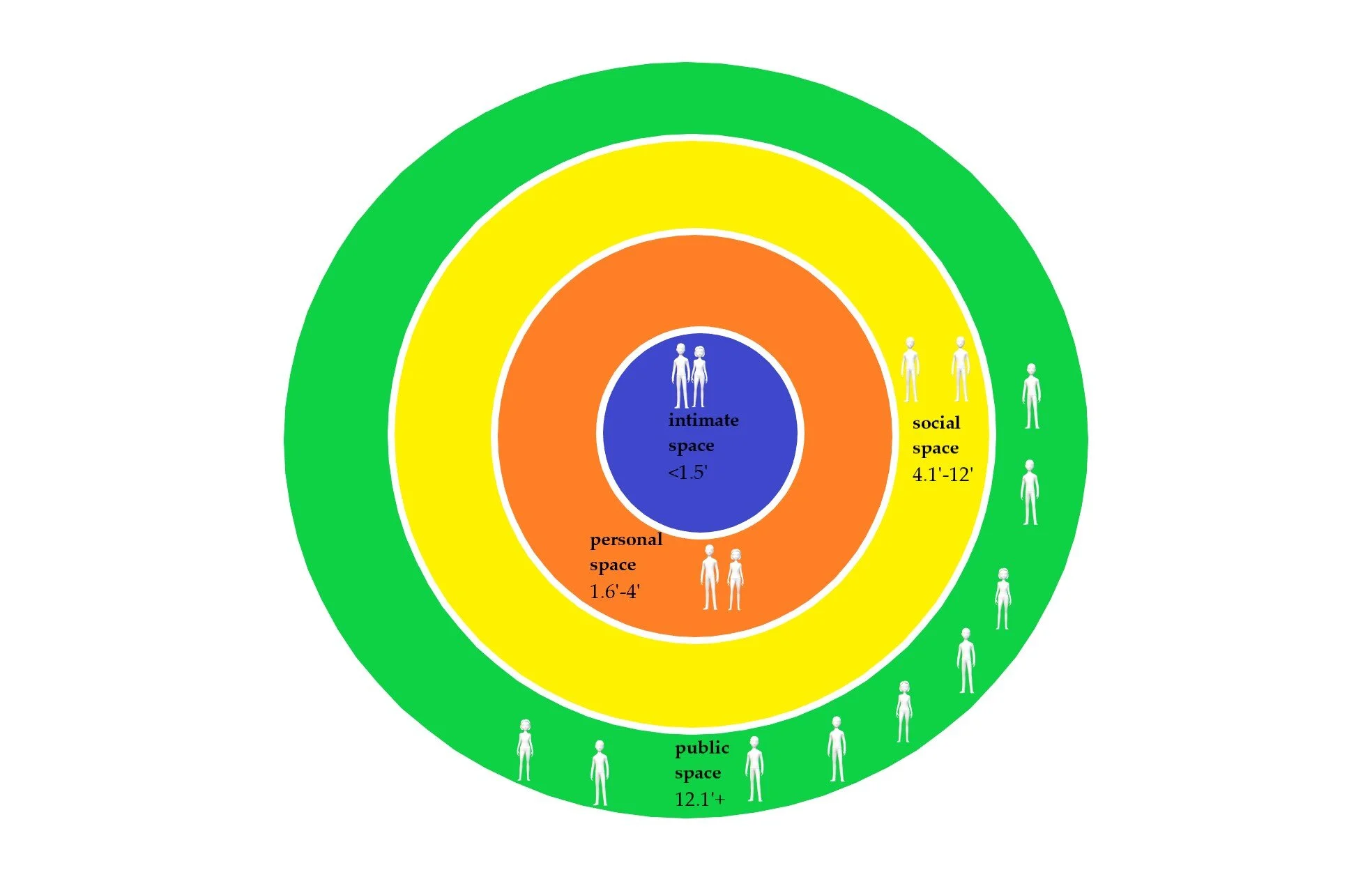
There is this principal that depending how close you are to others the more trust is needed. It is called Proximecs. This principal basically defines why at different proximity with others we need different levels of trust. The closer we are to another person the more trust we must have, or we will become uneasy. There is a reason why stadiums sell out so easily for sporting events, coffee shops have people littered all over working on their Macbooks, and why people will wait for hours on hot summer days in lines for the best roller coasters striking up conversations with strangers.
The distances breakdown like this:
Public Distance – 12.1’ +
Social Distance – 4.1’- 12’
Personal Distance 1.6’- 4’
Intimate Distance < 1.5’
The most fun and engaging interactions in our lives occur in social and personal distances. The closer we get to others the more powerful the emotion can be shared during thrilling experiences. Ever had an experience at a sporting event where you were slapping hands with some unknown individuals celebrating a score seemingly without thought about if they washed their hands or not? We are wired to have more emotional significance to others we are in close proximity to. Our bodies actually crave this connection to be understood and these interactions are a way to make that connection.
When working with customers it is extremely hard for us to get in front of them with emails, literature, billboards, etc. We need to get in touch with them on a closer level. This means sales professionals need to be in front of customers often. This is also why deeper relationships are made outside of the office i.e. golfing, sporting events, hands on training, etc. There isn’t a barrier between us and the customer like that of a desk, or board room table. Their guard is lowered and in most cases are more willing to share more details that will enable you to help serve them.
Now that we are in close proximities with the customer and trust is psychologically given as we are in close proximity, deeper discussions can happen and relationships formed. Have you ever had a customer out at lunch share some deep dark secret about the organization just to vent?
Work at meeting with the customer if you want to gain more business with your customers.
Warning!
Keep in mind that the intimate level should be those you should be giving intimate affection to like that of family and spouses. Doing that with customers is just awkward outside of a casual hug when a bond has been made to wish each other well before, or after a meeting.
P.S. the picture associated with this blog will help you understand visually the distances a little better.
Have a great week!
Sincerely,
Kevin Sidebottom