
Sales Automation Without Losing the Human Touch
Artificial intelligence, automation platforms, chatbots, and advanced CRM systems are transforming the way organizations sell. Tasks that once required hours of manual effort can now be completed in minutes. Customer inquiries can be answered instantly. Follow-up sequences can be automated. Forecasts can be generated using vast amounts of historical data. For many organizations, automation has become an essential tool for increasing efficiency and scaling operations.
However, as businesses embrace automation, many leaders face an important question: How do we leverage technology without losing the human connection that drives trust and long-term customer relationships?
The answer begins by recognizing that automation is a tool, not a replacement for people. Many organizations turn to automation because they simply do not have enough resources to handle every task manually. Automation helps bridge gaps, eliminate repetitive work, and create consistency in customer interactions. Chatbots can answer common questions. Automated email sequences can ensure timely follow-up. CRM systems can help sales teams stay organized and responsive. These technologies allow organizations to serve more customers without significantly increasing headcount.
Yet automation has limitations. While technology can provide information, it cannot fully replace empathy, intuition, or relationship-building. Customers may appreciate quick answers from a chatbot, but when facing a significant decision, a complex challenge, or an important investment, they often want to speak with a real person. They want someone who understands their situation, listens to their concerns, and helps them navigate uncertainty. Relationships are built through human interaction, not automated workflows.
This is why organizations must continue investing in people, even as they invest in technology. Sales professionals remain critical because customers buy from people they know, like, and trust. A phone conversation can uncover emotions, concerns, and opportunities that automation simply cannot detect. A thoughtful discussion can strengthen a relationship in ways that no automated email sequence ever will. Technology may open the door, but people are often what move the relationship forward.
The most successful organizations do not view automation and human interaction as competing priorities. Instead, they focus on finding the right balance. Automation should handle tasks that are repetitive, administrative, or time-consuming. People should focus on activities that require judgment, creativity, influence, and relationship-building. When each is used for its greatest strength, organizations create a more efficient and more effective sales process.
Perhaps the greatest risk organizations face is allowing efficiency to become more important than connection. Customers want convenience, but they also want confidence. They want fast answers, but they also want trusted advisors. They want technology to make interactions easier, not colder. The organizations that win will be the ones that use automation to enhance the customer experience while preserving the personal relationships that create loyalty and trust.
The future of sales is not automation alone, nor is it people alone. It is the thoughtful integration of both. Automation can help organizations scale, increase responsiveness, and improve forecasting. People create trust, strengthen relationships, and inspire confidence. When businesses find the right mix, they gain the efficiency of technology without sacrificing the human touch that ultimately drives sales success.
Because at the end of the day, customers may appreciate great technology, but they remember great relationships.
Master the Art of Influence: Build Trust, Drive Sales, and Lead Effectively
Are you ready to become the magnetic force that attracts top performers and your best customers?
I’m Kevin Sidebottom—keynote speaker, sales trainer, and author—and I help organizations unlock the power of influence to achieve breakthrough results.
In this blog, I reveal why influence is the ultimate currency in business and leadership—and how you can use it to:✅ Motivate customers to stay loyal and buy again✅ Build trust and engagement with your team✅ Transform your leadership approach to inspire stronger performance
With decades of experience studying why people buy and how leaders earn loyalty, I equip sales professionals and executives to deliver lasting value, strengthen customer relationships, and drive higher revenue.
👉 Featured Resources to Grow Your Influence:
· Email: kevin@kevinsidebottom.com
· The Sales Process Uncovered Membership
· The Sales Process Uncovered (Book on Amazon)
If you’re serious about elevating your sales process, leadership impact, and team performance, this blog will show you the path.

Pipeline Forecasting Made Simple for Leaders
Forecasting is one of the most important responsibilities leaders face, yet it is also one of the most difficult. Just ask a weather forecaster. Despite having sophisticated technology, years of historical data, and advanced models, weather forecasts are still not perfect. Business forecasting faces many of the same challenges. Markets shift, customer priorities change, economic conditions fluctuate, and unexpected events can alter buying behavior almost overnight. The goal of forecasting is not to predict the future with perfect accuracy. The goal is to gather the best information possible so leaders can make smarter decisions about where the business is headed.
One of the most overlooked sources of forecasting intelligence is the customer. Organizations that maintain strong customer relationships gain access to valuable information long before it appears in reports or industry data. Customers often see changes developing within their businesses before suppliers do. They know when projects are being delayed, budgets are tightening, hiring is accelerating, or new initiatives are being planned. Leaders who regularly engage customers in meaningful conversations can uncover trends months before they show up in sales numbers. The stronger the relationship, the more likely customers are to share what they are seeing and experiencing in the marketplace.
Another valuable forecasting strategy is identifying the "mechanics" of the business, the people who are closest to the day-to-day realities of customer behavior. In many industries, technicians, installers, mechanics, service representatives, and frontline employees often know what customers are planning to purchase before management does. They hear concerns, answer questions, and observe buying patterns firsthand. These employees frequently possess insights that never make it into a CRM system or forecast report. Leaders who take time to listen to the people closest to customers often discover opportunities and challenges earlier than competitors.
Leaders should also pay attention to indicators that may seem unrelated to sales at first glance. Warranty claims, service requests, maintenance schedules, replacement cycles, and product performance data can reveal emerging trends in customer demand. Rising warranty activity may signal future replacement opportunities. Increased service requests could indicate a growing need for upgrades or additional support. Looking beyond traditional sales metrics allows leaders to identify patterns that help improve forecasting accuracy and uncover revenue opportunities that others may miss.
One of the biggest forecasting mistakes organizations make is relying too heavily on historical data alone. While last year's numbers provide useful context, they should never become the primary forecasting strategy. Markets evolve too quickly for leaders to assume that next year will look like last year. Historical trends are valuable, but they must be balanced with current customer conversations, market conditions, competitive activity, and emerging industry trends. The future is rarely a simple extension of the past.
Perhaps the most critical ingredient in effective forecasting is communication. Forecasting cannot live solely within the executive team or finance department. Sales teams are hearing customer concerns. Customer service teams are identifying emerging issues. Operations teams are seeing shifts in demand. Customers themselves are sharing information about future plans and priorities. When organizations create strong communication channels across departments, insights begin to connect and patterns become easier to identify. The result is a more complete and accurate picture of where the business is headed.
The leaders who forecast most effectively are not necessarily the ones with the most sophisticated spreadsheets. They are the ones who stay connected to their teams, their customers, and the market itself. They gather information from multiple sources, remain curious about changing conditions, and recognize that forecasting is an ongoing conversation rather than a once-a-quarter exercise.
Like weather forecasting, business forecasting will never be perfect. But leaders who consistently listen, communicate, and seek information from the people closest to the action dramatically improve their ability to see what is coming next. And when leaders can see around corners, they make better decisions, create more stability, and position their organizations for sustainable growth.
Master the Art of Influence: Build Trust, Drive Sales, and Lead Effectively
Are you ready to become the magnetic force that attracts top performers and your best customers?
I’m Kevin Sidebottom—keynote speaker, sales trainer, and author—and I help organizations unlock the power of influence to achieve breakthrough results.
In this blog, I reveal why influence is the ultimate currency in business and leadership—and how you can use it to:✅ Motivate customers to stay loyal and buy again✅ Build trust and engagement with your team✅ Transform your leadership approach to inspire stronger performance
With decades of experience studying why people buy and how leaders earn loyalty, I equip sales professionals and executives to deliver lasting value, strengthen customer relationships, and drive higher revenue.
👉 Featured Resources to Grow Your Influence:
· Email: kevin@kevinsidebottom.com
· The Sales Process Uncovered Membership
· The Sales Process Uncovered (Book on Amazon)
If you’re serious about elevating your sales process, leadership impact, and team performance, this blog will show you the path.

Building a Repeatable Sales Engine
Scaling Growth Without Constantly Chasing New Customers
Many organizations believe scaling sales means finding more prospects, generating more leads, and filling the top of the funnel with as many opportunities as possible. While new customers are certainly important, sustainable growth is rarely achieved by simply doing more of the same. The organizations that scale most effectively build a repeatable sales engine, one that consistently creates exceptional customer experiences, maximizes customer value, and turns satisfied customers into advocates who help fuel future growth.
The foundation of every repeatable sales engine is the right sales process. Too many sales teams rely on individual talent rather than a proven system. When success depends on a few top performers, growth becomes difficult to replicate. A well-designed sales process creates consistency, allowing every salesperson to understand how to uncover customer needs, identify challenges, communicate value, and guide prospects toward the right decision that they need. More importantly, a strong process focuses on the customer's buying journey rather than the seller's agenda. When organizations build a repeatable process that can be taught, measured, and improved, sales become more predictable and scalable.
However, a sales engine extends far beyond the front line sales team. One of the most overlooked growth opportunities exists within customer service and support functions. Many organizations view customer service as a cost center, when in reality it can become one of the most powerful profit centers in the business. The experience customers have after the sale often determines whether they buy again, expand their relationship, or recommend the company to others. Customer service representatives interact with customers regularly, giving them unique visibility into changing needs, emerging challenges, and opportunities for additional value. When properly trained, support teams can strengthen customer loyalty, identify upsell opportunities, and reinforce the trust that drives long-term growth.
Another critical shift for organizations looking to scale is moving away from the mindset of constantly pursuing more customers and instead focusing on creating greater value with existing customers. Every customer comes with an acquisition cost. Marketing expenses, sales efforts, onboarding, implementation, support, and ongoing relationship management all require significant investments of time and resources. Because acquiring customers is expensive, the most profitable organizations often focus on serving current customers exceptionally well and finding additional ways to help them achieve their goals. Expanding relationships with existing customers is frequently more efficient and profitable than continually searching for new ones. The deeper the relationship becomes, the more value both the customer and the organization receive.
This approach requires patience. Building trust, delivering results, and earning the right to expand relationships does not happen overnight. However, organizations that commit to this strategy often discover that their customer base becomes one of their greatest competitive advantages. Customers who consistently experience value become more loyal, purchase additional products and services, and remain with the organization longer. Over time, the lifetime value of each customer increases while acquisition costs become a smaller percentage of overall revenue.
Perhaps the greatest benefit of a repeatable sales engine is that it creates momentum through referrals. Customers who trust your organization and achieve meaningful results naturally share those experiences with colleagues, friends, and peers. They become advocates who validate your credibility before you ever enter a sales conversation. This transferred trust dramatically shortens sales cycles and reduces resistance because prospects arrive with confidence already established. In many cases, the most qualified opportunities come not from marketing campaigns or cold outreach but from customers who are eager to tell others about the positive impact your organization has made.
The organizations that scale most effectively understand that growth is not simply about generating more leads. It is about building a system that consistently creates value, develops trust, strengthens relationships, and turns customers into advocates. The right sales process, a well-trained support team, a commitment to maximizing customer value, and a focus on earning referrals create a sales engine that becomes stronger over time. Instead of constantly chasing growth, these organizations build a business where growth begins chasing them.
Master the Art of Influence: Build Trust, Drive Sales, and Lead Effectively
Are you ready to become the magnetic force that attracts top performers and your best customers?
I’m Kevin Sidebottom—keynote speaker, sales trainer, and author—and I help organizations unlock the power of influence to achieve breakthrough results.
In this blog, I reveal why influence is the ultimate currency in business and leadership—and how you can use it to:✅ Motivate customers to stay loyal and buy again✅ Build trust and engagement with your team✅ Transform your leadership approach to inspire stronger performance
With decades of experience studying why people buy and how leaders earn loyalty, I equip sales professionals and executives to deliver lasting value, strengthen customer relationships, and drive higher revenue.
👉 Featured Resources to Grow Your Influence:
· Email: kevin@kevinsidebottom.com
· The Sales Process Uncovered Membership
· The Sales Process Uncovered (Book on Amazon)
If you’re serious about elevating your sales process, leadership impact, and team performance, this blog will show you the path.

The Customer Hero Method
Transforming Sales From Transactional to Transformational
Most sales conversations still sound the same: here’s what we offer, here’s what it costs, here’s why we’re better. It’s a product-first approach that treats selling like a transaction to be completed rather than a transformation to be created. The problem is, customers rarely buy because they are fascinated by what a company sells. They buy because they are trying to solve something that is disrupting their world, something that has consequences if it is not addressed.
The shift begins when organizations stop focusing on selling products and services and start focusing on outcomes tied directly to the customer’s situation, issues, and ramifications. Customers don’t wake up wanting software, consulting, equipment, or training. They wake up dealing with inefficiency, missed revenue, operational stress, declining performance, or uncertainty about what comes next.
When sales conversations are framed around those realities, the issues they are facing and the ripple effects those issues are creating everything changes. The product becomes secondary. The outcome becomes the point. Instead of pitching features, you begin clarifying consequences. Instead of listing capabilities, you start connecting dots between their current problem and their future success. That is where relevance lives, and relevance is what earns attention.
Once that shift happens, something deeper emerges… Customers don’t just want a solution, they want to be the hero of their own story. No one wants to feel like they were “sold to.” They want to feel like they made a smart, confident decision that improved their situation and elevated their results. In that story, not you nor your product or service is not the hero. The customer is.
Your role is the guide, the one who helps them see clearly, make sense of complexity, and move forward with confidence. When customers feel like they are in control of the decision and positioned as the central character overcoming their challenge, they engage differently. They listen more closely. They decide faster. And they trust deeper because they are not being pushed into a purchase, they are being supported in a win.
And when that experience is done well, something powerful happens beyond the sale itself. Customers begin referring you not because you asked for it, but because they now see you as part of their success story. They don’t describe you as a vendor or provider, they describe you as the reason something improved, stabilized, or accelerated in their world. That emotional connection turns into advocacy. It turns into introductions. It turns into opportunities that were never in your pipeline, but suddenly appear because someone else told the story on your behalf. This is where transactional selling ends and transformational growth begins. Not because you sold harder, but because you helped the customer become the hero and people always share their wins!
Master the Art of Influence: Build Trust, Drive Sales, and Lead Effectively
Are you ready to become the magnetic force that attracts top performers and your best customers?
I’m Kevin Sidebottom—keynote speaker, sales trainer, and author—and I help organizations unlock the power of influence to achieve breakthrough results.
In this blog, I reveal why influence is the ultimate currency in business and leadership—and how you can use it to:✅ Motivate customers to stay loyal and buy again✅ Build trust and engagement with your team✅ Transform your leadership approach to inspire stronger performance
With decades of experience studying why people buy and how leaders earn loyalty, I equip sales professionals and executives to deliver lasting value, strengthen customer relationships, and drive higher revenue.
👉 Featured Resources to Grow Your Influence:
· Email: kevin@kevinsidebottom.com
· The Sales Process Uncovered Membership
· The Sales Process Uncovered (Book on Amazon)
If you’re serious about elevating your sales process, leadership impact, and team performance, this blog will show you the path.

Growth vs. Scarcity Mindset
Transform Your Sales Game
Every sales professional operates from one of two places: growth or scarcity. One expands opportunity, while the other limits opportunity. The mindset you choose directly impacts how you sell, how you lead, and ultimately, how you perform.
A scarcity mindset shows up subtly. It sounds like, “I need to win this deal at all costs,” or “There’s not enough business to go around.” It creates pressure in conversations, shortens thinking, and pushes salespeople toward decisions rooted in fear. When scarcity takes over, reps hold tightly to every opportunity, hesitate to collaborate, and often chase deals that aren’t the right fit, because losing feels like falling behind.
The reality is, no individual or organization can handle 100% of the business available in the market. Trying to do so isn’t just unrealistic, it’s counterproductive. The strongest sales professionals understand that success isn’t about capturing everything. It’s about focusing on the right opportunities and creating more value within those opportunities.
That’s where a growth mindset changes the game.
Instead of asking, “How do I win this deal?” growth-minded salespeople ask, “How do we make the pie bigger?” This is where collaboration, creativity, and long-term thinking come into play. Organizations like the National Speakers Association often emphasize this concept of making the pie bigger. There is more opportunity available when professionals focus on expanding value rather than competing over limited slices.
A growth mindset opens the door to better partnerships, stronger relationships, and more strategic thinking. Sales professionals begin to look for ways to create opportunities, not just close them. They become more selective, more confident, and more focused on long-term wins instead of short-term pressure.
Scarcity, on the other hand, keeps people stuck. It creates hesitation, fear of loss, and a tendency to operate defensively. When salespeople believe opportunity is limited, they often underperform, not because they lack skill, but because their mindset restricts how they think and act.
There’s also a powerful lesson in what can be learned from each experience. Growth-minded sales professionals don’t just evaluate wins, they study losses. Instead of seeing a lost deal as failure, they ask, “What can I learn from this?” That question turns every outcome into an opportunity for improvement. Over time, that learning compounds into better conversations, stronger positioning, and more consistent results.
A growth mindset also changes how salespeople show up with customers. Instead of trying to force a fit, they focus on creating the right fit. They’re willing to walk away from opportunities that don’t align, knowing that doing so creates space for better ones. That confidence is felt by the customer and it builds a great level of trust. I have had customers call me up after turning down a deal, offering someone else’s solution asking me to be their guide in other areas. You can guess how that worked out for me on future opportunities.
Transforming your sales game doesn’t require a new script or a new pitch. It requires a shift in how you see opportunity.
You don’t need all the business., you need the right business and the mindset to grow it.
Because when you stop operating from scarcity and start thinking in terms of growth, you don’t just compete better. You create more opportunity, for yourself, your team, and your customers.
Have a great week!
Master the Art of Influence: Build Trust, Drive Sales, and Lead Effectively
Are you ready to become the magnetic force that attracts top performers and your best customers?
I’m Kevin Sidebottom—keynote speaker, sales trainer, and author—and I help organizations unlock the power of influence to achieve breakthrough results.
In this blog, I reveal why influence is the ultimate currency in business and leadership—and how you can use it to:✅ Motivate customers to stay loyal and buy again✅ Build trust and engagement with your team✅ Transform your leadership approach to inspire stronger performance
With decades of experience studying why people buy and how leaders earn loyalty, I equip sales professionals and executives to deliver lasting value, strengthen customer relationships, and drive higher revenue.
👉 Featured Resources to Grow Your Influence:
· Email: kevin@kevinsidebottom.com
· The Sales Process Uncovered Membership
· The Sales Process Uncovered (Book on Amazon)
If you’re serious about elevating your sales process, leadership impact, and team performance, this blog will show you the path.

Storytelling in Sales
Influence Customers Without Selling
The best salespeople don’t sound like salespeople. They don’t rely on pressure, scripts, or perfectly timed closes. Instead, they connect. And one of the most powerful ways to connect is through storytelling.
Storytelling allows sales professionals to influence customers without feeling like they’re being sold. It shifts the conversation from pushing a product / service to sharing experiences. These experiences allow the sales professional to share how they were able to avoid pitfalls for other customers as well as some challenges. When done well, it creates clarity, trust, and momentum in a way that facts alone rarely can.
People love stories because that’s how we’ve always learned. Long before presentations, proposals, and product demos, knowledge was passed down through stories. Stories made information memorable even before words were written down. Stories helped people understand complex ideas and apply them in real life. That hasn’t changed. Today’s buyers may have more data at their fingertips, but they still process and remember information through narrative.
When you present only features and benefits, customers have to do the heavy lifting of figuring out what it means for them. But when you tell a story about a customer who faced a similar challenge, made a decision, and achieved a result, well now you do that work for this customer. You give them a clear picture of what success can look like and how you can be the guide for them they have been looking for.
Stories also work because people can relate to them. Buyers are constantly asking themselves, “Will this work for me?” A well-told story answers that question without forcing it. When a prospect hears about someone in a similar situation navigating the same challenges, they begin to see themselves in that story. The conversation becomes less about whether the product is good and more about whether they want the same outcome.
This is where storytelling moves from being interesting to being influential. Instead of trying to convince someone, you help them connect the dots on their own. And when people arrive at a conclusion themselves, they’re far more committed to owning this solution you are providing.
At its core, effective storytelling in sales taps into something even deeper, people want to be the hero of their own story. They don’t want to feel like they’re being sold to; they want to feel like they’re making a smart decision that moves them forward. They want to solve a problem, achieve a goal, or create a better outcome for themselves and their organization.
Your role in that process is not to be the hero. It’s to be the guide.
The guide understands the challenge, offers a clear path forward, and helps the hero succeed. When sales professionals embrace this mindset, their conversations change. They ask better questions, listen more closely, and share stories that highlight transformation—not just information.
Instead of saying, “Here’s what our product does,” they say, “Let me share how someone in a similar situation approached this and what happened next.”
That shift removes pressure and builds trust. It allows customers to see the journey, not just the destination, or the issue they are facing.
Storytelling in sales isn’t about being dramatic or overly polished. It’s about being relevant, real, and focused on the customer’s success. When you use stories to illustrate challenges, decisions, and outcomes, you make it easier for buyers to understand, relate, and act.
Because in the end, people don’t remember features, benefits, or pitches, they remember how they feel in their story and how they can be the HERO.
Have a great week!
Master the Art of Influence: Build Trust, Drive Sales, and Lead Effectively
Are you ready to become the magnetic force that attracts top performers and your best customers?
I’m Kevin Sidebottom—keynote speaker, sales trainer, and author—and I help organizations unlock the power of influence to achieve breakthrough results.
In this blog, I reveal why influence is the ultimate currency in business and leadership—and how you can use it to:✅ Motivate customers to stay loyal and buy again✅ Build trust and engagement with your team✅ Transform your leadership approach to inspire stronger performance
With decades of experience studying why people buy and how leaders earn loyalty, I equip sales professionals and executives to deliver lasting value, strengthen customer relationships, and drive higher revenue.
👉 Featured Resources to Grow Your Influence:
· Email: kevin@kevinsidebottom.com
· The Sales Process Uncovered Membership
· The Sales Process Uncovered (Book on Amazon)
If you’re serious about elevating your sales process, leadership impact, and team performance, this blog will show you the path.

Stop Selling Products: Help Your Customer Become the Hero
Many sales professionals are taught to focus on their product, its features, benefits, and differentiators. They memorize specifications, compare competitors, and try to convince the buyer their solution is the best option. But the highest-performing salespeople eventually discover a powerful shift: great sales success doesn’t come from making your product the hero. It comes from making your customer the hero.
When a salesperson positions themselves as the guide rather than the star of the conversation, everything changes. Instead of trying to prove how great the product is, the focus moves to helping the customer achieve a better outcome. The conversation becomes less about what you sell and more about what the customer becomes after using it.
This mindset works because it aligns with how people naturally process information and make decisions. Humans think in stories. Buyers aren’t just evaluating a tool, they’re imagining a future where their problems are solved, their goals are achieved, and their reputation improves. In that story, they are the hero, not the vendor. Effective sales professionals position themselves as the guide who helps that hero succeed.
Research strongly supports this idea. Studies on storytelling in marketing show that stories are up to 22 times more memorable than facts alone, which means buyers are far more likely to remember a narrative about success than a list of product specifications.
In fact, 92% of consumers say they prefer messaging that feels like a story rather than a traditional advertisement, and 68% say a brand’s story influences their purchasing decisions.
When sales conversations focus on transformation rather than technical details, buyers connect emotionally with the outcome.
The psychology behind this is powerful. Research shows that about 95% of purchasing decisions are driven by subconscious emotional processes, even though buyers often justify them with logic afterward. When a salesperson helps a customer envision a better future, more revenue, smoother operations, happier employees, or greater personal success, the decision becomes easier.
There’s another reason this mindset works: trust. When a salesperson spends the entire conversation promoting their product, it can feel self-serving. But when the focus shifts to the customer’s journey and success, the salesperson becomes a partner rather than a promoter. Buyers sense the difference.
Companies that align their messaging around customer transformation often see measurable results. Businesses that emphasize story-driven communication can experience higher engagement and conversion rates, sometimes increasing conversions by almost 30% .
The takeaway for sales professionals is clear. Your role is not to be the hero of the sale. Your role is to help the customer become the hero of their own story.
That means asking better questions.
Understanding the real problem.
Helping the buyer see the future they want to create.
Instead of saying, “Here’s what our product does,” the conversation becomes, “Here’s what success could look like for you.”
When salespeople adopt this mindset, something powerful happens. Conversations become more collaborative. Customers feel understood instead of pressured. And the product becomes what it should have been all along, a tool that helps the the customer win.
The best sales professionals don’t sell products. They help customers achieve victories.
Master the Art of Influence: Build Trust, Drive Sales, and Lead Effectively
Are you ready to become the magnetic force that attracts top performers and your best customers?
I’m Kevin Sidebottom—keynote speaker, sales trainer, and author—and I help organizations unlock the power of influence to achieve breakthrough results.
In this blog, I reveal why influence is the ultimate currency in business and leadership—and how you can use it to:✅ Motivate customers to stay loyal and buy again✅ Build trust and engagement with your team✅ Transform your leadership approach to inspire stronger performance
With decades of experience studying why people buy and how leaders earn loyalty, I equip sales professionals and executives to deliver lasting value, strengthen customer relationships, and drive higher revenue.
👉 Featured Resources to Grow Your Influence:
· Email: kevin@kevinsidebottom.com
· The Sales Process Uncovered Membership
· The Sales Process Uncovered (Book on Amazon)
If you’re serious about elevating your sales process, leadership impact, and team performance, this blog will show you the path.

The 5 Buying Decisions Customers Make (And How to Guide Them)
Every customer makes the same five decisions before they ever say yes to buying a product or service. Unfortunately, most salespeople only focus on one or two of these decisions which is exactly why deals stall, objections rise, and opportunities slip away. They also only focus on the ones that are comfortable, product and price. Far too often they also jump into these two decisions before the conversation has had a chance to start.
Let’s discuss the five buying decisions that we need to work through with the customer if we are going to make the sale consistently.
The Salesperson
Before the customer evaluates our product or service we have to offer, they evaluate us. The customer is trying to validate if we are someone they can trust, or if we are trying to just push them into something that won’t help them resulting in another round of trying to figure out how to move forward. If they don’t trust us, then the some questions they soon have are, what is the price? How can I get out of this relationship? Where is the escape hatch?The Organization
Especially now more than ever is that customers actually want to know what the organization is doing for society. Can they trust the leadership of the organization to support customers at an ethical manner? Far too often we see headlines with leadership teams, CEO’s, coaches, etc handling their organizations in a poor manner. Gen Z and Millenials really are trying to make an impact in the world and they want to partner with organizations that will either give back to support communities or provide resources for them to support communities.
The organization is an important decision on who customers will partner with.
The Product or Solution
“Is this the right solution to solve my problem?” That is a question that I often hear from customers and most sales people can’t answer it. The sales person will answer with well we have this feature and this benefit, how does that sound. The customer is then thinking how is this feature and benefit going to to solve this problem? They may not say it out loud, but this is what they are thinking. But….When the solution is positioned as the natural answer, the buyer feels momentum , not pressure. This means that the sales person needs to provide the solution, not features and benefits.The Price
The customer after making the decision to keep moving forward with the salesperson wants to know if the value matches the perceived investment? Is this solution to my problem matching the value that I have placed on my problem? Maybe it’s time, maybe is monetary, maybe its health, but maybe it is stress level? They are hoping the salesperson is going to help them with this decision.
Unfortunately, the sales person presents the price and then the wheels come off of the presentation…. The sales person begins get nervous and devalues the solution which essentially causes the customer to not see the true value. To present the value, the sales person needs to know and feel the value of their proposal and be confident.
This is a make or brake point of the process.
Time to Buy
So now we have made it to the final buying decision. If we have performed well in the process it is time for the customer to accept and sign the agreement to schedule the delivery of the solution.Sales people have provided what they believe to be the value and this is at some times where the customer says something along the lines of, “great I will keep this in mind for the future.” Leaving the sales person shocked at how this could have happened. It's unfortunately because this customer was not validated early on which is a huge miss. If done correctly the customer will sign be thankful and ready to move forward which is the ultimate goal to move forward with the customer to find other opportunities with this relationship.
Master the Art of Influence: Build Trust, Drive Sales, and Lead Effectively
Are you ready to become the magnetic force that attracts top performers and your best customers?
I’m Kevin Sidebottom—keynote speaker, sales trainer, and author—and I help organizations unlock the power of influence to achieve breakthrough results.
In this blog, I reveal why influence is the ultimate currency in business and leadership—and how you can use it to:
✅ Motivate customers to stay loyal and buy again
✅ Build trust and engagement with your team
✅ Transform your leadership approach to inspire stronger performance
With decades of experience studying why people buy and how leaders earn loyalty, I equip sales professionals and executives to deliver lasting value, strengthen customer relationships, and drive higher revenue.
👉 Featured Resources to Grow Your Influence:
· Email: kevin@kevinsidebottom.com
· The Sales Process Uncovered Membership
· The Sales Process Uncovered (Book on Amazon)
If you’re serious about elevating your sales process, leadership impact, and team performance, this blog will show you the path.

How to Create a Customer-Centric Sales Experience
The biggest mistake sales teams make today is building their process around what they want to say instead of what the customer needs to understand. Features, benefits, demos, pitches, none of it matters if it isn’t anchored in the customer’s world. A customer-centric sales experience isn’t a tactic. It’s a strategic shift from selling to guiding, from presenting to understanding, from pressure to clarity.
Here’s how you create an experience customers actually want to be part of.
Start With Their Reality, Not Your Story
Most salespeople open with who they are, what they do, and why it matters. That’s backwards.
Customer-centric selling starts with different focus points.
Their pressures
Their goals
Their friction points
Their internal conversations
Their decision-making process
When a buyer feels understood, they’re instantly more open to being guided. Understanding creates influence. Pitchingcreates resistance.
Diagnose Before You Prescribe the Solution
Ask sharp, insight-based questions that help the buyer see their reality more clearly. Some examples of questions are below:
· “What’s the real cost of this problem?”
· “What’s slowing down your progress?”
· “What would success look like in measurable terms?”
A customer-centric sales experience makes the buyer feel smarter, not sold to.
Connect Solutions to Outcomes, Not Features
Buyers don’t buy tools, they buy transformation. Buyers care less about what your product does and more about what it improves. This means simply saying the solutions will help them be successful to here is how you see things change.
Shift your language from:
· “Here’s what this feature does…”
to
· “Here’s the problem this eliminates…”
· “Here’s the time this returns…”
· “Here’s the frustration this removes…”
· “Here’s the revenue this unlocks…”
Customer-centric selling ties every part of your solution to what the customer values most.
Build Confidence, Not Pressure
A customer-centric sales experience helps the buyer feel:
· Informed
· Supported
· Safe
· Capable of making a smart decision
· Enabled to move forward
Your role is to help them evaluate, compare, and decide without fear that you’re pushing them toward a bad choice. When buyers trust the process, they trust the decision.
Guide Them Through the Decisions They’re Already Making
Every buyer, consciously or not, is evaluating:
1. The salesperson — Do I trust you?
2. The organization — Can your company support me?
3. The product — Will this actually solve my problem?
4. The price — Is the value worth the cost?
5. The timing — Why should I act now?
A customer-centric process doesn’t fight these decisions, it supports them.
It anticipates concerns.
It removes friction.
It helps the customer feel confident at every stage.
This is how buyers move forward naturally, without being pushed.
Make the Next Step Frictionless
The moment a buyer feels confused or overwhelmed, momentum dies.
Your job as a sales professional is to make the next step:
· Clear
· Simple
· Low-risk
· Aligned with their goals
A customer-centric sales experience reduces decision fatigue and keeps progress effortless.
A customer-centric sales experience transforms selling from a battle to a partnership.
When you:
· Start in their world
· Diagnose deeply
· Align solutions to outcomes
· Build confidence
· Guide them through their real buying decisions
· And make next steps simple
…you don’t have to “sell.” Customers instead, pull themselves forward.
The future of sales belongs to the people who create experiences, not just pitches.
Master the Art of Influence: Build Trust, Drive Sales, and Lead Effectively
Are you ready to become the magnetic force that attracts top performers and your best customers?
I’m Kevin Sidebottom—keynote speaker, sales trainer, and author—and I help organizations unlock the power of influence to achieve breakthrough results.
In this blog, I reveal why influence is the ultimate currency in business and leadership—and how you can use it to:
✅ Motivate customers to stay loyal and buy again
✅ Build trust and engagement with your team
✅ Transform your leadership approach to inspire stronger performance
With decades of experience studying why people buy and how leaders earn loyalty, I equip sales professionals and executives to deliver lasting value, strengthen customer relationships, and drive higher revenue.
👉 Featured Resources to Grow Your Influence:
· Email: kevin@kevinsidebottom.com
· The Sales Process Uncovered Membership
· The Sales Process Uncovered (Book on Amazon)
If you’re serious about elevating your sales process, leadership impact, and team performance, this blog will show you the path.

Influence vs. Persuasion: The Key to Sales Success
Most salespeople spend their careers trying to persuade customers.
But the best sales professionals, the ones who consistently win premium clients, shorten sales cycles, and create long-term relationships don’t rely on persuasion at all. They use something else called influence. And the difference between the two is the difference between chasing business and attracting it.
Persuasion Pushes. Influence Pulls.
Persuasion is about getting someone to agree with you. It’s pressure-based. It’s momentary. It works until the buyer steps away to rethinks everything.
Influence, on the other hand, is about shaping how people see the situation, the solution, and most of all you. Influence is earned, it’s durable, and it continues working even when you’re not in the room.
Persuasion Creates Resistance. Influence Creates Trust.
When buyers feel persuaded, they feel pushed and people instinctively want to push back. They hesitate, they stall, or they go silent trying to avoid the situation and the person.
Persuasion triggers doubt in the customer’s mind: “Is this salesperson trying to win, or trying to help?”
Influence on the other hand removes doubt. It builds trust because it’s grounded in credibility, clarity, and understanding the buyer’s world. Influence allows the customer to see how well the sales person works and sees how it aligns with what others have told the customer about this sales person. That’s right, customer’s talk to each other…
Persuasion Works Short-Term. Influence Works Long-Term.
Persuasion may get you a yes today, but influence gets you the following:
· repeat business
· referrals
· premium pricing
· faster yeses
· deeper relationships
· access to decision-makers
Influence positions you as someone worth listening to, not just someone worth buying from in hopes that this solution will work for the customer. When customers see you as a trusted guide, not a sales rep, they keep coming back. And here is a really big thing, they also bring others with them. That’s right they start selling for us when we use influence.
Persuasion may help you win a moment, but influence enables you win the relationship, the deal, and the future.
If you want sustainable success, more yeses, fewer objections, and customers who follow your lead then build influence. It’s the skill that makes every part of selling easier.
Master the Art of Influence: Build Trust, Drive Sales, and Lead Effectively
Are you ready to become the magnetic force that attracts top performers and your best customers?
I’m Kevin Sidebottom—keynote speaker, sales trainer, and author—and I help organizations unlock the power of influence to achieve breakthrough results.
In this blog, I reveal why influence is the ultimate currency in business and leadership—and how you can use it to:
✅ Motivate customers to stay loyal and buy again
✅ Build trust and engagement with your team
✅ Transform your leadership approach to inspire stronger performance
With decades of experience studying why people buy and how leaders earn loyalty, I equip sales professionals and executives to deliver lasting value, strengthen customer relationships, and drive higher revenue.
👉 Featured Resources to Grow Your Influence:
· Email: kevin@kevinsidebottom.com
· The Sales Process Uncovered Membership
· The Sales Process Uncovered (Book on Amazon)
If you’re serious about elevating your sales process, leadership impact, and team performance, this blog will show you the path.

The Tie Back Formula
Over the past few weeks we have been talking about this mystical formula and how well it works for sales and leadership to gain engagement. Today we learn the process for creating the tie back questions and start adding a tool to our toolbox for better sales and engagement.
Most salespeople know they should sell benefits, not features. But here’s the twist: the best way to highlight benefits isn’t by telling, it’s by asking.
That’s where tie-back questions come in.
A tie-back question connects your product’s features to the customer’s real-world needs. The stronger the question, the clearer the benefit becomes, and the more the customer convinces themselves of your value.
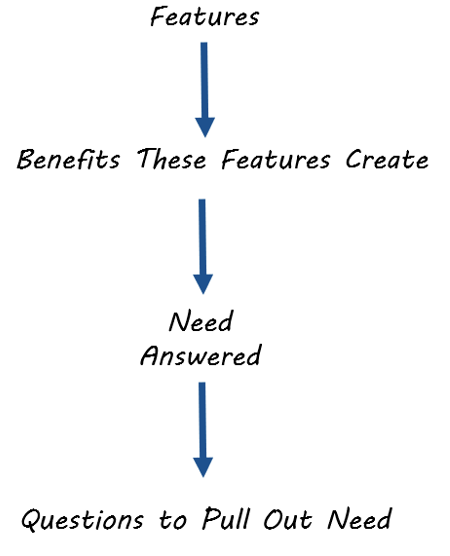
Grab a sheet of paper. Write your product’s features across the top. Under each, list the benefit. Then, under the benefit, list the need it answers.
Example: In my trainings, I use a clicker with a button that blanks out the slide.
· Feature: Slide blanking button
· Benefit: Audience attention shifts back to me
· Need: Refocus the group when making a key point
Once you know the need, craft questions that highlight it.
For the blank-slide feature, I might ask:
· “Would it be valuable if you could instantly refocus your audience during a presentation?”
· “How much more influence would you have if you could pause the slides to drive home a critical point?”
Notice what’s happening: I’m not pitching the button. I’m pulling the customer into imagining how much better their world looks with the benefit.
Below is the complete process of creating the questions that tie back your features and benefits:
Back when I sold stand-on lawnmowers (before they were a thing), I didn’t start with horsepower or specs. Instead, I asked questions like:
· “Have you ever had employees get stuck when a mower tipped near a retention pond?”
· “How do your crews handle steep inclines today safely?”
These questions tied directly to the mower’s feature, standing design with easy step-off, and the benefit: greater safety and maneuverability. Customers quickly connected the dots themselves and could see the advantage that the product was offering them. A safter way operate and have less lawsuits!
Tie-back questions do three things:
1. Expose real needs. You find out if the feature actually matters.
2. Highlight benefits naturally. The customer says “yes” to their own pain points.
3. Build alignment. By the time you present, you’re not pitching, you’re confirming.
Using this process with your products you will be able to make higher levels of engagement in your meetings with customers and gain traction / speed on their decision making. This is the essence of how we can make larger sales with the sales cycle decreasing.
The best part…When the customers start seeing the benefit you bring to them, they can’t help but tell all their collegues in the industry to contact you. Then your prospecting becomes more efficient allowing you to have more freedom and income in your pocket.
Does that sound like a value to you? If so, implement this and see how well it works for you. If you have questions reach out!
Master the Art of Influence: Build Trust, Drive Sales, and Lead Effectively
Are you ready to become the magnetic force that attracts top performers and your best customers?
I’m Kevin Sidebottom—keynote speaker, sales trainer, and author—and I help organizations unlock the power of influence to achieve breakthrough results.
In this blog, I reveal why influence is the ultimate currency in business and leadership—and how you can use it to:
✅ Motivate customers to stay loyal and buy again
✅ Build trust and engagement with your team
✅ Transform your leadership approach to inspire stronger performance
With decades of experience studying why people buy and how leaders earn loyalty, I equip sales professionals and executives to deliver lasting value, strengthen customer relationships, and drive higher revenue.
👉 Featured Resources to Grow Your Influence:
· Email: kevin@kevinsidebottom.com
· The Sales Process Uncovered Membership
· The Sales Process Uncovered (Book on Amazon)
If you’re serious about elevating your sales process, leadership impact, and team performance, this blog will show you the path.