
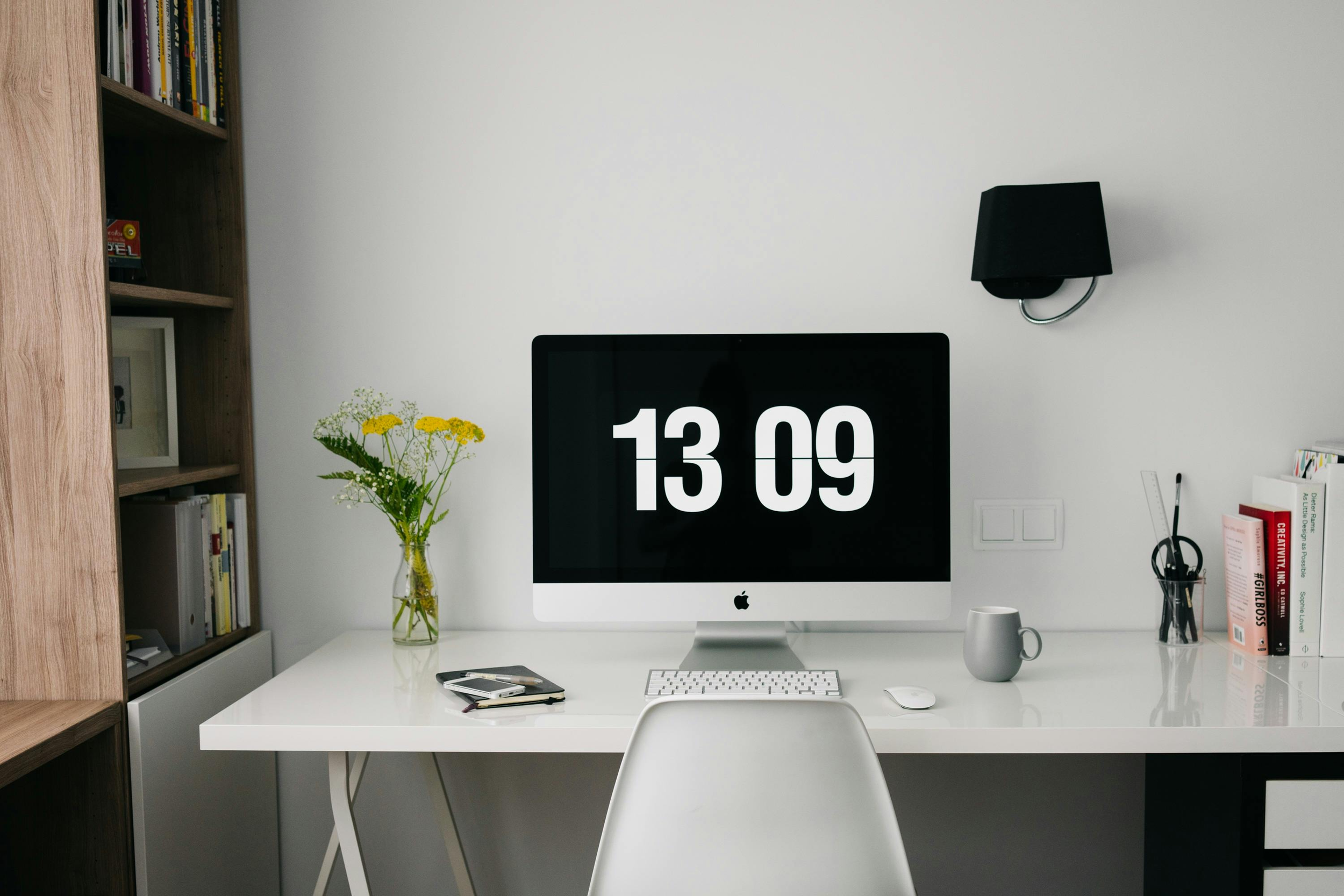
How to Create a Productive and Comfortable Bedroom Office for Entrepreneurs
We have a guest post from the very creative consultant when it comes to creating an efficient work / life spirit. Today Candace Simon is helping us if we are limited on space.
For entrepreneurs working from home, especially solo founders and local business owners, running a business from the same room used for sleep can feel like living at work. The bedroom office challenges are real: focus gets shredded by clutter, calls spill into downtime, and the brain stops knowing when it’s “on” or “off.” A thoughtful home office setup for business owners can support productivity and well-being without taking over the whole room. With a few clear choices, work-life balance in small business can start feeling possible again.
Set Up a Bedroom Office That Protects Your Focus
This process helps you build a comfortable, workable office inside a bedroom without letting work take over your rest space. You’ll end with a clear layout, less visual noise, and a few easy habits that make it easier to start and stop work on purpose.
Pick your “work corner” and define its edges
Start by choosing one consistent spot for work, even if it’s just a desk-width slice of the room. Mark the boundary with a rug, a folding screen, or the desk facing away from the bed so your brain reads it as a separate zone. If you track what you actually use daily, the idea behind smarter planning and optimization becomes doable at home too.Choose ergonomic basics you’ll use every day
Prioritize a supportive chair and a desk height that lets your shoulders relax and your elbows sit comfortably at your sides. If your budget is tight, upgrade in order: chair first, then monitor height (even a stack of books), then a simple footrest. Comfort matters because pain quietly steals attention and makes you quit early.Reset the surface and build a tiny storage system
Clear the desktop completely, then put back only your “daily drivers” (laptop, notebook, one pen cup, one drink). Add one small catch-all tray plus one vertical file holder so papers stop migrating to the bed or nightstand. The goal is a fast end-of-day reset that takes under two minutes.Create a shutdown ritual that closes the workday
Pick a consistent finish move like closing all tabs, writing tomorrow’s top three tasks, and physically putting your laptop in a drawer or bag. Use a visual cue to separate work tasks from personal life, since color coding can help you differentiate categories at a glance. This matters most in a bedroom because the room needs a clear “off switch.”Test for one week, then adjust one thing at a time
Work from your setup for five business days and notice what keeps breaking your flow: chair discomfort, clutter creep, poor cable routing, or no place to set call notes. Change only one variable at a time so you can tell what actually helped. A good bedroom office is built by small corrections, not one perfect shopping trip.
Dial In Light, Camera Backgrounds, and Dual-Purpose Layouts
Once your desk zone is functional and your focus boundaries are in place, a few small upgrades can make your bedroom office feel way more professional, without turning your sleep space into a studio.
Use the window like a free key light: For optimal lighting for a home office, place your desk so the window is in front of you or at a 45° angle, not behind you. This keeps your face evenly lit on calls and reduces the “silhouette effect.” If glare hits your screen, rotate the monitor slightly or add a simple sheer curtain to soften harsh midday sun.
Add one “good enough” lamp and point it the right way: If you work after dark, you don’t need a fancy setup, just one lamp placed slightly above eye level and off to the side of your monitor. Aim it toward your face or a nearby wall so the light bounces softly, instead of shining straight into your eyes. A quick test: open your phone camera, turn your head left/right, and pick the angle that minimizes shadows under your eyes.
Create a 3-step lighting routine for different tasks: Natural and artificial lighting solutions work best when you match them to what you’re doing. Try this simple setup: “focus mode” = bright overhead + desk lamp, “call mode” = lamp angled toward your face + overhead dimmer/off, “wind-down mode” = warm bedside light only. This supports the dedicated work zone idea from your basic setup, your brain starts to associate certain lighting with work vs. sleep.
Build a clean video-call wall in one afternoon: Choose one spot behind your chair that will be your default background for video conference calls. Clear that 3–4 foot area, hang one simple piece of art, and keep the rest plain; busy shelves can look messy fast on camera. If your room layout forces the bed into view, use a folding screen or a curtain on a tension rod to hide it in seconds.
Use “close the loop” storage to stay clutter-free: The fastest way to keep a bedroom office from taking over is to make sure everything has a home you can shut, drawer, bin, or lidded basket. A practical rule is avoiding clutterby planning enough shelving and storage for what you actually use weekly, not what you might use someday. Do a 2-minute reset at the end of each work block: clear the desktop, stack papers into one tray, and put chargers in one container.
Design for “bedroom by night, office by day”: In a multifunctional bedroom office design, you’re looking for pieces that move, fold, or disappear. If you’re tight on space, inspiration like a bed fully folds up shows how transforming furniture can free up a real work surface during the day. If that’s not in your budget, copy the principle with smaller swaps: a wall-mounted drop-leaf desk, a rolling cart that tucks in a closet, or a laptop stand you store in a drawer after hours.
When your lighting is consistent, your background is intentional, and your gear resets quickly, it’s much easier to troubleshoot little annoyances like screen glare, awkward camera angles, and “where did my workspace go?” moments.
Bedroom Office Questions, Answered
Q: What are the best lighting options to reduce eye strain and maintain focus in a bedroom workspace?
A: Use layered lighting: soft ambient light plus a task light aimed at your desk, not your eyes. Place a lamp slightly above eye level and off to the side, then angle it toward a wall for a gentle bounce. If daylight causes glare, add a sheer curtain and lower screen brightness until whites look comfortable.
Q: How can I create a professional-looking background on my bedroom wall for video calls without spending a lot of money?
A: Pick one “camera corner” and keep it intentionally simple: a plain wall, one framed print, and one small plant or lamp. If the bed is visible, hang a tension-rod curtain or use a folding screen you can tuck away after calls. Test it with your phone camera and remove anything that looks visually noisy.
Q: What strategies can help me organize a multifunctional bedroom space to keep work items separate and minimize distractions?
A: Give work a closable home: one drawer, lidded bin, or tote that holds everything you use daily. Keep only today’s tools on the desktop, and do a two-minute “shutdown reset” at the end of each block. A rolling cart can also act like a portable office that disappears when you are done.
Q: How can I set up my bedroom office to support mental well-being and reduce feelings of overwhelm during long workdays?
A: Start with comfort so your brain is not fighting your body: adjust chair height so feet feel grounded, then check seat depth using the space between the back of your knees guideline. Build tiny cues for recovery, like a water bottle within reach and a timer that prompts a 60-second eye break. Keep one calming surface clear, even if it is just a small nightstand.
Q: What are some ways to manage stress or anxiety while working from a bedroom office, possibly with natural supplements that enhance relaxation and focus?
A: Use a quick nervous-system reset you can repeat: inhale for four counts, exhale for six, then stand and stretch your hips and shoulders. If anxiety persists, consider supportive options like magnesium glycinate or L-theanine and check for interactions with a clinician, especially if you take other meds; those exploring premium THCA distillate products can also keep a simple list of anything new they try. If you need extra support, video-delivered CBT can be a practical fit for home-based entrepreneurs.
Bedroom Office Setup Checklist (Do This Today)
This checklist turns a cozy-but-chaotic bedroom corner into a workspace you can actually rely on. Run through it once now, then revisit weekly to keep your setup supportive as your workload shifts.
✔ Define one work zone with a desk and dedicated chair
✔ Adjust chair height so feet stay flat and shoulders relax
✔ Position your screen at eye level and an arm’s length away
✔ Add layered lighting with a soft lamp plus focused task light
✔ Create a clean video-call background in a single “camera corner”
✔ Store work gear in one closable bin, drawer, or rolling cart
✔ Set a two-minute end-of-day reset to clear surfaces
Check off one item today, and your bedroom will feel more restful tonight.
Build a Bedroom Office That Supports Focus and Balance
Running a business from your bedroom can feel like you’re always “on,” even when you’re trying to rest. The way through is a simple, intentional approach: treat your starting bedroom office setup as a designed system, comfort, boundaries, and ease, rather than a pile of gear. When the benefits of home office design stack up, enhanced entrepreneur productivity follows, and improved work-life balance stops feeling like a fantasy because the space cues work time and downtime. A motivating workspace environment makes good habits easier and bad days shorter. Pick one high-impact change from the checklist right now and do it in under 20 minutes. That small shift builds the stability and resilience that keep your health and business moving forward.
Source: https://www.pexels.com/photo/silver-imac-on-desk-265129/
Master the Art of Influence: Build Trust, Drive Sales, and Lead Effectively
Are you ready to become the magnetic force that attracts top performers and your best customers?
I’m Kevin Sidebottom—keynote speaker, sales trainer, and author—and I help organizations unlock the power of influence to achieve breakthrough results.
In this blog, I reveal why influence is the ultimate currency in business and leadership—and how you can use it to:✅ Motivate customers to stay loyal and buy again✅ Build trust and engagement with your team✅ Transform your leadership approach to inspire stronger performance
With decades of experience studying why people buy and how leaders earn loyalty, I equip sales professionals and executives to deliver lasting value, strengthen customer relationships, and drive higher revenue.
👉 Featured Resources to Grow Your Influence:
· Email: kevin@kevinsidebottom.com
· The Sales Process Uncovered Membership
· The Sales Process Uncovered (Book on Amazon)
If you’re serious about elevating your sales process, leadership impact, and team performance, this blog will show you the path.