
The Ringleman Effect And How It Affects Engagement During Meetings
Ever wonder why some meetings it seems like everyone is engaged, but others people seem to be staring off at other screens. Some people are busy working on other things and now really paying attention to what the team is discussing? We are not talking about the mute button issues here either.
There is an effect that occurs especially in large meetings known as the Ringleman Effect. The Ringleman Effect is basically summed up that as when group size increases, engagement decreases. That’s right, when the size of the meeting grows then engagement actually decreases. This is why we have people asking to please repeat the question quite often.
During large meetings people tend to start working on other tasks “multi-tasking” which is actually ineffective. Science has shown that we are unable to focus on more than one task at a time with effectiveness. Think about how many crashes occur while someone is reading a text or email on their phone these days while driving.
The size of the meeting will dictate the expectation that the attendees will have. Most won’t realize it until they are in the meeting and see the list of attendees growing. When I speak about trust there are certain levels of trust that are given in one-on-one interactions compared to larger groups. So as the meetings get larger trust actually goes down. Trust effects engagement levels.
If we want to have higher levels of engagement in our meetings we need to start looking at who really needs to be in the meetings for the specific topic. We need to focus on who really needs to be in the meeting and not just dropping a calendar on every person’s schedule just to get the masses. I know some people in larger organizations will say that they need to get managers involved as well to move things along. Do we need them on the initial call to understand the situation though?
People also get irritated when a meeting is set up when they already have one or two meetings scheduled during that time. They feel like others don’t respect them enough to look at their calendars before setting up a meeting. That means that trust goes down.
What can we do to drive higher levels of engagement during meetings?
We can look at the topic at hand and only invite those that need to be invited to the meeting as one option. Do we need to have the finance team, engineering team, and management when there is a small quality issue with the manufacturing plant forgetting to paint the product, or packaging the product improperly?
We can set up a couple of meetings to focus on specific topics. Yes, it will take more time for us, but in order to get more traction, we need to move forward faster. We can also only have the specific team members needed for each topic to talk so there aren’t others sitting online wasting their time as well as not paying attention.
We can set shorter meetings and keep them specific in topic so we are only running 15 to 30 minute meetings instead of trying to block out the entire hour which people are less likely to give up. The smaller window of time will be a smaller investment to the attendees which will garnish more engagement.
We can also focus on building rapport with others. If there is extra time, then we can catch up with team members even virtually. We can see how they are doing, catch up on topics they may mention that they spoke in passing during the meeting. Show others we care will go a long way in gaining engagement during our meetings.
Focus on the other people we are asking to spend the time with us and how we can better use their time and we will have more effective meetings with more engagement.
Have a great week!
Have a great week!
“Businesses wonder why it is still hard to be thought of as the brand of choice with customers. How can our business make more profitable transactions and stay out of the commodity battle with low profits? I equip your sales team to walk with the customer through the five buying decisions, and in the correct order to generate explosive revenues with greater profits!”
https://drive.google.com/file/d/1lWIVasmkFsoYL4h0AqIZgH6LC3qaw_gI/view?usp=sharing – client profile sheet
https://www.amazon.com/Sales-Process-Uncovered-Success-Influence/dp/0578421518 - Book
https://kevinsidebottom.kartra.com/page/5AF12 - Sales Process Uncovered Online Training
https://kevinsidebottom.kartra.com/page/68N10 - Trustworthy Online Training

Why We Need Rest
Do you ever get back from a vacation and think that you need a vacation from your vacation? Are you able to unplug when you are away from the office on vacation? Do you feel truly rested after the weekend? How often when you are supposed to rest are you checking emails for work behind your family’s back? Like you have some secret mistress known as a J.O.B.
I have been spending the time to relax on my Sundays over the past year. I take time to rest because I keep a pretty rigorous schedule. I’m up between 5 and 6 am to get started on my day by prepping with reading, my devotions, and my goals. This is all before I hop in the shower to get ready to work.
I work hard and workout hard. This means when it is time to rest, I need to rest. Now I don’t have an oxygen chamber, freezing chamber, or any of that scientific stuff. I take power naps, read, hang out with friends and family, take walks, relax on the boat, etc. I need to unplug so that I can refresh my mind.
When our mind is constantly going and firing on all cylinders it gets fatigued. Our brain needs rest to repair and form new synapsis. Which is why when we are rested we typically come up with the greatest break throughs for problems that we are trying to solve. Our creativity goes up, our brain does not feel foggy, our decision making is more clear, etc. Forbes did an article that is helpful with understanding why we need rest with some action steps we can take to accomplish rest.
I know there are some of you reading that think that sleep is for the weak and the dead. That is something my mother still says to this day. The toughest people I have ever met are Navy Seals. There we twenty years older than me and could outperform me. These people actually go through something called Hell Week and they are up with no sleep for days. Not hours, days. They hallucinate, they have depleted testosterone levels, they have trouble making decisions, etc.
A gentleman names Kirk Parsley was an active seal and studied health and he actually teaches high performing people on the effects of sleep. I have put a link here for a quick video of him talking about sleep. He briefly talks about how these high performers had testosterone levels of young girls because of the deprivation and constant fatigue from lack of rest.
If Seals and athletes need to make sure that they take time to rest, the rest of us humans should take notice. We need to make sure we are having self care. I know for some people may think they are stronger than the rest and can go without rest, but it is true. We need to unplug and rest if we are going to continue to function at high levels.
If we do not take time to rest then we will not function and it can impact our health with different diseases. Not just being grouchy, but actual diseases that can kill us. Do yourself a favor and take time to unplug to rest and recover so that you can get back into the fight rested with more capacity.
Have a great week!
“Businesses wonder why it is still hard to be thought of as the brand of choice with customers. How can our business make more profitable transactions and stay out of the commodity battle with low profits? I equip your sales team to walk with the customer through the five buying decisions, and in the correct order to generate explosive revenues with greater profits!”
https://drive.google.com/file/d/1lWIVasmkFsoYL4h0AqIZgH6LC3qaw_gI/view?usp=sharing – client profile sheet
https://www.amazon.com/Sales-Process-Uncovered-Success-Influence/dp/0578421518 - Book
https://kevinsidebottom.kartra.com/page/5AF12 - Sales Process Uncovered Online Training
https://kevinsidebottom.kartra.com/page/68N10 - Trustworthy Online Training

Fit people Are Very Productive
I have met with a great deal of very successful people in my life. Those that are success business professionals, owners, pastors, non-profit leaders, and heads of their family. One thing that is common with all of these successful people is that they take time to invest in their fitness lifestyle.
By being disciplined with fitness and taking care of their bodies, people are fueling themselves. I know this sounds counter intuitive as working out and fitness is expelling energy, but things happen when we work out. Our brains release chemicals that help our moods, mental capacity, and reduces the effects of stress. A study out of BYU helps us understand the benefits of fitness.
I have been working out disciplined for well over a decade. Now I don’t have the 6 or 8 pack abs that trainers show off on their Instagram, but I do have a greater mobility and strength than I did when I was younger. I am in better shape now than I was in high school and college. I have been disciplined on my working out and stretching.
What has happened is that I have been able to be more focused on other things, have more endurance when tough times happen, be more resilient, manage stress better, and by more disciplined in other areas of my life as a by-product.
One of my mentors when I was getting into sales who was a successful business man and ex-navy seal always made time for fitness. He worked about 90 hours a week on his business, but still found time to fitness. He had hobbies, but was very disciplined on his fitness. As a result, he was able to make clearer decisions and take risks that he was able to analyze better with more focus.
In downtimes of our economy, he was able to take advantage and grow his business. He was disciplined in the fitness area that also allowed him to make more mental decisions without the doubt that comes along with the stress.
We need to make sure that we are disciplined in our fitness if we want to excel in our lives. Without being disciplined in this area, we will have a harder time being disciplined in other areas of our life. I know that some people will say that they just don’t have time to set aside for fitness, but if we read that article referenced at the beginning of this post, you’ll see that we don’t have time not do focus on fitness. One quote that I am always reminded is the one below from Tony Horton, “The joy of discipline, or the pain of regret, which will it be today?”
Focus on fitness and let that bleed over into other areas of our lives and we will see ourselves improve, have better stress management, longevity, and have great levels of mental capacity.
Keep in mind that fitness does not mean running a marathon, or doing an ironman, it is getting physically moving and strengthening in small increments over time. It’s not great leaps, but small steps over and over that will achieve the greatest results.
Maybe its taking a walk outside, or picking a fitness program that has been put on the back burner, or maybe it’s just paying with kids more so you can get started. Either way start today and finish stronger!
Have a great week!
“Businesses wonder why it is still hard to be thought of as the brand of choice with customers. How can our business make more profitable transactions and stay out of the commodity battle with low profits? I equip your sales team to walk with the customer through the five buying decisions, and in the correct order to generate explosive revenues with greater profits!”
https://drive.google.com/file/d/1lWIVasmkFsoYL4h0AqIZgH6LC3qaw_gI/view?usp=sharing – client profile sheet
https://www.amazon.com/Sales-Process-Uncovered-Success-Influence/dp/0578421518 - Book
https://kevinsidebottom.kartra.com/page/5AF12 - Sales Process Uncovered Online Training
https://kevinsidebottom.kartra.com/page/68N10 - Trustworthy Online Training

Be The Bridge
Have you ever wondered how some people just seem to build influence with others so quickly? That they just seem to gain engagement without much effort?
Today let’s talk about one of the concepts that I teach in my Unmatched Influence training, and is also part of my online Trustworthy training below. It’s called being the bridge.
This concept was something I stumbled onto when I was new to a particular sales territory that I moved into for one of the organizations that I worked for in my career. I was not the only part of the organization that was new to this territory. The entire organization was new.
We had no previous relationships in this territory so we were starting from scratch. We were hustling to get the business growing and fast. This part of the United States was also considered a good ole boy network. If you were an outsider, good luck…
I started building relationships with customers and prospects as fast as I could. I was working extra hours and getting to know the territory and who were the top prospects. While doing so I was building my CRM (Customer Relationship Management) database as I went. I was asking all sorts of questions.
There was a lot of caffeine and memorization as well. Back when my memory was great…
One day I was calling on a customer that was asking me about a software they were looking at using for their business. I knew nothing of the software and was curious as to why I was being asked. It was because I was an electrical engineer by training. Like just being an electrical engineer made me understand all types of software.
Granted I could probably debug some software issues and fix windows issues, but know all software was not something that I could sign up for. What I did know is that another customer about three hours north of this customer actually used this software.
I reached out to this other customer and asked if they wouldn’t mind answering some questions for another customer not in their territory. The answer was yes and they had a call which resulted in the customer asking the question to avoid some pitfalls that the other customer had. They switch over to the new software was a success.
What I didn’t expect is that the customer that I helped get in touch with this other customer was grateful and started confiding in me more and more. Asking me questions about more business solutions and ideas and telling others that I was the go to person for help.
This began a snowball effect which resulted in me getting more phone calls from potential customers than me having to chase them down. I was building influence faster and faster. Now the initial help that I offered by connecting the two customers did not result in sales that day, but it did build a relationship and influence in the entire territory fast.
I call this “Being the Bridge.” By connecting others that are able to help each other I am also granted influence and credibility as well. By being the bridge, I was able to gain much faster influence in my territory that I actually was being asked to stop in to help. It also netted me a great deal of business. I was growing my territory at a fast pace, I won the award for top sales person for the United States, and grossed more income all by serving the customers by bridging them together.
To build influence, we need to serve those around us whether they be customers, or team members. We need to use the open hand and not the closed fist when interacting with them. If we do so, we will be successful in building unmatched influence that will allow us to go further faster with others.
I hope this helps you on your journey to building influence.
Have a great week!
“Businesses wonder why it is still hard to be thought of as the brand of choice with customers. How can our business make more profitable transactions and stay out of the commodity battle with low profits? I equip your sales team to walk with the customer through the five buying decisions, and in the correct order to generate explosive revenues with greater profits!”
https://drive.google.com/file/d/1lWIVasmkFsoYL4h0AqIZgH6LC3qaw_gI/view?usp=sharing – client profile sheet
https://www.amazon.com/Sales-Process-Uncovered-Success-Influence/dp/0578421518 - Book
https://kevinsidebottom.kartra.com/page/5AF12 - Sales Process Uncovered Online Training
https://kevinsidebottom.kartra.com/page/68N10 - Trustworthy Online Training

What Are The Ramifications?
Ramifications are all around us. From the decisions we make, to decisions that others make that affect us. These ramifications come about from all sorts of different directions. It’s like pushing a domino and watching them race forward knocking down the next and the next. We have ramifications for our decisions that we make and we need to help others navigate their ramifications for their situation and issues as well.
Today I want to focus on the ramifications of our customers and team members decisions on how they respond to their situation and issues. The past weeks we talked about issues and how to help understand the customer and team member’s current issues they are facing from the situation they are in.
We need to also understand what the ramifications are if the issues and situation are not resolved to the outcome they want. This may mean that they end up buying a competitor’s product / service, or joining another organization to where we have to find a new person that fits our culture, has the tools we need to perform the task we need them to perform, etc.
It benefits us to make sure we are reaching out to help our customers and team members that are facing a situation and issues to avoid the ramifications that hurt our bottom line. Not so that we are just focused on our bottom line, but that of serving. By doing this we can actually build trust and engagement with customers and team members.
A great deal of sales professionals and leadership people think that it’s just a numbers game and to a small point that is true, but for the majority by showing up and showing we care we can maintain long lasting relationships and avoid the waste of money on onboarding new customers and new employees. We need to put a value on others in order to build lasting relationships and trust. Otherwise we risk spending more money to onboard.
Every customer and new employee has a cost involved with getting them set up and up to speed with our systems and processes. We lose time and money when we have to consistently perform this loop. Now we can’t eliminate every instance of this, but we can minimize this by focusing on serving our customers and employees.
Asking questions to understand the situation, the issues, and the ramifications will help us to understand our customers and employees. When we truly understand these three areas, we can then help find solutions for them that likely will minimize cost impacts to our organization.
When we are successful in helping them, trust goes up which means speed goes up and costs go down.
This means more PROFITS!!!
Who doesn’t like more profits? We also gain more engagement from this process of understanding others as well which means that we will be able to make it through the hard times together.
We need to take the focus off ourselves and serve those around us if we are going to gain traction.
For more information on building trust and understanding people check on the links below for my online trainings that you can do at your own pace.
Have a great week!
“Businesses wonder why it is still hard to be thought of as the brand of choice with customers. How can our business make more profitable transactions and stay out of the commodity battle with low profits? I equip your sales team to walk with the customer through the five buying decisions, and in the correct order to generate explosive revenues with greater profits!”
https://drive.google.com/file/d/1lWIVasmkFsoYL4h0AqIZgH6LC3qaw_gI/view?usp=sharing – client profile sheet
https://www.amazon.com/Sales-Process-Uncovered-Success-Influence/dp/0578421518 - Book
https://kevinsidebottom.kartra.com/page/5AF12 - Sales Process Uncovered Online Training
https://kevinsidebottom.kartra.com/page/68N10 - Trustworthy Online Training

What's The Issue?
Have you ever tried to jump a hurdle in track? Ever done a tough mudder, or savage race that has mud and obstacles scattered all throughout the course? These are the issues that we are facing in those two situations that are keeping us from the finish line.
A couple weeks back we talked about the situation that people are in. That is their current state that the customer, or employee is in. If not rectified can cause them to find a solution that may not be the best solution for them.
Today we are going to talk about the issues. Each person has a situation, issues, and ramifications. The issue are the items that are affecting the situation that the customer, or employee is currently in. What is stopping them from moving forward to the place they want to get to. The issues are the obstacles, or the hurdles they currently see before themselves.
We as sales professionals and leaders need to understand the situation and issues of those we come in contact with. Otherwise, we will not be able to help them get to that finish line. If we don’t help them, they will search out the solution they think is best and likely won’t stick with us.
It is our duty to understand what the issues are for those that we come in contact with so that we can help them. It affects our bottom line. If we think we can just replace a customer, or team member we can, but there will be a loss of time and money involved with this decision. This is an area that most businesses have had to focus on as they are hemorrhaging money affecting their profits.
Engagement is low when we treat customers and team members as just another cog in our machine. We need to place value on them and focus on understanding their issues to keep them engaged. By engaging them and showing these individuals that we care, they will open up to us.
How do we do this? We ask questions. Lots of good questions to understand what is going on and what are their perceived issues. Kind of like a therapist ask questions to understand the surface level issues and then quantifying questions to go deeper to find the real issues. If you have never been to a therapist, I recommend doing an initial session, but know that something will come up that you did not see coming
What kind of questions should we be asking? Sales people have been taught for years to ask only open-ended questions which are questions that cannot be answered with a yes / no answer. I use open and closed ended questions because conversations flow with both better. If we ask too many open-ended questions people get defensive. Maybe that is why people cringe when they think about sitting with a therapist.
We need to uncover the issues that people are facing if we will ever be able to think about helping them. If we just assume we know the answer then we risk making an ass our of u and me. Yes, that was a little profanity and I apologize, but it is literally how assume is spelled
Focus on understanding our customer and team members and we will begin to help them in the future.
Next week we will discuss the third part of how we can help and it will help you to focus better on figuring out the correct solution.
“Businesses wonder why it is still hard to be thought of as the brand of choice with customers. How can our business make more profitable transactions and stay out of the commodity battle with low profits? I equip your sales team to walk with the customer through the five buying decisions, and in the correct order to generate explosive revenues with greater profits!”
https://drive.google.com/file/d/1lWIVasmkFsoYL4h0AqIZgH6LC3qaw_gI/view?usp=sharing – client profile sheet
https://www.amazon.com/Sales-Process-Uncovered-Success-Influence/dp/0578421518 - Book
https://kevinsidebottom.kartra.com/page/5AF12 - Sales Process Uncovered Online Training
https://kevinsidebottom.kartra.com/page/68N10 - Trustworthy Online Training

Do You Know The Situation?
Ever wonder why some people just don’t follow our direction? Ever hate having to interact with some people because you just know they are going to sabotage your plans?
In sales and in leadership, we have to deal with a lot of people. Some might cringe at that and want to just order people to do something, but unfortunately when people are involved it is messy. We can’t just simply demand things.
People have many things they are juggling on their day to day plates and we need to understand why they may be acting a certain way if we are going to be able to work with them. I’m not talking about gossip stuff, but finding out what is going on. Peel the onion to get to the less superficial level. In cooking we learn that the deeper layers of an onion are the sweeter and most flavorful layers. The same thing happens for learning more about people.
If we simply put a label on someone because they are acting a certain way without know the facts behind the situation, how can we be justified in that? We need to do better!
I have had a manager that has checked in with me periodically when they found out about a situation I was going through. This meant the world to me as I was in the struggle of emotions, mental fatigue, and stress. It affected my work, my attitude, and my success. It actually kept me working for the organization instead of leaving because someone showed they cared. This is how our employees and customers feel as well.
I have had many customers that were struggling through situations that I have been able to lend an ear to, a helping hand to, and simply showing that someone cared. This helped them see that they were not alone in the situation and that others would lend a hand. Even if it is just an ear to let someone vent. People are meant to be around others. We need others to know that they matter.
Ramsey Solutions in Tennessee mandates that managers know what is going on with their subordinates so that they can help, rally the team around the individual, and to mitigate pitfalls. They know if a family member is going through a severe illness, if a baby is on the way, or some other major event. This way they show that the team member is valued and cared for. Showing people we care is vital for trust and influence. It’s called empathy which unfortunately is in short supply lately.
Understanding the situation is crucial to helping solidify any issues that are popping up and so that we can move forward together. If we don’t, we lose time on an already limited clock that is ticking down. Gain more engagement and influence by understanding the situation that others are in and learn more about them so that they know they matter.
Wouldn’t you rather associate with an organization that you feel values you? Why not be that person that reaches out to customers and team members to let them know they matter as well.
Have a good week!
“Businesses wonder why it is still hard to be thought of as the brand of choice with customers. How can our business make more profitable transactions and stay out of the commodity battle with low profits? I equip your sales team to walk with the customer through the five buying decisions, and in the correct order to generate explosive revenues with greater profits!”
https://drive.google.com/file/d/1lWIVasmkFsoYL4h0AqIZgH6LC3qaw_gI/view?usp=sharing – client profile sheet
https://www.amazon.com/Sales-Process-Uncovered-Success-Influence/dp/0578421518 - Book
https://kevinsidebottom.kartra.com/page/5AF12 - Sales Process Uncovered Online Training
https://kevinsidebottom.kartra.com/page/68N10 - Trustworthy Online Training

The Power Of Your Clothing and Scents On Others
Have you heard the saying, “ You only get one chance to make a first impression?” It is actually very difficult to change this impression as well.
Did you know that the color clothing you wear can affect this impression? Did you know that scents can actually trigger anxieties in people? There are several factors in building trust, but these two are the most subtle that people miss all the time.
I have been in sales for what is closing in on two decades at this point and it is interesting how much I have learned throughout this career. I didn’t intend on this becoming my career either, but was one of exploration as my career aspirations was to manage people. Yes, I wanted to be a manager and an advisor informed me that I needed to learn sales if I was going to lead others.
That is what kicked off my career in sales and I am glad I did venture into this sector of business. Many believe we need to be a certain kind of personality, good looking, have a strong sense of humor, etc, yet time and time again I have proved that to be incorrect. Yes, we need to have interpersonal skills and yes, we need to be able to laugh with others, but we need to do so much more and it does not mean we have to fit into one mold.
Since beginning in sales I have learned that there are some factors that impact likability and trust. The two I’d like to talk about today are clothing colors and scents. These don’t seem like they are impactful, but check out this data.
The Harvard Gazette posted an article in 2020 about how scents are associated with memories. Click here for the article. Basically, smell is the only sense in our body that does not have a filter to the brain. When we smell cut grass, we typically think of warm summer days. Unfortunately, some people like me are highly allergic to cut grass and the chemical released by the grass clippings. I go into sneezing fits and want to gouge my eyes out when I am around cut grass.
Others have scents that take them back to bad memories that when smelled make their body’s fight or flight mechanism jump into action. That means anxiety goes up. Now if we are the ones wearing that scent, then the people start associating the anxiety with us. They will associate us with danger and that first impression goes right out the window. Keep that in mind when you are spraying on your favorite cologne or perfume in the morning. We still need to smell clean though!
Colors are also associated with trust and likeability as well. Robert Caldini wrote a great book called Influence that depicts what each color does, why certain organizations used colors for their logos, etc. For help today know that light blues and whites promote trust and dark red power ties promote authority. Black typically means we are hiding something. Keep that in mind when trying to gain trust and likability. If we need to build trust and influence, we should be wearing light blues and whites when engaging others.
We do not need to be wearing power ties to show we are assertive and have authority. That does not lower anxieties. Power ties drives anxieties up. When leading people and trying to sell to customers we need the anxiety levels lowered. The lower the anxiety levels, the higher the likability and trust levels.
If we can not get past those two questions: Do I like You? and Do I Trust You? We will never obtain buy in for our cause, customers for our products, or an engaged staff for our cause. We need to take the focus off our wants and needs and focus on how we can connect with others.
I hope that helps! Have a great week and good luck shopping!
“Businesses wonder why it is still hard to be thought of as the brand of choice with customers. How can our business make more profitable transactions and stay out of the commodity battle with low profits? I equip your sales team to walk with the customer through the five buying decisions, and in the correct order to generate explosive revenues with greater profits!”
https://drive.google.com/file/d/1lWIVasmkFsoYL4h0AqIZgH6LC3qaw_gI/view?usp=sharing – client profile sheet
https://www.amazon.com/Sales-Process-Uncovered-Success-Influence/dp/0578421518 - Book
https://kevinsidebottom.kartra.com/page/5AF12 - Sales Process Uncovered Online Training
https://kevinsidebottom.kartra.com/page/68N10 - Trustworthy Online Training

How To Answer Your Customer’s Three Questions
Last week we talked about the three questions that our customers ask at every interaction. If you have not done so, feel free to go back and read that post. It should only take about 3 minutes. A quick read.
Today we are going to answer how we the professional sales person will answer these questions. We do this by uncovering needs. Yep, we are going to ask them questions. There has been a great deal of study on what questions to ask and old sales techniques always told us to ask open ended questions that are not answered with simple answers like “yes”, or “no”. What I have found is that there is no correlation to success with asking all open-ended questions as opposed to closed ended questions. Obviously if we ask all closed ended questions, we will lose interest from the customer and they will move along.
I choose to use a mixture of open-ended questions and close ended questions. I let the conversation flow well and make the customer feel relaxed. Keep in mind when we are asking questions, the customer is likely to have their guard up. Making the customer feel more relaxed is key at the beginning of the sales process. Making sure where we meet, colors we wear, and scents we spray on is also important. For today, we will focus on the questions.
In the Uncover Needs of the sales process we are looking to draw out information from the customer so that we can sell them the best solution. We need to find out their needs. Needs are grouped into three areas and I use the acronym SIR:
1. Situational
2. Issues
3. Ramifications
Situational needs are questions we use to draw out where the customer is. This is where they are at in the buying process, where they want to get to in the future, who is the decision maker, what is their process for making a decision, what is driving their need for looking at options, etc. These are very probing questions and customers are usually not wanting to discuss for hours on end. The more questions we ask that are situational the more risk we have of the customer becoming anxious. We will want to limit the amount of situational questions that we ask so make sure we are asking the best ones.
The larger the transaction there are likely more than one decision maker. I have had to address large teams of decision makers for deals in the multi-million range. When I was selling outdoor power equipment to landscapers it was usually one or two people. Keep that in perspective when you are in the situational questions to understand if you are speaking to the correct decision makers.
Issues are the needs we really need to focus on. They are the limiting factors for organizations that want to move forward, or the reasons why organizations may fail. These are highly motivating needs that we need to address with our product or service. Pain is a large driver in making changes so find out what pain they are experiencing and why. We also need to understand why these issues are causing them limits or pain. Asking what success would look like to the customer here would help them think in depth and confide in us a little more. They may also bring in the people that are actually experiencing the pain to help describe to us the issue not just the symptom of the issue. The key is to find the issues that we can resolve with our product or service.
Ramifications are also highly motivating needs that we need to know. If the customer is unsuccessful in finding an option to mitigate the issue they have, what does that look like? Does the organization have to close its doors, does it lose a large contract, or is it smaller to where the customer can not find a special gift for someone special? Husbands do not buy your significant other a treadmill. That is not a special gift.
When the stakes are high people are very motivated to find a solution and are more open to options. Make sure when asking ramification questions that we are building up the problem in the customer’s mind to drive a sense of urgency so they open up, bring in others that can help provide information, and help us find more information to drive the best solution. The more we elevate the issue the better influence we can have on helping our customers. Understanding the ramifications well will strengthen our sales presentation later and can move the customer to action.
Be careful not to jump into your presentation just yet. If we do not uncover all of the needs prior to presenting they we will miss the target and then we risk devaluing our solution. When I do half and full day trainings on the sales process I walk teams through the entire process including developing the questions that will derive larger impact with their customers. We really need to invest time to develop great questions for the sales teams to make greater impact which results in becoming the brand of choice.
“Businesses wonder why it is still hard to be thought of as the brand of choice with customers. How can our business make more profitable transactions and stay out of the commodity battle with low profits? I equip your sales team to walk with the customer through the five buying decisions, and in the correct order to generate explosive revenues with greater profits!”
https://drive.google.com/file/d/1lWIVasmkFsoYL4h0AqIZgH6LC3qaw_gI/view?usp=sharing – client profile sheet
https://www.amazon.com/Sales-Process-Uncovered-Success-Influence/dp/0578421518 - Book
https://kevinsidebottom.kartra.com/page/5AF12 - Sales Process Uncovered Online Training
https://kevinsidebottom.kartra.com/page/68N10 - Trustworthy Online Training

What Are They Expecting?”
If you have followed my blog posts for any length of time when we talk about what the Customer wants. You should know that the customer wants to have these three questions answered.
Do I like you?
Do I trust you?
How can you help me?
These three questions may seem simple and redundant, but if the customer does not know, like, and trust us, then we will not be doing business with them. Customers want to know that they will be served and helped to a better future. This is not just some thoughtless process they go. It is crucial for survival.
These three questions have been with us as part of our fight or flight mechanism to keep us alive. It has served us well and is a continued mechanism that has helped us as we evolve into better cultures. Having this mechanism work for us helps us stave off making poor decisions on products and services that may not meet our needs. It also keeps us away from those not so helpful individuals that just care about making money no matter the cost.
Customers are not just people who buy products and services either. They are the people we lead, work with, and interact with in social settings. If we use this filter in our view of others, we see that everyone is a customer and we are sales people. Even leaders are sales people.
We need to treat those that we interact with as customers of our own personal brand if we are going to be successful. Whether it is a sports team, political, non-profit, or a for profit organization we all need to serve each other and let others know that we can be liked, trusted, and help others.
If we focus on those three questions, we will be able to grow influence which is key in leadership and sales. Without influence we go nowhere together.
Our customers need us to help them solve their issues and move forward. They key is identifying that issue and how to implement the correct solution to help our customers. If we don’t then we risk being thought of as a commodity and low trust levels. That is why so many people do not trust governments anymore as politicians have forgotten who the customer is.
We need to serve our customers well and provide them answers to those three questions if we are going to move forward no matter what profession, position, or status we hold. Everyone needs to serve each other and then we can grow more trust with easier transactions.
Just remember the last time you had an amazing experience at a restaurant. What did you do? You likely told others why they needed to go visit the location. Just think what would happen if we served each other so well that they told others they needed to work with us.
“Businesses wonder why it is still hard to be thought of as the brand of choice with customers. How can our business make more profitable transactions and stay out of the commodity battle with low profits? I equip your sales team to walk with the customer through the five buying decisions, and in the correct order to generate explosive revenues with greater profits!”
https://drive.google.com/file/d/1lWIVasmkFsoYL4h0AqIZgH6LC3qaw_gI/view?usp=sharing – client profile sheet
https://www.amazon.com/Sales-Process-Uncovered-Success-Influence/dp/0578421518 - Book
https://kevinsidebottom.kartra.com/page/5AF12 - Sales Process Uncovered Online Training
https://kevinsidebottom.kartra.com/page/68N10 - Trustworthy Online Training

Why They Don’t Trust You
Have you ever wondered why someone you have been trying to build trust with just won’t give you trust? No matter how hard you try, they just won’t do it?
Did you know there are different levels of trust and that trust is a marathon, not a sprint?
If we want to have trust with others, we need to take the focus off of ourselves and focus on others. We need to answer three questions at every interaction.
Do I like you?
Do I trust you?
How can you help me?
Those three questions have a great deal of parts to them, but if we struggle at any one of them, we will not be building trust. I wouldn’t trust my life to someone who read about packing a parachute online once compared to someone who does it for their business. It took time for the person to get qualified. So why do we think that everyone should just trust us?
There have been a great deal of stories about people trusting someone with their finances and it is all gone. Nest eggs crushed by somone that wanted to use the money for their own lifestyle instead of investing for the client. Organizations have done this as well.
Ever heard of Enron or Bernie Madoff? Fraudsters are like social media experts as they can swindle people out of money with all the new trends. People are even being taken advantage of for Covid with new scams. It is crazy how good these people are.
Life has taught people to not blindly trust each other. Experience after experience has taught us that we need to be on guard. The old way of innocent until proven guilty has been flipped upside down to where we are now guilty until proven innocent. Even now if we are proven innocent people still think of us as guilty due to all the fake news out there.
People do need to extend trust, but that is not likely to happen freely right away. It is like climbing a large staircase. One step at a time answering the three questions every time we interact with the other individuals. We need to take the focus off ourselves and we will start building trust to some day have that trust level we desire others to have for us.
Focus on the marathon and not a sprint when building trust and you will build the levels of trust with others, but it takes time.
Have a great week!
Sincerely,
Kevin Sidebottom
“Businesses wonder why the majority of their sales teams struggle at winning profitable business. I equip your sales team to walk with the customer through the five buying decisions, and in the correct order to generate explosive revenues with greater profits!”
https://drive.google.com/file/d/1lWIVasmkFsoYL4h0AqIZgH6LC3qaw_gI/view?usp=sharing – client profile sheet
https://www.amazon.com/Sales-Process-Uncovered-Success-Influence/dp/0578421518 - Book
https://kevinsidebottom.kartra.com/page/5AF12 - Sales Process Uncovered Online Training
https://kevinsidebottom.kartra.com/page/68N10 - Trustworthy Online Training

What Employees Think Management Does
Most employees wonder what their management and leadership teams are doing day to day. Constant commands of new requests rain down from above constantly. When employees state that they are too busy the response from management is that they just need to prioritize.
The funny thing about prioritization is that each day it changes to the new fire that has popped up as being the most prioritized issue. Employees are just asked to do more without clarity or help in some cases. This is a huge frustration with employees and typically drives burn out.
Employees want to feel like they matter. When management tells the employee to do a new task that has popped up without support that feeling of frustration sets in. It can feel like a hamster on a wheel every new day. When it comes time for the end of year review the main goals that were requested at the beginning of the year have been missed. The only trigger for a raise, promotion, a future with the organization was missed because of the ever changing priorites.
What can employees do? Can they fight back? Should they push back to management? Will management accept this stance? What is management doing to help the employees become more successful?
Most employees think of management as people sitting on a couch enjoying their favorite cereal, in their comfy pants. Meanwhile the employee is struggling to keep going. The employees become resentful that the manager is just barking orders to keep from being on the hotseat like an underperforming NFL coach.
Managers are meant to keep things moving forward by managing people and processes to maintain the flow. Just like a flowing river, if something gets jammed up then the water becomes stagnant and smells awful. Managers are there to keep things flowing. They manage a group of employees typically called the span of command.
Managers are working hard trying to manage priorities of the organization as those issues arise. They don’t want to keep pushing new orders, but they have to so they can stay in their position and collect their paycheck. Far too often new managers are not equipped to grow trust and influence with those that they manage driving dissention and hate in their groups. This then turns into having to fill another spot on their team when employees have had enough and leave.
Gallop did a poll and found that this lack of loyalty to the company can cause turnover, which can cost businesses approximately 1.5 times the annual salary of every person who quits.
What managers need to think of themselves is team leaders. Leaders help their teams by pouring into them and helping the team grow together. By investing into the team and helping them get better as well as fighting for their team, the leader will be rewarded with trust and influence. Leaders don’t just bark orders, they serve the team members. They serve by going the way and showing the way.
If you are in a management position, think about how you can serve the team so that they can improve. By serving you will get higher levels of engagement and success with your employees. Heck, they may even stay with you instead of chasing a pay raise at another organization.
Employees want to feel like they matter. If they feel like leadership and management does not care for them, they will ultimately disengage and look for other opportunities. We have just gone through what people are calling the great resignation. Leadership and management need to look themselves in the mirror and evaluate how they are leading their teams. They are costing the organization a great deal of money if they don’t take this hard look in the mirror.
Sincerely,
Kevin Sidebottom
“Businesses wonder why the majority of their sales teams struggle at winning profitable business. I equip your sales team to walk with the customer through the five buying decisions, and in the correct order to generate explosive revenues with greater profits!”
https://drive.google.com/file/d/1lWIVasmkFsoYL4h0AqIZgH6LC3qaw_gI/view?usp=sharing – client profile sheet
https://www.amazon.com/Sales-Process-Uncovered-Success-Influence/dp/0578421518 - Book
https://kevinsidebottom.kartra.com/page/5AF12 - Sales Process Uncovered Online Training
https://kevinsidebottom.kartra.com/page/68N10 - Trustworthy Online Training

The Supply Struggle Is Real
In the past couple of years with a pandemic and supply chain issues, it has become crucial to make sure we still deliver at high levels with low costs. Organizations have had to pay higher costs to ship goods from overseas, weather has affected larger parts of the country, and there are constant requests from suppliers to increase pricing in the name of higher costs.
As sales people we don’t always want to go to customers with price increase after price increase. It sometimes feels like death by a thousand cuts as one VP states. Sales people want to sell and then collect a pay check in most cases and hate the constant requests to get price increases. It is a difficult balance between customer relationship and keeping our organization afloat.
If you are in leadership, or in sales these issues have been hitting all of us quite regularly. It seems everything is increasing and there is no end in sight. There are plenty of factors to blame, but pointing the finger never resolves the issue.
I’ve worked in organizations that do not want to hedge market stability so they set up raw material adjustments. Now it seems like there is a request for logistics adjustments that will be needed. A great deal of purchasing and sales teams are wishing things would go back to what they were, but unfortunately the reality is that it will take a market crash to really level set. Especially with the consumption of raw materials increasing to where even lumber mills can’t keep up with demand.
There will need to be quite a few things that need to change in order for us to make things get to a calm state and fluctuations to calm down. Better forecasting will be crucial with greater levels of communication from customers and suppliers. There will need to be a seize to just in time delivery imposed by some industries. There will also need to be some holding more materials to support the demand right now.
We all need to work together, customer and suppliers creating a better communication system with lower finger pointing if we are to get back to a better quality of life. Every industry is impacted with these issues so simply jumping to a new organization is not necessarily the resolution. We need to really work together to find a better way.
Yes some ideas that we try, will not work. But that is the great thing about the lightbulb. It took over a thousand attempts for Thomas Edison to create the lightbulb. We now have the technology to improve efficiency, but we need to look at how we can work together, team up, and give each other the benefit of the doubt. No one software package, communication tactic, or demand will cure this. We have to have empathy for each other and work together to solve the issues.
Greater levels of communication and transparency will be required to move forward. Those are crucial in building trust. Let’s stop the finger pointing and find solutions and we will all get to a better life soon enough.
Have a great week!
Sincerely,
Kevin Sidebottom
“Businesses wonder why the majority of their sales teams struggle at winning profitable business. I equip your sales team to walk with the customer through the five buying decisions, and in the correct order to generate explosive revenues with greater profits!”
https://drive.google.com/file/d/1lWIVasmkFsoYL4h0AqIZgH6LC3qaw_gI/view?usp=sharing – client profile sheet
https://www.amazon.com/Sales-Process-Uncovered-Success-Influence/dp/0578421518 - Book
https://kevinsidebottom.kartra.com/page/5AF12 - Sales Process Uncovered Online Training
https://kevinsidebottom.kartra.com/page/68N10 - Trustworthy Online Training

Don’t Forget About Customer Service
I have walked into a local package delivery service and the customer service representative was obviously not having a great day. I was talked to as if I had just spilled my sippy cup all over their carpet. I was questioned as if I had put something inside that might explode with a raised eyebrow. Finally, after the interrogation I was politely asked if I wanted to complete a customer service survey.
I have been placed on hold and bounced between multiple departments of call centers and treated as if I was a burden on the representative from the other side of the phone. I’ve been rudely supported and told to have a great day in a sarcastic tone as well.
I have also experienced great service at organizations from IT people and have bought their product by the referral from that IT person. They walked with me through the entire purchase and guided me away from extras that were not needed. They did not leave my side until I was fully satisfied with the product and thanked me. That is right they actually thanked me for spending time with them.
The interesting thing is though is that does not matter what the position in the organization is whether it be CEO, a sales person, an engineer, or a janitor. We are a representative of the organization to the outside world. We have the opportunity to build up or tear down the reputation of our organization by how we treat others. We are ambassadors for the organizations we represent. We need to keep that in mind when we are sporting our organization’s name, at events, and even what we post on social media. We are all in customer service.
It also does not matter if we are not a paid employee of the organization either. When people see us representing an organization, they are making the association no matter our affiliation. People will make their perceptions based on the people they interact with.
I have had people in organizations tell me they don’t care if a customer likes it or not because they don’t have to interact with the customer regularly. It’s frankly, not their job. Unfortunately, what these individuals don’t understand is that the customer is buying products / services that are in turn funding the individual’s paycheck. Make enough customers stop buying from you and then you are looking for other employment.
When the customer has a bad experience now, they are able to send all over the world in a matter of seconds. The customer can influence their friend network faster than ever sharing their story. Organizations do not have the ability to respond to every negative comment on all of the social media platforms. There is just too much area to cover, but we can make sure we do our part and give the customer a great experience each and every time we interact with them.
No one is above customer service. We are all serving customers. Whether we like it or not, our organizations are judged by how we interact with others. Make the interaction a positive one. Be courteous, helpful, gracious, and humble.
Have a great week!
Sincerely,
Kevin Sidebottom
“Businesses wonder why the majority of their sales teams struggle at winning profitable business. I teach your sales team to walk with the customer through the five buying decisions, and in the correct order to generate more sales with higher profits!”
https://drive.google.com/file/d/1lWIVasmkFsoYL4h0AqIZgH6LC3qaw_gI/view?usp=sharing – client profile sheet
https://www.amazon.com/Sales-Process-Uncovered-Success-Influence/dp/0578421518 - Book
https://kevinsidebottom.kartra.com/page/5AF12 - Sales Process Uncovered Online Training
https://kevinsidebottom.kartra.com/page/68N10 - Trustworthy Online Training

What Leadership Is Missing These Days
It seems like everyone wants to influence others. They believe that with influence all their worries will go away whether it be in sales, or getting their plans to move forward. Having others follow them will make all their worries come to an end.
We have influencers on social media, like Instagram, tik tok, clubhouse, etc. You name it there are people trying to grow their follower base. When these influencers meet, they literally discuss how many followers they have.
The question I have is do followers equate to actual influence. Would those followers send these influencers tons of money just because? Would these followers go on mission with these influencers for their cause? What is the level of influence of these followers really equate to?
Far too often individuals in leadership positions get so engulfed in the power aspect that they are about to obtain that they only think about what others will do for them. What can others do for me instead of what I can do for those that I am about to lead. Leadership is not about getting others to do stuff we want, but for us to help move others forward that betters their lives and the organization’s impact.
What I have found in my career is that no one cares how much we know until they know how much we care about them. That’s right the focus is not to be shown on us, but on others that we are serving in sales and leadership. The more we invest in helping them succeed, the more we gain influence. Not for the sake of building influence, it is a byproduct of the process of serving.
There are three questions that everyone asks on every interaction:
Do I like you?
Do I trust you?
How can you help me?
These three questions are how we have survived for thousands of years. That’s right, it is the process the brain uses to see if we are in danger, or if we are going to be okay. Whether the fight or flight response should ramp up, or if we are able to relax and enjoy the company. Ever met someone that made the hair on the back of your neck stand up. Your body was kicking into the fight or flight response.
These three questions are crucial if we are going to build influence with others. We need to serve others by answering these three questions. If we want to lead them in our organization, we must make sure we are answering these questions on every interaction. If we don’t, we will soon be onboarding someone else and starting the process over again. This I believe is why there is so much cost in business. If leadership doesn’t take the time to focus on the individuals that report to them, but just the bottom line, then they will ultimately fail. This is one major factor in why loyalty with an organization has dropped dramatically since the 1990’s.
When organizations forget about the human aspect of the employees and focus solely on the bottom line, cultures fail. There is an article back in 2005 by the Harvard Business School that calls out why we need to have a human focus on helping those that report to us. If we don’t then we will need to start the process of recruiting which could in turn cost as much as 2 times the salary for that position to recruit, onboard, and get the new person up to speed with the old person was.
The numbers are even higher with today’s work environment with the Great Resignation that has just occurred over the past year. What can we do? We need to make sure we go back to the basics and focus on those three questions to generate influence and serving our customers and employees if we are going to survive into future decades.
Leadership is not to be served, but to serve.
Have a great week!
Sincerely,
Kevin Sidebottom
“Businesses wonder why the majority of their sales teams struggle at winning profitable business. I teach your sales team to walk with the customer through the five buying decisions, and in the correct order to generate more sales with higher profits!”
https://drive.google.com/file/d/1lWIVasmkFsoYL4h0AqIZgH6LC3qaw_gI/view?usp=sharing – client profile sheet
https://www.amazon.com/Sales-Process-Uncovered-Success-Influence/dp/0578421518 - Book
https://kevinsidebottom.kartra.com/page/5AF12 - Sales Process Uncovered Online Training
https://kevinsidebottom.kartra.com/page/68N10 - Trustworthy Online Training

How Selfish Are We?
Today let’s talk about the most important variable in building trust with others.
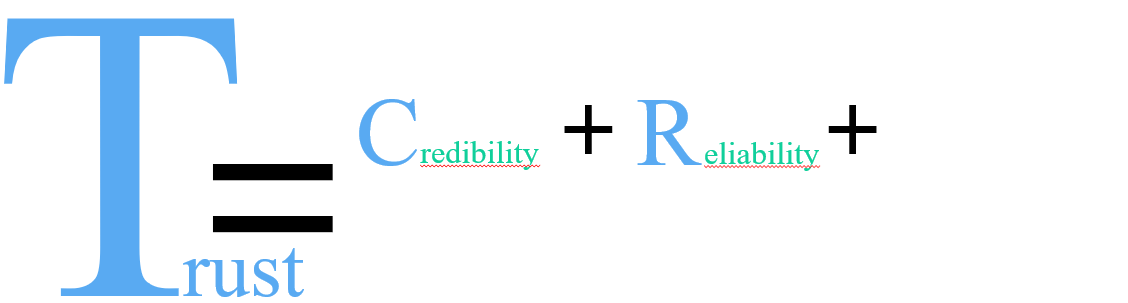
Over the past few weeks, we have been walking through the trust equation explaining three other variables in building trust. If you have not read them, I highly recommend you go back through and read the past three weeks. It will likely take less than ten or so minutes, but will help you understand the variables that affect trust.
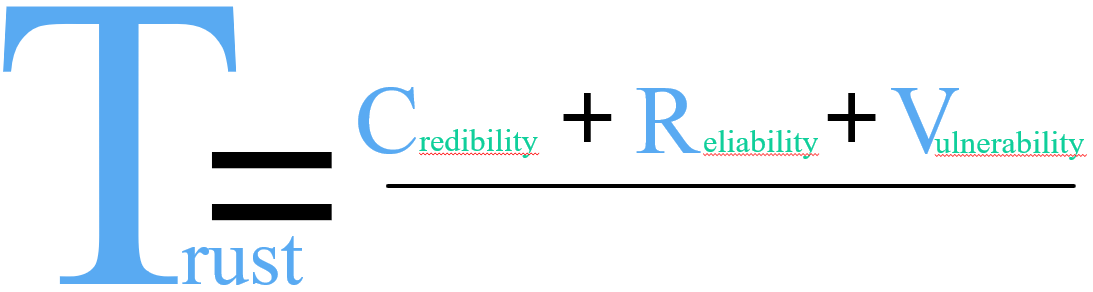
Today we focus on the denominator of the fraction on building trust and the variable is Selfishness. We have seen politicians, CEO’s, and sales professionals all brag about how they did something great and how they deserve all the credit. Unfortunately, anything worth doing takes a great deal of effort and typically takes support of others. We need to make sure we are not killing trust with selfish gain.
When I created the trust equation it was to make it easy for people to see the basics of building trust. You can be very creditable, reliable, and vulnerable, but if we are only doing this to help ourselves “WIN” we actually “LOSE.” We will not be able to gain trust and sustain it if we are only out for our own gain. If we are selfish and only doing things to be able to leverage in another instance, we will soon erode trust. People will see it especially if we are doing this over and over again. True we may be able to hide our selfishness for a little while, but trust is really a long-term plan. People will figure us out, as selfishness is like a spotlight shining bright into the night sky.
Selfishness tells people that we do not value them and do not care about them. Who wants to trust someone like that? Have you ever been around someone that you tried to give more and more trust and it just seemed to blow up in your face each and every time? It is really hard to keep wanting to extend them the benefit of doubt. After a while, trust in that person is just not an option.
By being selfish we can quickly turn relationships sour. In sales or leadership if this happens, we start losing our influence, which is the key ingredient to business success. Without trust there is no influence. We may think that if we have leverage over others we can influence them, but I challenge that thought because once that leverage is gone there is no more influence. There have been stories in business where boards have thrown the CEO out of the organization overnight. Even Steve Jobs was asked to step down at one point at Apple.
I am constantly taking inventory in my life to gauge how selfish I am being. I’m sure I fail to live up to my standard, but my focus is on not being selfish and trying to help everyone that I can. I put my expertise out there to help others gain knowledge. I do not do it so I can say, see what I have done, but to share so that people can avoid mistakes that I have run in to. My goal is to help others become more efficient and successful especially with areas of sales and influence.
The key is to really take an inventory of our relationships and see if there are any areas where we are being selfish. Are there some relationships that we have been one sided on? Have we made any recent mistakes that an apology will help start the road back to building trust? Selfishness can be fixed when we take an honest look at how we have behaving with others.
If we want to have a greater trust level, then our selfishness must be put in check.
Just remember what our math teachers taught us. It does not matter how large the numerator of a fraction is. The denominator will affect the outcome greater. Below is a picture of the complete trust equation for you to have. Take a screen shot, or make it a graphic for yourself and keep where you can see it often to remind yourself what trust is affected by.

Have a great week!
Sincerely,
Kevin Sidebottom
“Businesses wonder why the majority of their sales teams struggle at winning profitable business. I teach your sales team to walk with the customer through the five buying decisions, and in the correct order to generate more sales with higher profits!”
https://drive.google.com/file/d/1lWIVasmkFsoYL4h0AqIZgH6LC3qaw_gI/view?usp=sharing – client profile sheet
https://www.amazon.com/Sales-Process-Uncovered-Success-Influence/dp/0578421518 - Book
https://kevinsidebottom.kartra.com/page/5AF12 - Sales Process Uncovered Online Training
https://kevinsidebottom.kartra.com/page/68N10 - Trustworthy Online Training
A Crucial Contributor To Building Trust
Today we are finishing up the numerator of the trust equation. For those that don’t remember, the numerator is all of the variables above the dividing line in a fraction. So far, we have talked about credibility and reliability in building trust. The third and most important numerator variable is vulnerability.
I was raised in a single parent family for most of my younger years and being vulnerable was not a soft skill I was taught. I was taught to “man up”, “suck it up”, etc. We didn’t show emotions that often except for anger and sarcasm. Vulnerability was something I have and continue to work on to this day. This was one of the hardest skills for me as a man, but one of the most beneficial skills as a person of influence. If you can be vulnerable and go deeper with people you will gain more trust and influence with others over time.
I know what you may be thinking at this moment. I don’t have time to be vulnerable. I just need to push through with my team or my customers and get the job done to move on to the next task. I understand business and getting work done. What I am talking about is building a trust with your team or customers that gives you the benefit of the doubt in bad situations. The kind of trust that will provide you help when fighting against the competition. This kind of trust is more than the superficial arm-length kind of relationship. It brings people in to get to know us on a deeper level. A level that when the chips are down, they will step in to help without question.
Now let’s talk about what vulnerability is. Vulnerability is a soft skill that is not typically taught. Vulnerability is about going deep and opening up ourselves to be potentially judged, let down, hurt emotionally, and disappointed. It is that uneasy feeling when we are about to disclose something about ourselves to someone because we are risking our comfort level. Vulnerability is deeper than honesty.
When being honest, we can speak the truth, but still not show our true self. People can be rubbed the wrong way with honesty and not trust us. We can’t gain the connection with others when we are just being honest. We need to develop our level of vulnerability with those individuals to gain the next level of relationships. Vulnerability is a scary place for most people because there is that risk of being hurt, but the payoff is definitely greater than the risk.
I have worked with ex-navy seals, business owners, entrepreneurs, engineers, contractors, etc. and those that are most successful are vulnerable to those they need high levels of trust with. Leaders learn how to be vulnerable. Leaders strive to grow the relationship with those around them so that when the time comes to dig down the leaders will have the buy in from those around them to work together and accomplish great things.
The reason why I have had such great success in sales is because I am vulnerable with my customers and team members. I trust them and pushed through my comfort zone to allow others in to see who I am. By doing so I have gained great relationships and trust with those around me and built strong bonds that helped me when working on new businesses, growing a men’s ministry, my marriage, and some close friends that would drop everything and run to help if I truly needed it.
This week I want to challenge us to open up when we are trying to bottle up things that we don’t want to let others know about. It’s okay to take off the mask of perfectness and let others see our true identity. Let others open up to us while we use active listening and not just give solutions. I should also say that “suck it up buttercup” would not be the best phrase when someone opens up to us and is vulnerable. That might get you quickly thrown out of their circle of trust. My commitment this week is to listen and be more vulnerable to those around me and not jump in to fix it and move on. What is your next step today to be more vulnerable with those around you?
Go ahead and post your next step in vulnerability in the comments below.
Sincerely,
Kevin Sidebottom
“Businesses wonder why the majority of their sales teams struggle at winning profitable business. I teach your sales team to walk with the customer through the five buying decisions, and in the correct order to generate more sales with higher profits!”
https://drive.google.com/file/d/1lWIVasmkFsoYL4h0AqIZgH6LC3qaw_gI/view?usp=sharing – client profile sheet
https://www.amazon.com/Sales-Process-Uncovered-Success-Influence/dp/0578421518 - Book
https://kevinsidebottom.kartra.com/page/5AF12 - Sales Process Uncovered Online Training
https://kevinsidebottom.kartra.com/page/68N10 - Trustworthy Online Training
Reliability, The Second Variable In The Trust Equation
Ever think it’s no big deal if I pass up on this one meeting with a customer? Ever think that it’s just one appointment in my busy schedule that I can just skip? What about that promise that we broke to our family to do something fun that we are going to have to push back on the calendar yet again?
The road to eroding trust is paved with good intensions. It is sealed with no follow through.
My father once told me that I should do the right thing no matter if anyone was watching. At the time as a young adult, I was thinking that what does it matter if no one is watching. In today’s age with technology, someone is always watching. Just do a google search on yourself and you’ll find tons of websites with all of your information out there.
If we want to be considered trustworthy, we need to make sure that we are showing up in a consistent manner each and every time. We need to be Reliable.
That’s right Reliability is key to trust building. People begin to trust us when we are consistent in how we show up. That can be personality, work ethic, promises, etc. The more consistent we are the more reliable we are.
Think of that restaurant that you have visited multiple times because the food was great and the service was fantastic. We can’t help but tell people they have to go visit that establishment because of the great experience. That is what others want of us. They want to know that they can get a consistent experience from us when they interact with us.
Whether it is our boss, our significant other, our kids, etc. It doesn’t matter who we are interacting with, they want to have consistency with us. That makes the reliability go up. If we are consistently showing up with our work, we get to stay employed and more money with raises and promotions. Children get more freedom when they are reliable.
If we are there for our friends in times of need, they will open up to us more and we have more influence. If our kids know that we will be there for them they will have more confidence in us as parents. They will trust us more.
We need to be constantly showing up in the same reliable manner if we want trust. Yes there are times that we fall short and have to ask for forgiveness, but if we have been reliable more often than not, we will get the benefit of the doubt. When we can have a minor slip up, but still be considered trustworthy and reliable that is when we know we are doing well.
In sales too often the customer is provided all of these reasons why this interaction will be different from other suppliers. Delivery will be exceptional and on time, our customer service team will support them and not leave the customer on hold for hours on end, etc.
Far too often in sales we over commit and under produce. We have this grand promise that falls short of expectation for the customer. Guess what happens…Trust goes down and we are put into the commodity bucket on the next time we are thought of as an option for suppling goods and services. In sales and business, we also need to make sure that we are showing up in a reliable manner if we want to be considered the best option and maintain good profit margins.
When we are considered commodities, the only differentiating factor is price. We need to make sure that we are providing exceptional service to help the customer along through their lives and support them in a reliable manner. If we do that trust will go up and we will gain more opportunities in the future. That is why I try to under commit and over produce for my customers as much as I can.
If I am not able to guarantee something, then I don’t. I am not like one of those informercials from the 90’s promising that this product will solve everything from small messes to world hunger. I make sure that my customers know how, when, and what my product / service will do and make sure that it achieves those goals. I have built solid levels of trust with customers and friends by being consistent and reliable.
The final thought is yes, we need to commit to something and push hard to make that happen. Never committing to anything will stop trust in it’s tracks.
Be reliable and you will gain trust with those you interact with.
Have a good week!
Sincerely,
Kevin Sidebottom
“Businesses wonder why the majority of their sales teams struggle at winning profitable business. I teach your sales team to walk with the customer through the five buying decisions, and in the correct order to generate more sales with higher profits!”
https://drive.google.com/file/d/1lWIVasmkFsoYL4h0AqIZgH6LC3qaw_gI/view?usp=sharing – client profile sheet
https://www.amazon.com/Sales-Process-Uncovered-Success-Influence/dp/0578421518 - Book
https://kevinsidebottom.kartra.com/page/5AF12 - Sales Process Uncovered Online Training
https://kevinsidebottom.kartra.com/page/68N10 - Trustworthy Online Training
To Build Trust You Need To Have The Letter C
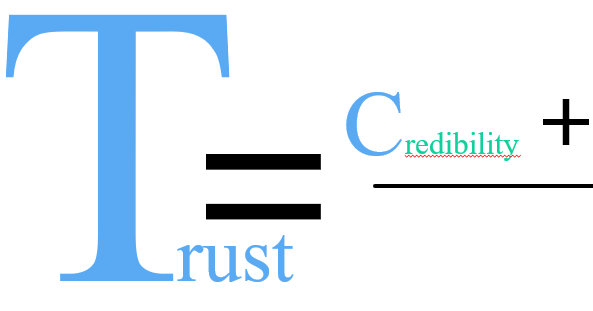
The last couple of weeks I have been helping you with understanding that there are different levels of trust needed for different levels of relationships and the three questions that we need to answer to build trust and influence. Today I would like help you with a concept that I created for people to visualize an easy way to understand what goes into trust. I call it the “Trust Equation” and it has helped many people start building trust easily by understanding the components of trust.
There are four main components of the trust equation and I will break down each of them in the next few blogs so that you can better understand each and excel at building higher levels of trust in 2022. Without trust we can’t make movements, sell, lead, or do anything of substance with others. We need trust.
Without any more delays let’s get into the first component of trust:
Credibility
We have have credibility before people will trust us on a specific topic of concern. This is crucial, but does not mean that we have to go to school to learn about everything and anything. No one knows everything.
Credibility is typically linked to knowledge. A person goes to school, gets a degree and then they are finally credible on a subject. While that is very true, there are other aspects to Credibility that many do not think about. One is effective communication and the other I call “being the bridge.”
I have seen very intelligent individuals lose credibility because they could not effectively communicate their topic. That’s right, just because they have a great deal of knowledge, does not automatically grant them credibility. Everyone needs to be able to communicate effectively!
There are many courses that help on effective communication topics, but the biggest effect on communication is the ability to break complex topics into simple understandable pieces. That means not using really big dictionary words when a simple word can be used. If we can communicate effectively then we can build trust and generate credibility.
Now the other component I mentioned earlier is what I call “being the bridge.” This is something that I learned when I first got into sales. If I was able to connect people needing help in a certain area with those that had the knowledge, I actually built credibility. That’s right because I was bridging the gap for them, then I am deemed a credible source as well.
When we bridge others together, we are associated with credibility because we are associated as one that adds vallue. Adding value is key in trust building and being a bridge will help us gain influence. This is one of the main ways I have been so successful throughout my career. I have built a great deal of credibility by bridging others together.
Bring knowledgeable, communicating effectively, and being the bridge will allow us to become more credible with others. Consistently showing up to add value and help others is the way to growing trust with anyone we interact with.
If you would like more information on building trust reach out and set up a call so we can discuss and I can point you in the right direction!
The next few weeks I will discuss the other variables in the trust equation. Look forward to helping you gain more trust and influence in the weeks to come!
Sincerely,
Kevin Sidebottom
“Businesses wonder why the majority of their sales teams struggle at winning profitable business. I teach your sales team to walk with the customer through the five buying decisions, and in the correct order to generate more sales with higher profits!”
https://www.amazon.com/Sales-Process-Uncovered-Success-Influence/dp/0578421518 - SPU Book
https://kevinsidebottom.kartra.com/page/5AF12 - Sales Process Uncovered Online Training
https://kevinsidebottom.kartra.com/page/68N10 - Trustworthy Online Training

Trust begins with three questions
If you want trust, you must answer three questions every time you meet with others. Too often people focus on how others will answer these three questions and not how we need to be answering them. The three questions are:
Do I like You?
Do I trust You?
How can you help Me?
Those three questions that everyone asks at every interaction are crucial for us to put our best foot forward. Otherwise, we will not grow trust levels with others and possibly erode trust with others.
The first question has a lot that goes into it, but the main thing is that if people do not like us then they will not trust us. There is a radar in our fight or flight system that has likeability as a key indicator. Ever have that feeling that something was wrong with someone you just met and you needed to leave. That is the radar trying to keep you alive.
Likeability is crucial. The colors we wear, the way we make others feel, our pace of speech, and even the scents we wear can affect the likeability factor. See we don’t know other people’s pasts, experiences, and triggers. That means that we can subconsciously step onto land mines that we did not know where there. A land mine is an explosive that is buried under the surface that when stepped on creates a large explosion usually killing the person that stepped on the land mine.
This does not mean that we just avoid contact with others. What we need to do is make sure we are consciously approaching those that we come in contact with awareness and humility. We can’t avoid contact with others, but we can however focus on understanding and help them.
The more we put the focus on learning about others and minimizing ways to trigger others the better we can build relationships with them.
When I first meet with others, I tend to wear colors like light blue, whites in my shirts. I don’t wear power ties, dark colors, or a ton of cologne. I also focus on learning about them by asking a great deal of questions. Not so I can sell them something, but to learn and help if possible. I want to help people and by investing in helping others, I have also benefited in my careers and personal life as a by-product.
The first step in taking the focus off ourselves and onto others is start by learning about them. The best way to do that is build a profile about them. That means we are focused solely learning about them (not to leverage them, but to help them). I use a profile sheet when I prep for meeting with individuals and do research on them prior to the meeting if possible. I have also asked if I could take notes and 9 times out of 10 the people are receptive and actually get more engaged by me attempting to learn about them.
I have attached a link to the profile sheet I use to learn about others a. If you’d like a copy just click here and you can have it. No, I am not trying to track your email through this. It is free to you. There are some questions you might have on this sheet so if you haven’t read any of my blog posts about the client profile sheet you can look back at those, or reach out. I would be glad to help you.
For today, focus on not stepping on land mines and learning about others and you will start building trust with others.
Have a great week.
Sincerely,
Kevin Sidebottom
“Businesses wonder why the majority of their sales teams struggle at winning profitable business. I teach your sales team to walk with the customer through the five buying decisions, and in the correct order to generate more sales with high margins!”
https://drive.google.com/file/d/1lWIVasmkFsoYL4h0AqIZgH6LC3qaw_gI/view?usp=sharing – client profile sheet
https://www.amazon.com/Sales-Process-Uncovered-Success-Influence/dp/0578421518 - Book
https://kevinsidebottom.kartra.com/page/5AF12 - Sales Process Uncovered Online Training
https://kevinsidebottom.kartra.com/page/68N10 - Trustworthy Online Training