
So You Want To Lead...Better Know Sales!
I was not sure why I needed to know sales at the time to be a good manager, but I knew I would figure out why someday.
When I first started in sales it was on the premise that if I wanted to be a great manager, business owner, lawyer, president, I needed to know sales. That is what a successful business owner told me after I had told him that I wanted to be a manager in the next five years. He was a great leader and still has people working for him that were with him since he opened his company in the mid 1980’s. I was not sure why I needed to know sales at the time to be a good manager, but I knew I would figure out why someday.
At first, I was hesitant to change careers. Six months of hesitation and discussions to be exact. I did not want to be a salesperson because all life had taught me was that they were only out for their own gain. I did not want to actively be associated with that stigma?
When I did decide to try this sales thing out, I figured that sales would be easy. The first year of sales was a rude awakening. It literally looked like a heartbeat of someone that just took their last breath. I was fortunate to have a chance to keep going and learning from the successful business owner in what he called “hands on training.”
Hands on training meant that I was to help him with projects after hours, gain training from peers, and hours of trainings to perfect my craft. I did weekend deliveries, helped him with personal projects, etc. Basically, anything he needed extra help with I was there. This was valuable time with him mentoring me all he knew about sales and business.
I excelled from then on to become a great sales leader in my industry and even relocated to another part of the United States to help grow a new territory. We did very well there with great purpose. Customers started opening up fast to me and sales were increasing as the years went by. I was awarded the prize of top salesman for the United States and had taken the territory to where it had never been. I won’t give all those secrets away today on how we did this, but I can tell you it was not because we were the cheapest price or by doing anything unethical.
What I can tell you is that this success was because of Influence. As influence increases people trust us more and are willing to go deeper in relationships with us. These relationships open up the doors to long lasting and deep relationships. The more influence someone has the more they excel in whatever they are doing.
I had customers asking me about other aspects about their business as time went on. They were confiding in me as a trusted asset that could help them break through their ceiling to the next level. It was eye opening that I was able to help them with simple things up to the complex integrations of business solutions.
What I found is that the sales process that I keynote and perform trainings on helps people build amazing amounts of influence fast! That is right, selling correctly helps us build influence! Keep in mind that selling is not just a product or service. It can be selling a vision, mission, or idea that we need others to help us achieve. By building influence using the sales process, leaders gain more engagement their teams.
As you look around your organization look at those relationships of those that go out of their way to help you and those that don’t. See how much influence you have with each of these groupings of people. The more influence you have, the farther you and your organization will go.
Happy selling!
Sincerely,
Kevin Sidebottom
“Businesses wonder why the majority of their sales teams struggle at winning profitable business. I teach your sales team to walk with the customer through the five buying decisions, and in the correct order to generate more sales with high margins!”

What Percentage Is A Good Profit Margin?
The first thing that I ask them is what is the market bearing for a sales price for what they offer. Often, I am left with a blank stare saying our price.
Welcome back
I teach sales teams how to sell their products and services effectively and with a common language, but I am often asked what percentage is a good profit margin to make for my product / service. More importantly they want to know how much they should make with their product and service. Some even believe that their product / service is earth shattering brand new, and nothing like it anywhere on this planet so there is nothing to compare it against.
The first thing that I ask them is what is the market bearing for a sales price for what they offer. Often, I am left with a blank stare saying our price. This is because they really have not studied the market to understand. When we do some investigating, we find out that a market study to see what the competition is offering their eyes open. Old pricing strategies was to add profit to our costs. They called it cost plus for markup.
Different markets bear different profit margins so investigation is necessary. Grocery stores operate at much lower profit margins than say Apple selling an iphone. They have more turns of products such as chips, fruit, milk, etc that they do not need to charge $20 per banana. They also understand their costs well.
By understanding the market, we can now understand this data point. The real estate industry has done a great job understanding this topic and we can learn from them in other markets. They literally show comparable sales in the area “Comps.” It’s a really good gauge at where the market is for a product / service.
Unfortunately, some market pricing is established in markets by trying to simply add profit to costs. This is called a cost plus pricing model and is unfortunately not viable in most markets. We really need to know what our costs, but can not just simply say we deserve x profit.
Now we need to really understand our costs. There are many costs like material, labor costs, but fixed costs like the rent of our buildings, loan payments (if you don’t follow Dave Ramsey’s rules), etc. are also needed to be figured in. Once we understand our true costs, we need to know how much we need to make before we can brake even, and then how we can survive and have a decent living. That’s right we need to understand where we can be so that we can still eat and sleep in doors with possibly a vacation…I mean retreat for future planning ;)
Now here is a warning especially if we are launching a new product / service, or are new to any market. Trying to come in and be the cheapest price is not the answer to have instant success. Most will try to do this and believe that they will be able to increase price over time whether it is scope creek to add profit, or simply raising price over time. What organizations have found is that when they try to raise price for future business, it tends not to work because they have set a precedence with the customer. Focus on starting off right and not being the cheapest price.
Be the best value. This is where there is so much value that the customer has no reason not to do business with us and pay the investment to work with us. That is where top organizations that have high profits, large cash reserves, and can weather any storm are. They are financially set for success and their customers are happy to pay the investment to do business with them.
Use the sales process to understand what value you bring to the customer and you’ll be able to maintain good profits.
Sincerely,
Kevin Sidebottom
“Businesses wonder why the majority of their sales teams struggle at winning profitable business. I teach your sales team to walk with the customer through the five buying decisions, and in the correct order to generate more sales with high margins!”

What To Expect From A Sales Manager
They may challenge our assumptions, but to help us make sure we effectively thinking through the process.
Welcome back,
Today we are going to look at what we should expect from a sales manager. I’m sure anyone in sales has horror stories of bad sales managers. It’s okay if you are currently working for one, you don’t have to raise your hand if they are near J
I am asked what makes a good sales manager, and what should I expect from a sales manager. This blog is not going to say what a typical sales manager is, it is going to discuss what we should be expecting out of sales managers. That’s right when we interview with sales managers, we should be looking for a few things. These will be indicators about what we are about to get ourselves into in hopes of avoiding a bad situation.
I have had a couple Rockstar sales managers, a couple really bad sales managers, but mostly just okay sales managers. I know what to look for in a sales manager that I figured I should share with you so you can avoid some difficult relationships in the future.
I have had two really bad sales managers in the past. The first one should have been fired based off how sexist, manipulative, and degrading he was about others. He took his title to his head. The other was kind, but did not know how anything worked at the company even though he had been there for twenty plus years, and he could not offer help when asked. He was like a cockroach. He knew how to survive in the corporate world, but just didn’t add much value. It was unfortunate that this happens, but I’m sure this manager was not the only one.
With the bad out of the way let’s start with what we should be looking for in great sales managers. When we think of a sales manager, we should be thinking about someone who will invest in us and grow us. We need someone that will be a coach. Not like a coach on a football field that yells in plays and tells us to execute what they say, but someone that will ask us questions to pull out our own unique solutions to the problems at hand.
When I went to get certified by John Maxwell, my eyes were open to this new type of coach. A coach that has passion to grow those under them and help those they manage find their own true answers. Most managers want to manage people and processes to keep things moving smoothly, but a coach will encourage us to try for more than we think possible and to find the best answer within us. They want to invest in us as well.
These types of managers are also very transparent and knowledgeable about the products and processes of the organization. They know how to guide us around the pitfalls and educate us why we don’t want to go down a certain path, but still give us the option to choose our paths. They will ask us questions to make us think about why we are doing something and then ask us to provide why we believe this is the best path to take. They may challenge our assumptions, but to help us make sure we effectively thinking through the process. Not allowing us to just wing it.
Sales managers should also be looking for their replacement. Maybe the sales manager will be promoted someday, change corporations, or maybe they will expire. The sales manager should be functioning just like a leader that is looking to grow others around them so when the sales manager is gone, the organization will still thrive and move forward. They should be focused on leaving the organization better than they found it. Not because they want all of the applause, but because they value other individuals highly.
We need to stop looking at sales managers as people that just merely manage people and processes to keep things moving along, we need to expect more out of them to be coaches and leaders that want to grow people around them. They foster a culture of possibilities and adventure to personal and professional growth for their employees. Isn’t that someone you’d like to work for?
If you have a great manager that you’d like to mention in the comments below, please do so. I am always looking for people to interview and find out what makes them great and what values they focus on. It will also help all of you get better understanding as well.
Have a great week and I will see you next time!
Link to this week’s Youtube video
Sincerely,
Kevin Sidebottom
“Businesses wonder why the majority of their sales teams struggle at winning profitable business. I teach your sales team to walk with the customer through the five buying decisions, and in the correct order to generate more sales with high margins!”

Why You Need Trust In The Workplace
We need to make sure we are forming a trusting environment because speed and cost are the two variables in business that are affected by trust.
Good morning everyone,
As we enter into fall and are looking at how many work days there are left before the end of the year, I decided to write on this topic so teams can focus on a building better team environment to end the year off right. That’s right we need to have trust in the workplace if we are going to do well.
If we are a manager that does not have trust for our employees then we are going to micro manage them. If we do not trust the employees, we spend much of our time checking and rechecking their work. If we do that, how can we continue to grow ourselves, and still move the group farther? It’s like rowing a boat with our hands instead of an oar.
If we do not trust our colleges enough then we are doing extra work as well to make sure we hit the outcome we desire. That means more stress, longer hours, less efficiency, and drain on our attitudes. Then comes the mixed emotions of stress and disengagement with work and family. When teams are not in a high trust environment, they are not working efficiently. People are not communicating well and issues are sometimes hidden. The only time management sees an issue is when a major event occurs.
If we are in a large organization and the engineering team is not trusted by other teams, then the design will be delayed to launch. If this is a publicly traded entity and launches are delayed guess what happens to the stock price valuation…
We need to make sure we are forming a trusting environment because speed and cost are the two variables in business that are affected by trust. When we are in a high trust environment speed goes up and cost goes down. When that happens, guess what happens to profits…they go UP!
When we are in a high trust environment people will be allowed to move quicker without having to get tons of approvals and tons of double checking. Everything flows faster and work is completed with less bureaucracy. It’s like a river that is allowed to flow, it is clean, but when it is blocked up, everything becomes stagnant and scummy.
We need to make sure that we are working on ways to build trust throughout our organization so that we can work more efficiently. If trust happens and grows, the outcome will be increased profits.
If you’d like to know ways to improve trust check out the link below that will take you to my video that discusses this topic more as well as a few tools that I have created to help build long lasting trust.
Sincerely,
Kevin Sidebottom
“Businesses wonder why the majority of their sales teams struggle at winning profitable business. I teach your sales team to walk with the customer through the five buying decisions, and in the correct order to generate more sales with high margins!”

Want to Build Trust? Start with the letter C
Credibility is typically linked to knowledge. A person goes to school, gets a degree and then they are finally credible on a subject. While that is very true, there are other aspects to Credibility that many do not think about.
Hey everyone,
I have noticed a rise in interest in learning about building trust. Today Trust is in high demand. Employees and management need to establish trust more than ever especially with the working remote situations. In uncertain times, it is trust that is the key ingredient in moving forward and achieving desired goals.
There are many aspects to trust and how to build high levels of trust. Different environments also require different levels of trust. I have been asked many times for a simple roadmap in building trust. That is why I have created the Trust equation. Something simple for people to remember and be able to apply. I have also spoken to Multi-Billion dollar organizations to help teams build trust by using this equation.
Today I want to focus in on one part of that equation because going into the entire equation in one sitting would require a great deal or reading on your part. For today let’s focus in on “Credibility.” Credibility actually has a few components to it and some that most people don’t think about.
Credibility is typically linked to knowledge. A person goes to school, gets a degree and then they are finally credible on a subject. While that is very true, there are other aspects to Credibility that many do not think about. One is effective communication and the other is called “being the bridge.”
I have seen very intelligent individuals lose credibility because they could not effectively communicate with others. That’s right, just because they have a great deal of knowledge, does not automatically grant them credibility. Everyone needs to be able to communicate effectively! There are many courses that help on effective communication topics, but the biggest effect on communication is the ability to break complex topics into understandable language. That means not using really big dictionary words when a simple word can be used. If we can communicate effectively then we can build trust and generate credibility.
Now the other component I mentioned earlier is what I call “being the bridge.” This is something that I learned when I first got into sales. If I was able to connect people needing help in a certain area with those that had the knowledge, I built credibility. That’s right because I was bridging the gap for them, then I am deemed a credible source as well. When we bridge others together, we are associated with one that adds value. Adding value is key in trust building and being a bridge will help us gain influence. This is one of the main ways I have been so successful throughout my career. I have built a great deal of credibility by bridging others together.
Bring knowledgeable, communicating effectively, and being the bridge will allow us to become more credible. Consistently showing up to add value and help others is the way to growing trust with anyone we interact with.
If you would like more information on building trust reach out and set up a call so we can discuss and I can point you in the right direction!
Have a great day!
Sincerely,
Kevin Sidebottom
“Businesses wonder why the majority of their sales teams struggle at winning profitable business. I teach your sales team to walk with the customer through the five buying decisions, and in the correct order to generate more sales with high margins!”
You only get one chance to...
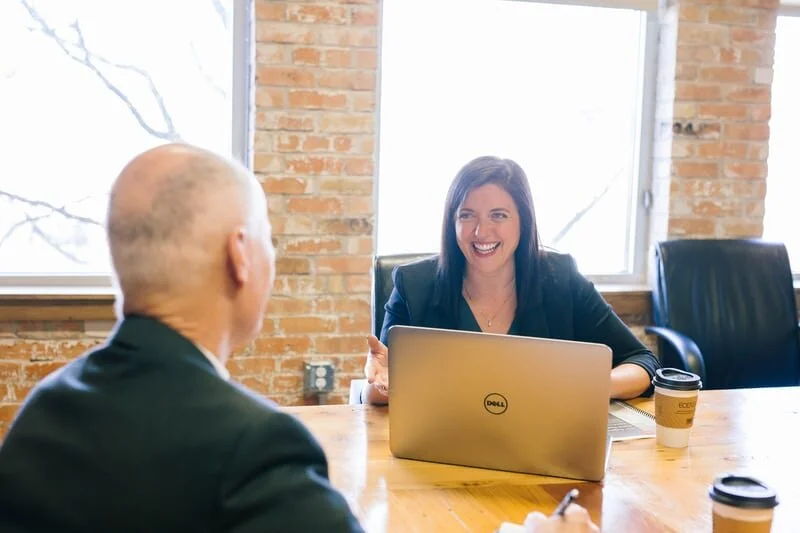
The sales process is the key to mastering the art of first impressions, building rapport, and likeability. Once we master the first buying decision of the sales process, we can build rapport with those around us faster!
Good morning everyone!
I hope you are enjoying your summer with your kids home from school, taking trips, and enjoying some downtime in the sun!
I have been thinking about this topic for a while now and decided that it was time to step up on my soap box. I firmly believe that we all need to know how to sell in order to make great first impressions. Whether we are going for a job interview (selling ourselves), out on a date (selling ourselves), leading an organization (selling vision and ourselves), or selling a product or service which means we need to know how to sell (ourselves), etc.
No matter what we are doing, we are selling ourselves as the best option for those around us. We share stories, build friendships, engage with coworkers etc. all of the time. Some people do this really well and some unfortunately do not. This is not simply determined if you are an introvert, or an extrovert to determine if you will do this well. What I am saying is that some just don’t sell themselves well enough.
There are three questions everyone asks at every interaction and they are as follows:
Do I like you?
Do I trust you?
How can you help me?
In seven seconds, a decision is made about the other person based off these three questions. Now there are so many aspects to how one can affect those three questions, that it is key that we know how to sell and why these three questions are affected. Learning the sales process if even just for only buying decision 1, we are definitely on solid footing to move forward with other people.
How we are dressed, what the environment we are in, our posture, our speech patterns, and many more aspects affect how people form their decisions about us. Have you ever heard the phrase. “we only get one chance to make a first impression?” This is because once someone makes that impression about us, it is extremely hard to change.
The sales process is the key to mastering the art of first impressions, building rapport, and likeability. Once we master the first buying decision of the sales process, we can build rapport with those around us faster! This will enable us to make great first impressions, obtain engagement from those around us, and create stronger relationships.
Wouldn’t it be nice to know how to sell and build relationships to make our lives better?
If you’d like to learn the sales process and how to gain influence, I have launched my online course. It will enable you to master sales, implement the simple to use process, and become a top performer!
Sincerely,
Kevin Sidebottom
“Businesses wonder why the majority of their sales teams struggle at winning profitable business. I teach your sales team to walk with the customer through the five buying decisions, and in the correct order to generate more sales with high margins!”

Rapport Is The Building Block For Influence
I was reflecting the other day on building rapport with others which is essential in building influence with others. Building rapport is especially important during this time with the pandemic keeping all of us separated.
Whether we are a coach, meeting with a client, or are taking part in an interview we need to be able to build rapport quickly. We form our first impressions of others in less than 60 seconds. These two questions “Do I like you? and Do I trust you?,” are answered in that 60 seconds. If you want influence, then you need to be able to build rapport.
People also associate with others that they know, like, and trust. I have even heard of people being hired because they were more relatable even though they were not the most qualified. Isn’t that interesting. Rapport building is an essential skill to have if we are going to interact with other people.
So how do we build rapport?
Here are four ways that I build rapport with others:
Be Helpful
Be willing to help them with whatever they need help with. Go the extra mile to help others even when we think we have done enough. One step further... It could be helping a child with an assignment on the football field going through the play with them one on one and then helping them step through the steps in that process. It could be jumping in to help unload something that the person we are meeting with is trying to unload from a truck without trying to get something from them in return. It could also be helping sweep up a mess that has happened for the customer while they are trying to fill an order, or sending follow up note to the person that the task was completed for them by your organization. Being genuine and helpful will go a long way at building rapport with people.
Be Intentional
By being intentional I mean really look to find common ground with those people we are interacting with. This can be researching them on social media such as Linkedin, Facebook, local associations they are affiliated with, google etc. Being intentional to learn about those people and their interests are very impactful. Not just to gain a sale, but to be intentionally curious about them and hear them.
Be Respectful
People want to feel valued and that they are important. Why not make them feel that way? Let them know that we have their back and are willing to do the work with them. Call them sir or ma’am when they are older than us is a good way to show respect. Using their name (sweetest sound to any person is their own name), using our manners, asking them questions. By being respectful we are showing respect and who doesn’t like some R.E.S.P.E.C.T.?
Be Enthusiastic
Show some enthusiasm with the person we are talking to. Use humor, make them feel comfortable, and lower the tension. People that smile and make people laugh are far more enjoyable. These people build rapport more so than someone who walks around like the Winnie the Pooh character Eeyore that moped around and never showed excitement. People like to be around light hearted and fun people. Show some enthusiasm and energy. People gravitate towards others that are full of energy.
There you have it, think of H.I.R.E. when you are looking to build rapport. Focus on others and help them get to where they way to go, be respectful and be enthusiastic in order to build rapport. We want the person to like us so much that they can’t think of anyone else they would rather talk to for our subject matter.
If you are interested in building more influence click the image below and you will be taken to my course. I will guide you in the principals on how to answer the three questions that everyone asks at each interaction.

Have a great weekend.
Sincerely,
Kevin Sidebottom
“Businesses wonder why the majority of their sales teams struggle at winning profitable business. I teach your sales team to walk with the customer through the five buying decisions, and in the correct order to generate more sales with high margins!”