
Building a Repeatable Sales Engine
Scaling Growth Without Constantly Chasing New Customers
Many organizations believe scaling sales means finding more prospects, generating more leads, and filling the top of the funnel with as many opportunities as possible. While new customers are certainly important, sustainable growth is rarely achieved by simply doing more of the same. The organizations that scale most effectively build a repeatable sales engine, one that consistently creates exceptional customer experiences, maximizes customer value, and turns satisfied customers into advocates who help fuel future growth.
The foundation of every repeatable sales engine is the right sales process. Too many sales teams rely on individual talent rather than a proven system. When success depends on a few top performers, growth becomes difficult to replicate. A well-designed sales process creates consistency, allowing every salesperson to understand how to uncover customer needs, identify challenges, communicate value, and guide prospects toward the right decision that they need. More importantly, a strong process focuses on the customer's buying journey rather than the seller's agenda. When organizations build a repeatable process that can be taught, measured, and improved, sales become more predictable and scalable.
However, a sales engine extends far beyond the front line sales team. One of the most overlooked growth opportunities exists within customer service and support functions. Many organizations view customer service as a cost center, when in reality it can become one of the most powerful profit centers in the business. The experience customers have after the sale often determines whether they buy again, expand their relationship, or recommend the company to others. Customer service representatives interact with customers regularly, giving them unique visibility into changing needs, emerging challenges, and opportunities for additional value. When properly trained, support teams can strengthen customer loyalty, identify upsell opportunities, and reinforce the trust that drives long-term growth.
Another critical shift for organizations looking to scale is moving away from the mindset of constantly pursuing more customers and instead focusing on creating greater value with existing customers. Every customer comes with an acquisition cost. Marketing expenses, sales efforts, onboarding, implementation, support, and ongoing relationship management all require significant investments of time and resources. Because acquiring customers is expensive, the most profitable organizations often focus on serving current customers exceptionally well and finding additional ways to help them achieve their goals. Expanding relationships with existing customers is frequently more efficient and profitable than continually searching for new ones. The deeper the relationship becomes, the more value both the customer and the organization receive.
This approach requires patience. Building trust, delivering results, and earning the right to expand relationships does not happen overnight. However, organizations that commit to this strategy often discover that their customer base becomes one of their greatest competitive advantages. Customers who consistently experience value become more loyal, purchase additional products and services, and remain with the organization longer. Over time, the lifetime value of each customer increases while acquisition costs become a smaller percentage of overall revenue.
Perhaps the greatest benefit of a repeatable sales engine is that it creates momentum through referrals. Customers who trust your organization and achieve meaningful results naturally share those experiences with colleagues, friends, and peers. They become advocates who validate your credibility before you ever enter a sales conversation. This transferred trust dramatically shortens sales cycles and reduces resistance because prospects arrive with confidence already established. In many cases, the most qualified opportunities come not from marketing campaigns or cold outreach but from customers who are eager to tell others about the positive impact your organization has made.
The organizations that scale most effectively understand that growth is not simply about generating more leads. It is about building a system that consistently creates value, develops trust, strengthens relationships, and turns customers into advocates. The right sales process, a well-trained support team, a commitment to maximizing customer value, and a focus on earning referrals create a sales engine that becomes stronger over time. Instead of constantly chasing growth, these organizations build a business where growth begins chasing them.
Master the Art of Influence: Build Trust, Drive Sales, and Lead Effectively
Are you ready to become the magnetic force that attracts top performers and your best customers?
I’m Kevin Sidebottom—keynote speaker, sales trainer, and author—and I help organizations unlock the power of influence to achieve breakthrough results.
In this blog, I reveal why influence is the ultimate currency in business and leadership—and how you can use it to:✅ Motivate customers to stay loyal and buy again✅ Build trust and engagement with your team✅ Transform your leadership approach to inspire stronger performance
With decades of experience studying why people buy and how leaders earn loyalty, I equip sales professionals and executives to deliver lasting value, strengthen customer relationships, and drive higher revenue.
👉 Featured Resources to Grow Your Influence:
· Email: kevin@kevinsidebottom.com
· The Sales Process Uncovered Membership
· The Sales Process Uncovered (Book on Amazon)
If you’re serious about elevating your sales process, leadership impact, and team performance, this blog will show you the path.

Overcoming Rejection
Resilience Tips for Sales Leaders
Ever get so close to winning a multi-million dollar business opportunity, felt like you were in the driver’s seat for the award and then...poof…gone. Me too!
Rejection is part of sales. Not occasionally, consistently. Deals fall through, prospects go silent, and opportunities you were confident in don’t close. The difference between average sales leaders and high-performing ones isn’t avoiding rejection, it’s how quickly they recover from it.
Anyone who tells you they never lose is a liar. There I’ve said it. I know a great deal of success sales leaders and talk to them regularly. They all lose more than they win. Let that sink in for a second. But here is the different.
The best sales leaders get back up.
It’s easy to take rejection personally. A lost deal can feel like a reflection of effort, ability, or even value. But strong sales leaders separate the outcome from their identity. They don’t ignore disappointment, but they don’t live in it either. They process it, learn from it, and move forward. Because in sales, momentum matters. The longer you sit in frustration, the harder it is to regain progress.
Wallowing is where performance starts to decline. When sales leaders dwell on losses, it shows up in their tone, their energy, and their future decision-making. Teams pick up on that quickly. Confidence drops, hesitation increases, and suddenly one lost deal turns into a pattern. Resilient sales leaders break that cycle by choosing action over emotion. They get back into conversations, re-engage their pipeline, and model forward movement for their team.
But resilience isn’t just about moving on, it’s about learning / refining.
Every lost deal carries insight. The question is whether you’re willing to find it. Strong leaders consistently ask, “What can be learned here?” Was the problem clearly defined? Did the customer see enough value? Were all decision-makers engaged? Was the timing right? These questions turn rejection into feedback.
The key is applying what you learn.
Too many sales teams review losses but fail to change behavior. Real growth happens when insights translate into action. Maybe it means improving discovery questions, tightening follow-up, or qualifying opportunities more effectively. When leaders take what’s learned and apply it quickly, each rejection becomes a stepping stone instead of a setback.
Resilient leaders also help their teams navigate rejection the same way. They don’t allow their people to spiral after a loss, but they also don’t dismiss it. They coach through it. They ask better questions. They help reps see what can be improved and where they performed well. Over time, this builds confidence and consistency across the team.
Rejection doesn’t disappear in sales, but its impact can be controlled.
Get back up quickly.
Don’t sit in the loss.
Learn from it.
Apply it.
Because the leaders who win aren’t the ones who avoid rejection, they’re the ones who use it to get better, faster.
Master the Art of Influence: Build Trust, Drive Sales, and Lead Effectively
Are you ready to become the magnetic force that attracts top performers and your best customers?
I’m Kevin Sidebottom—keynote speaker, sales trainer, and author—and I help organizations unlock the power of influence to achieve breakthrough results.
In this blog, I reveal why influence is the ultimate currency in business and leadership—and how you can use it to:✅ Motivate customers to stay loyal and buy again✅ Build trust and engagement with your team✅ Transform your leadership approach to inspire stronger performance
With decades of experience studying why people buy and how leaders earn loyalty, I equip sales professionals and executives to deliver lasting value, strengthen customer relationships, and drive higher revenue.
👉 Featured Resources to Grow Your Influence:
· Email: kevin@kevinsidebottom.com
· The Sales Process Uncovered Membership
· The Sales Process Uncovered (Book on Amazon)
If you’re serious about elevating your sales process, leadership impact, and team performance, this blog will show you the path.
Growth vs. Scarcity Mindset
Transform Your Sales Game
Every sales professional operates from one of two places: growth or scarcity. One expands opportunity, while the other limits opportunity. The mindset you choose directly impacts how you sell, how you lead, and ultimately, how you perform.
A scarcity mindset shows up subtly. It sounds like, “I need to win this deal at all costs,” or “There’s not enough business to go around.” It creates pressure in conversations, shortens thinking, and pushes salespeople toward decisions rooted in fear. When scarcity takes over, reps hold tightly to every opportunity, hesitate to collaborate, and often chase deals that aren’t the right fit, because losing feels like falling behind.
The reality is, no individual or organization can handle 100% of the business available in the market. Trying to do so isn’t just unrealistic, it’s counterproductive. The strongest sales professionals understand that success isn’t about capturing everything. It’s about focusing on the right opportunities and creating more value within those opportunities.
That’s where a growth mindset changes the game.
Instead of asking, “How do I win this deal?” growth-minded salespeople ask, “How do we make the pie bigger?” This is where collaboration, creativity, and long-term thinking come into play. Organizations like the National Speakers Association often emphasize this concept of making the pie bigger. There is more opportunity available when professionals focus on expanding value rather than competing over limited slices.
A growth mindset opens the door to better partnerships, stronger relationships, and more strategic thinking. Sales professionals begin to look for ways to create opportunities, not just close them. They become more selective, more confident, and more focused on long-term wins instead of short-term pressure.
Scarcity, on the other hand, keeps people stuck. It creates hesitation, fear of loss, and a tendency to operate defensively. When salespeople believe opportunity is limited, they often underperform, not because they lack skill, but because their mindset restricts how they think and act.
There’s also a powerful lesson in what can be learned from each experience. Growth-minded sales professionals don’t just evaluate wins, they study losses. Instead of seeing a lost deal as failure, they ask, “What can I learn from this?” That question turns every outcome into an opportunity for improvement. Over time, that learning compounds into better conversations, stronger positioning, and more consistent results.
A growth mindset also changes how salespeople show up with customers. Instead of trying to force a fit, they focus on creating the right fit. They’re willing to walk away from opportunities that don’t align, knowing that doing so creates space for better ones. That confidence is felt by the customer and it builds a great level of trust. I have had customers call me up after turning down a deal, offering someone else’s solution asking me to be their guide in other areas. You can guess how that worked out for me on future opportunities.
Transforming your sales game doesn’t require a new script or a new pitch. It requires a shift in how you see opportunity.
You don’t need all the business., you need the right business and the mindset to grow it.
Because when you stop operating from scarcity and start thinking in terms of growth, you don’t just compete better. You create more opportunity, for yourself, your team, and your customers.
Have a great week!
Master the Art of Influence: Build Trust, Drive Sales, and Lead Effectively
Are you ready to become the magnetic force that attracts top performers and your best customers?
I’m Kevin Sidebottom—keynote speaker, sales trainer, and author—and I help organizations unlock the power of influence to achieve breakthrough results.
In this blog, I reveal why influence is the ultimate currency in business and leadership—and how you can use it to:✅ Motivate customers to stay loyal and buy again✅ Build trust and engagement with your team✅ Transform your leadership approach to inspire stronger performance
With decades of experience studying why people buy and how leaders earn loyalty, I equip sales professionals and executives to deliver lasting value, strengthen customer relationships, and drive higher revenue.
👉 Featured Resources to Grow Your Influence:
· Email: kevin@kevinsidebottom.com
· The Sales Process Uncovered Membership
· The Sales Process Uncovered (Book on Amazon)
If you’re serious about elevating your sales process, leadership impact, and team performance, this blog will show you the path.

Storytelling in Sales
Influence Customers Without Selling
The best salespeople don’t sound like salespeople. They don’t rely on pressure, scripts, or perfectly timed closes. Instead, they connect. And one of the most powerful ways to connect is through storytelling.
Storytelling allows sales professionals to influence customers without feeling like they’re being sold. It shifts the conversation from pushing a product / service to sharing experiences. These experiences allow the sales professional to share how they were able to avoid pitfalls for other customers as well as some challenges. When done well, it creates clarity, trust, and momentum in a way that facts alone rarely can.
People love stories because that’s how we’ve always learned. Long before presentations, proposals, and product demos, knowledge was passed down through stories. Stories made information memorable even before words were written down. Stories helped people understand complex ideas and apply them in real life. That hasn’t changed. Today’s buyers may have more data at their fingertips, but they still process and remember information through narrative.
When you present only features and benefits, customers have to do the heavy lifting of figuring out what it means for them. But when you tell a story about a customer who faced a similar challenge, made a decision, and achieved a result, well now you do that work for this customer. You give them a clear picture of what success can look like and how you can be the guide for them they have been looking for.
Stories also work because people can relate to them. Buyers are constantly asking themselves, “Will this work for me?” A well-told story answers that question without forcing it. When a prospect hears about someone in a similar situation navigating the same challenges, they begin to see themselves in that story. The conversation becomes less about whether the product is good and more about whether they want the same outcome.
This is where storytelling moves from being interesting to being influential. Instead of trying to convince someone, you help them connect the dots on their own. And when people arrive at a conclusion themselves, they’re far more committed to owning this solution you are providing.
At its core, effective storytelling in sales taps into something even deeper, people want to be the hero of their own story. They don’t want to feel like they’re being sold to; they want to feel like they’re making a smart decision that moves them forward. They want to solve a problem, achieve a goal, or create a better outcome for themselves and their organization.
Your role in that process is not to be the hero. It’s to be the guide.
The guide understands the challenge, offers a clear path forward, and helps the hero succeed. When sales professionals embrace this mindset, their conversations change. They ask better questions, listen more closely, and share stories that highlight transformation—not just information.
Instead of saying, “Here’s what our product does,” they say, “Let me share how someone in a similar situation approached this and what happened next.”
That shift removes pressure and builds trust. It allows customers to see the journey, not just the destination, or the issue they are facing.
Storytelling in sales isn’t about being dramatic or overly polished. It’s about being relevant, real, and focused on the customer’s success. When you use stories to illustrate challenges, decisions, and outcomes, you make it easier for buyers to understand, relate, and act.
Because in the end, people don’t remember features, benefits, or pitches, they remember how they feel in their story and how they can be the HERO.
Have a great week!
Master the Art of Influence: Build Trust, Drive Sales, and Lead Effectively
Are you ready to become the magnetic force that attracts top performers and your best customers?
I’m Kevin Sidebottom—keynote speaker, sales trainer, and author—and I help organizations unlock the power of influence to achieve breakthrough results.
In this blog, I reveal why influence is the ultimate currency in business and leadership—and how you can use it to:✅ Motivate customers to stay loyal and buy again✅ Build trust and engagement with your team✅ Transform your leadership approach to inspire stronger performance
With decades of experience studying why people buy and how leaders earn loyalty, I equip sales professionals and executives to deliver lasting value, strengthen customer relationships, and drive higher revenue.
👉 Featured Resources to Grow Your Influence:
· Email: kevin@kevinsidebottom.com
· The Sales Process Uncovered Membership
· The Sales Process Uncovered (Book on Amazon)
If you’re serious about elevating your sales process, leadership impact, and team performance, this blog will show you the path.
The 5 Buying Decisions Customers Make (And How to Guide Them)
Every customer makes the same five decisions before they ever say yes to buying a product or service. Unfortunately, most salespeople only focus on one or two of these decisions which is exactly why deals stall, objections rise, and opportunities slip away. They also only focus on the ones that are comfortable, product and price. Far too often they also jump into these two decisions before the conversation has had a chance to start.
Let’s discuss the five buying decisions that we need to work through with the customer if we are going to make the sale consistently.
The Salesperson
Before the customer evaluates our product or service we have to offer, they evaluate us. The customer is trying to validate if we are someone they can trust, or if we are trying to just push them into something that won’t help them resulting in another round of trying to figure out how to move forward. If they don’t trust us, then the some questions they soon have are, what is the price? How can I get out of this relationship? Where is the escape hatch?The Organization
Especially now more than ever is that customers actually want to know what the organization is doing for society. Can they trust the leadership of the organization to support customers at an ethical manner? Far too often we see headlines with leadership teams, CEO’s, coaches, etc handling their organizations in a poor manner. Gen Z and Millenials really are trying to make an impact in the world and they want to partner with organizations that will either give back to support communities or provide resources for them to support communities.
The organization is an important decision on who customers will partner with.
The Product or Solution
“Is this the right solution to solve my problem?” That is a question that I often hear from customers and most sales people can’t answer it. The sales person will answer with well we have this feature and this benefit, how does that sound. The customer is then thinking how is this feature and benefit going to to solve this problem? They may not say it out loud, but this is what they are thinking. But….When the solution is positioned as the natural answer, the buyer feels momentum , not pressure. This means that the sales person needs to provide the solution, not features and benefits.The Price
The customer after making the decision to keep moving forward with the salesperson wants to know if the value matches the perceived investment? Is this solution to my problem matching the value that I have placed on my problem? Maybe it’s time, maybe is monetary, maybe its health, but maybe it is stress level? They are hoping the salesperson is going to help them with this decision.
Unfortunately, the sales person presents the price and then the wheels come off of the presentation…. The sales person begins get nervous and devalues the solution which essentially causes the customer to not see the true value. To present the value, the sales person needs to know and feel the value of their proposal and be confident.
This is a make or brake point of the process.
Time to Buy
So now we have made it to the final buying decision. If we have performed well in the process it is time for the customer to accept and sign the agreement to schedule the delivery of the solution.Sales people have provided what they believe to be the value and this is at some times where the customer says something along the lines of, “great I will keep this in mind for the future.” Leaving the sales person shocked at how this could have happened. It's unfortunately because this customer was not validated early on which is a huge miss. If done correctly the customer will sign be thankful and ready to move forward which is the ultimate goal to move forward with the customer to find other opportunities with this relationship.
Master the Art of Influence: Build Trust, Drive Sales, and Lead Effectively
Are you ready to become the magnetic force that attracts top performers and your best customers?
I’m Kevin Sidebottom—keynote speaker, sales trainer, and author—and I help organizations unlock the power of influence to achieve breakthrough results.
In this blog, I reveal why influence is the ultimate currency in business and leadership—and how you can use it to:
✅ Motivate customers to stay loyal and buy again
✅ Build trust and engagement with your team
✅ Transform your leadership approach to inspire stronger performance
With decades of experience studying why people buy and how leaders earn loyalty, I equip sales professionals and executives to deliver lasting value, strengthen customer relationships, and drive higher revenue.
👉 Featured Resources to Grow Your Influence:
· Email: kevin@kevinsidebottom.com
· The Sales Process Uncovered Membership
· The Sales Process Uncovered (Book on Amazon)
If you’re serious about elevating your sales process, leadership impact, and team performance, this blog will show you the path.

Personalization in Sales: Win More with Less Effort
Most sales teams think the path to more deals is more activity, more emails, more calls, more demos. But activity without personalization is just noise. Buyers don’t respond to noise. They respond to relevance.
The truth is simple:
Personalization lets you win more while working less.
Because when your message feels tailored, your customer leans in. When it feels generic, they tune out. Here’s why personalization is the smartest efficiency play in sales today.
Personalization Cuts Through the Clutter
Buyers are drowning in outreach. Messages that look mass-produced get deleted instantly. Messages that feel personal get a little more attention. Personalization isn’t about adding a first name. It’s about showing the buyer you understand like their pressures, priorities, industry issues, goals, and language.
When your message sounds like it was written specifically for them, it is elevated above the noise.
Personalization Shortens the Sales Cycle
A buyer who feels understood moves forward. That’s because personalization eliminates guesswork. It reduces the customer’s mental load. When your outreach, your discovery questions, and your recommendations align directly with their world, the buyer gains interest. And with that, decisions happen sooner. Personalization isn’t just a connection strategy it’s a speed strategy.
Personalization Makes Every Touchpoint More Impactful
Most reps think success comes from more touches. But the real power comes from meaningful touches. When every interaction adds value, you don’t need as many interactions. Less effort. Bigger impact.
Personalization Is Scalable (When Done the Right Way)
Most reps think personalization equals extra work but It doesn’t. Not when you build it into your process you’re not reinventing the wheel. Tailoring the conversation so it feels unique to them is crucial to build influence. We need the buyers to lean in and to obtain that we need to make it about them in a personal way that they want to lean in to.
Winning with personalization will allow us to open more doors with less effort.
Master the Art of Influence: Build Trust, Drive Sales, and Lead Effectively
Are you ready to become the magnetic force that attracts top performers and your best customers?
I’m Kevin Sidebottom—keynote speaker, sales trainer, and author—and I help organizations unlock the power of influence to achieve breakthrough results.
In this blog, I reveal why influence is the ultimate currency in business and leadership—and how you can use it to:
✅ Motivate customers to stay loyal and buy again
✅ Build trust and engagement with your team
✅ Transform your leadership approach to inspire stronger performance
With decades of experience studying why people buy and how leaders earn loyalty, I equip sales professionals and executives to deliver lasting value, strengthen customer relationships, and drive higher revenue.
👉 Featured Resources to Grow Your Influence:
· Email: kevin@kevinsidebottom.com
· The Sales Process Uncovered Membership
· The Sales Process Uncovered (Book on Amazon)
If you’re serious about elevating your sales process, leadership impact, and team performance, this blog will show you the path.

Influence vs. Persuasion: The Key to Sales Success
Most salespeople spend their careers trying to persuade customers.
But the best sales professionals, the ones who consistently win premium clients, shorten sales cycles, and create long-term relationships don’t rely on persuasion at all. They use something else called influence. And the difference between the two is the difference between chasing business and attracting it.
Persuasion Pushes. Influence Pulls.
Persuasion is about getting someone to agree with you. It’s pressure-based. It’s momentary. It works until the buyer steps away to rethinks everything.
Influence, on the other hand, is about shaping how people see the situation, the solution, and most of all you. Influence is earned, it’s durable, and it continues working even when you’re not in the room.
Persuasion Creates Resistance. Influence Creates Trust.
When buyers feel persuaded, they feel pushed and people instinctively want to push back. They hesitate, they stall, or they go silent trying to avoid the situation and the person.
Persuasion triggers doubt in the customer’s mind: “Is this salesperson trying to win, or trying to help?”
Influence on the other hand removes doubt. It builds trust because it’s grounded in credibility, clarity, and understanding the buyer’s world. Influence allows the customer to see how well the sales person works and sees how it aligns with what others have told the customer about this sales person. That’s right, customer’s talk to each other…
Persuasion Works Short-Term. Influence Works Long-Term.
Persuasion may get you a yes today, but influence gets you the following:
· repeat business
· referrals
· premium pricing
· faster yeses
· deeper relationships
· access to decision-makers
Influence positions you as someone worth listening to, not just someone worth buying from in hopes that this solution will work for the customer. When customers see you as a trusted guide, not a sales rep, they keep coming back. And here is a really big thing, they also bring others with them. That’s right they start selling for us when we use influence.
Persuasion may help you win a moment, but influence enables you win the relationship, the deal, and the future.
If you want sustainable success, more yeses, fewer objections, and customers who follow your lead then build influence. It’s the skill that makes every part of selling easier.
Master the Art of Influence: Build Trust, Drive Sales, and Lead Effectively
Are you ready to become the magnetic force that attracts top performers and your best customers?
I’m Kevin Sidebottom—keynote speaker, sales trainer, and author—and I help organizations unlock the power of influence to achieve breakthrough results.
In this blog, I reveal why influence is the ultimate currency in business and leadership—and how you can use it to:
✅ Motivate customers to stay loyal and buy again
✅ Build trust and engagement with your team
✅ Transform your leadership approach to inspire stronger performance
With decades of experience studying why people buy and how leaders earn loyalty, I equip sales professionals and executives to deliver lasting value, strengthen customer relationships, and drive higher revenue.
👉 Featured Resources to Grow Your Influence:
· Email: kevin@kevinsidebottom.com
· The Sales Process Uncovered Membership
· The Sales Process Uncovered (Book on Amazon)
If you’re serious about elevating your sales process, leadership impact, and team performance, this blog will show you the path.

Build a Sales Process That Converts Every Time
Most salespeople don’t lose deals because they lack talent.
They lose deals because they lack consistency.
Great customer experiences don’t happen by accident, they happen by on purpose.
A clear, repeatable sales process ensures you show up the same way on your best day, your tired day, your busy day, and your “nothing’s going right” day.
A process is your insurance policy. It protects your performance, your pipeline, and your customer relationships.
Here’s why a strong sales process matters, and actually helps you sell more with less effort.
Consistency Builds Trust
Customers don’t buy from unpredictable people. A process ensures every buyer gets the same high-level experience. They know who they are working with and know how to engage with them every day. When customers know that they can call the sales person and get the similar response, they will feel comfortable and start building bonds with the sales person.
When buyers know what to expect, trust follows.
A Process Reduces Mistakes
Without a process, sellers skip steps and can’t figure out why they did not get the yes they were looking for. Sales people jump too quickly to selling their products’ features and benefits hoping the customer will leap out of their chair. The sales person misses key questions that will uncover a wealth of opportunity making them a one hit wonder at best.
Without a process in place, the sales person will lose more opportunities before they even begin.
A Process Makes You More Efficient
When you know the path, you don’t waste energy creating it from scratch each time. Ever have a great idea in the shower? It’s because you don’t have to think about what you need to do which allows your mind to flow. The same thing happens when sales people have a process they follow in sales. They start seeing more signs, having more moments of clarity, and feel more engaged because they don’t have to think about what they need to do next.
A Process Helps You Perform Under Pressure
Stress happens and when you have a plan of how to execute you don’t have to stop and think about what to do next. It is already built in to help you move through it. When I was a volunteer fire fighter, we constantly had to train for putting out fires, how to manage resources, and maneuver obstacles. When the stressful time came of saving someone’s home from fire, if we did not have a process of what needed to be in place, we would have lost the advantage and lose all of the belongings people held close to their hearts.
The same is said in sales, as we will get emergency meetings, phone calls, emails that will stress us out as we are walking into a new prospect, but having a process in place of how we show up with the potential customer, we can walk through it and not have to worry. By having the process in place, we will not have a clunky, awkward discussion with customers. We are steady and able to move forward with the potential customers to help them see the value we bring even under stress.
A process isn’t about scripts, control, or rigid rules. It’s about showing up consistently, guiding customers confidently, and creating clarity at every step.
When you build the right kind of sales process, one rooted in how customers actually make decisions, you stop improvising and start influencing with less effort.
Master the Art of Influence: Build Trust, Drive Sales, and Lead Effectively
Are you ready to become the magnetic force that attracts top performers and your best customers?
I’m Kevin Sidebottom—keynote speaker, sales trainer, and author—and I help organizations unlock the power of influence to achieve breakthrough results.
In this blog, I reveal why influence is the ultimate currency in business and leadership—and how you can use it to:
✅ Motivate customers to stay loyal and buy again
✅ Build trust and engagement with your team
✅ Transform your leadership approach to inspire stronger performance
With decades of experience studying why people buy and how leaders earn loyalty, I equip sales professionals and executives to deliver lasting value, strengthen customer relationships, and drive higher revenue.
👉 Featured Resources to Grow Your Influence:
· Email: kevin@kevinsidebottom.com
· The Sales Process Uncovered Membership
· The Sales Process Uncovered (Book on Amazon)
If you’re serious about elevating your sales process, leadership impact, and team performance, this blog will show you the path.

Making Tie-Backs a Habit in Every Sales Conversation
You don’t rise to the level of your goals, you fall to the level of your habits.
Salespeople know tie-back questions work. They’ve seen the lightbulb moments when customers connect a feature to their own outcome. But here’s the trap: tie-backs are often used as a tactic, not a discipline.
One big demo? They use them.
Quarter-end deal push? They use them.
Everyday calls? Not so much.
The real power comes when tie-back questions become automatic, woven into every conversation until they’re a behavior.
Here’s a practical structure you can practice until it’s instinct:
1. Listen actively.
Capture the exact words your customer uses. Don’t paraphrase into sales jargon.
Example: Customer says, “We’re buried in manual reporting.”
2. Connect back.
Use their words in a question that ties directly to your product.
Example: “If reporting were automated, how much time would that free up for your analysts?”
3. Anchor outcomes.
Reinforce the link between their answer and your product’s value.
Example: “That’s exactly why our reporting module exists, to give teams back 10+ hours a week.”
This cycle turns features into outcomes, and outcomes into reasons to act.
When done well, tie-back questions don’t sound like a script. They sound like curiosity. The customer barely notices you’re guiding them toward your solution.
Poor example (feels forced):
· “Our product improves efficiency. Wouldn’t that be good for you?”
Better example (feels natural):
· “You mentioned efficiency is a priority. If this cut your team’s workload by 30%, how would that change things?”
The difference is subtle, but it builds trust.
When tie-back questions become behavior, you stop “selling features” altogether. Your conversations shift:
· From what your product does → to what it means for them.
· From explaining benefits → to having them describe the impact.
· From transactional deals → to trusted advisor relationships.
That’s where influence lives. That’s where trust grows. And that’s where deals close faster, and new opportunities start piling up.
Have a great week!
Master the Art of Influence: Build Trust, Drive Sales, and Lead Effectively
Are you ready to become the magnetic force that attracts top performers and your best customers?
I’m Kevin Sidebottom—keynote speaker, sales trainer, and author—and I help organizations unlock the power of influence to achieve breakthrough results.
In this blog, I reveal why influence is the ultimate currency in business and leadership—and how you can use it to:
✅ Motivate customers to stay loyal and buy again
✅ Build trust and engagement with your team
✅ Transform your leadership approach to inspire stronger performance
With decades of experience studying why people buy and how leaders earn loyalty, I equip sales professionals and executives to deliver lasting value, strengthen customer relationships, and drive higher revenue.
👉 Featured Resources to Grow Your Influence:
· Email: kevin@kevinsidebottom.com
· The Sales Process Uncovered Membership
· The Sales Process Uncovered (Book on Amazon)
If you’re serious about elevating your sales process, leadership impact, and team performance, this blog will show you the path.

The Tie Back Formula
Over the past few weeks we have been talking about this mystical formula and how well it works for sales and leadership to gain engagement. Today we learn the process for creating the tie back questions and start adding a tool to our toolbox for better sales and engagement.
Most salespeople know they should sell benefits, not features. But here’s the twist: the best way to highlight benefits isn’t by telling, it’s by asking.
That’s where tie-back questions come in.
A tie-back question connects your product’s features to the customer’s real-world needs. The stronger the question, the clearer the benefit becomes, and the more the customer convinces themselves of your value.
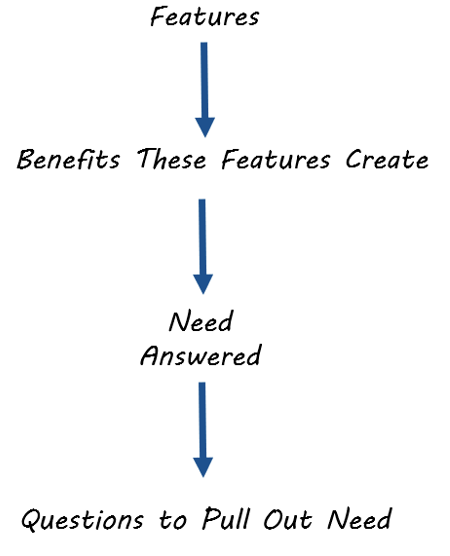
Grab a sheet of paper. Write your product’s features across the top. Under each, list the benefit. Then, under the benefit, list the need it answers.
Example: In my trainings, I use a clicker with a button that blanks out the slide.
· Feature: Slide blanking button
· Benefit: Audience attention shifts back to me
· Need: Refocus the group when making a key point
Once you know the need, craft questions that highlight it.
For the blank-slide feature, I might ask:
· “Would it be valuable if you could instantly refocus your audience during a presentation?”
· “How much more influence would you have if you could pause the slides to drive home a critical point?”
Notice what’s happening: I’m not pitching the button. I’m pulling the customer into imagining how much better their world looks with the benefit.
Below is the complete process of creating the questions that tie back your features and benefits:
Back when I sold stand-on lawnmowers (before they were a thing), I didn’t start with horsepower or specs. Instead, I asked questions like:
· “Have you ever had employees get stuck when a mower tipped near a retention pond?”
· “How do your crews handle steep inclines today safely?”
These questions tied directly to the mower’s feature, standing design with easy step-off, and the benefit: greater safety and maneuverability. Customers quickly connected the dots themselves and could see the advantage that the product was offering them. A safter way operate and have less lawsuits!
Tie-back questions do three things:
1. Expose real needs. You find out if the feature actually matters.
2. Highlight benefits naturally. The customer says “yes” to their own pain points.
3. Build alignment. By the time you present, you’re not pitching, you’re confirming.
Using this process with your products you will be able to make higher levels of engagement in your meetings with customers and gain traction / speed on their decision making. This is the essence of how we can make larger sales with the sales cycle decreasing.
The best part…When the customers start seeing the benefit you bring to them, they can’t help but tell all their collegues in the industry to contact you. Then your prospecting becomes more efficient allowing you to have more freedom and income in your pocket.
Does that sound like a value to you? If so, implement this and see how well it works for you. If you have questions reach out!
Master the Art of Influence: Build Trust, Drive Sales, and Lead Effectively
Are you ready to become the magnetic force that attracts top performers and your best customers?
I’m Kevin Sidebottom—keynote speaker, sales trainer, and author—and I help organizations unlock the power of influence to achieve breakthrough results.
In this blog, I reveal why influence is the ultimate currency in business and leadership—and how you can use it to:
✅ Motivate customers to stay loyal and buy again
✅ Build trust and engagement with your team
✅ Transform your leadership approach to inspire stronger performance
With decades of experience studying why people buy and how leaders earn loyalty, I equip sales professionals and executives to deliver lasting value, strengthen customer relationships, and drive higher revenue.
👉 Featured Resources to Grow Your Influence:
· Email: kevin@kevinsidebottom.com
· The Sales Process Uncovered Membership
· The Sales Process Uncovered (Book on Amazon)
If you’re serious about elevating your sales process, leadership impact, and team performance, this blog will show you the path.

Driving Urgency w/ Tie Backs
You’ve probably been there: a customer nods along, agrees with your points, even tells you your solution looks strong, and then they stall for months when you follow up asking about next steps.
“Let’s revisit next quarter.”
“We need more time to think.”
“It’s not urgent right now.”
The frustration is real. The value is obvious, yet the decision lingers. Why? Because people naturally avoid risk. Taking action, spending money, adopting a new tool, changing a process feels risky. Waiting feels safe. That is why we need to be making sure we are asking the right questions to help them understand the waiting is actually hurting them.
This is where tie-back questions become a game-changer. They don’t just connect your product to a problem; they connect inaction to consequences.
Tie-back questions that drive urgency usually focus on two things:
1. The cost of doing nothing
2. The benefit of acting now
Imagine this exchange:
Customer: “Collaboration between departments is slow.”
Seller: “If this continues for six more months, how much do you estimate it will cost in missed opportunities?”
That question reframes the problem from an annoyance to a measurable loss. Suddenly, inaction looks expensive.
Then pivot to the positive:
Seller: “If we solved this today, how quickly could you start hitting your quarterly goals?”
Now urgency isn’t about fear, it’s about speed and results.
Behavioral economics tells us people are twice as motivated to avoid loss as they are to pursue gain. Tie-back questions tap into that bias by making inaction visible.
At the same time, you can’t only push on pain. Hope motivates too. The balance is critical:
· Highlight the cost of delay. (Loss avoidance)
· Show the upside of speed. (Hope for gain)
When both levers are pulled, urgency rises.
Tie-back questions don’t just connect your product to value, they shine a spotlight on the hidden costs of waiting and the visible rewards of acting now.
And when customers see both, hesitation turns into momentum.
Have a great week!
Master the Art of Influence: Build Trust, Drive Sales, and Lead Effectively
Are you ready to become the magnetic force that attracts top performers and your best customers?
I’m Kevin Sidebottom—keynote speaker, sales trainer, and author—and I help organizations unlock the power of influence to achieve breakthrough results.
In this blog, I reveal why influence is the ultimate currency in business and leadership—and how you can use it to:
✅ Motivate customers to stay loyal and buy again
✅ Build trust and engagement with your team
✅ Transform your leadership approach to inspire stronger performance
With decades of experience studying why people buy and how leaders earn loyalty, I equip sales professionals and executives to deliver lasting value, strengthen customer relationships, and drive higher revenue.
👉 Featured Resources to Grow Your Influence:
· Email: kevin@kevinsidebottom.com
· The Sales Process Uncovered Membership
· The Sales Process Uncovered (Book on Amazon)
If you’re serious about elevating your sales process, leadership impact, and team performance, this blog will show you the path.

Make Them The Hero!
Two weeks ago in the post about how consistency builds trust with the customers I referenced this week’s title. This is a crucial secret of all for becoming a successful sales professional. That is: Sales isn’t about you. It’s about the customer.
I know some of you did a “wait, what?”
That’s right making a sale is not about selling a product or service to a customer. It’s about helping them to be a hero of their story.
Why Customers Need to Be the Hero
Too many salespeople want to be the center of the story—the one with the slick pitch, the clever answers, the grand solution. But customers don’t buy to make us look good. They buy because it makes them look feel like they are winning in their story.
· 74% of buyers choose the sales rep who first adds value and insight to their journey (Demand Gen Report).
· Buyers who feel understood are 3x more likely to purchase (Forrester).
Customers want someone that will be in their corner to help them succeed in their endeavors, not to say, “Kevin was such a great sales professional, I just had to buy from him.” They are not looking for the best skilled sales professional to shine the spotlight on, they want to show the world how great of a deal maker they are, how awesome of a purchase they made, how they have just leveled up to take on the world.
How to Make Customers the Hero
1. Frame solutions around them – Instead of “Here’s what we do,” shift to “Here’s how this helps you reach your goals.” Focus on them in the language.
2. Connect them to resources – Sometimes value isn’t selling your product, it’s introducing them to someone who can solve another problem. I call this being the bridge and it has netted me future sales because the customer could not help but recommend me to friends and family.
3. Celebrate their wins – When they succeed, shine the spotlight on them, not yourself. Let them know they are valued and that you support them and are glad you could be a part of their journey.
Think of yourself as the guide in the customer’s story—like Mickey to Rocky Balboa You’re not the main character; you’re the one who equips the customer to win their fight, hopefully with a knock out in the first round!
We still need to focus on the process, but if we put the customer’s needs first we will be able to be a part of their success story and others will start coming to us for requests instead of us having to hunt for more business.
Have a great week!
Master the Art of Influence: Build Trust, Drive Sales, and Lead Effectively
Are you ready to become the magnetic force that attracts top performers and your best customers?
I’m Kevin Sidebottom—keynote speaker, sales trainer, and author—and I help organizations unlock the power of influence to achieve breakthrough results.
In this blog, I reveal why influence is the ultimate currency in business and leadership—and how you can use it to:
✅ Motivate customers to stay loyal and buy again
✅ Build trust and engagement with your team
✅ Transform your leadership approach to inspire stronger performance
With decades of experience studying why people buy and how leaders earn loyalty, I equip sales professionals and executives to deliver lasting value, strengthen customer relationships, and drive higher revenue.
👉 Featured Resources to Grow Your Influence:
· Email: kevin@kevinsidebottom.com
· The Sales Process Uncovered Membership
· The Sales Process Uncovered (Book on Amazon)
If you’re serious about elevating your sales process, leadership impact, and team performance, this blog will show you the path.